Category:
EnvironmentTaba Waste Facility: Five Years Idle, Accountability Missing
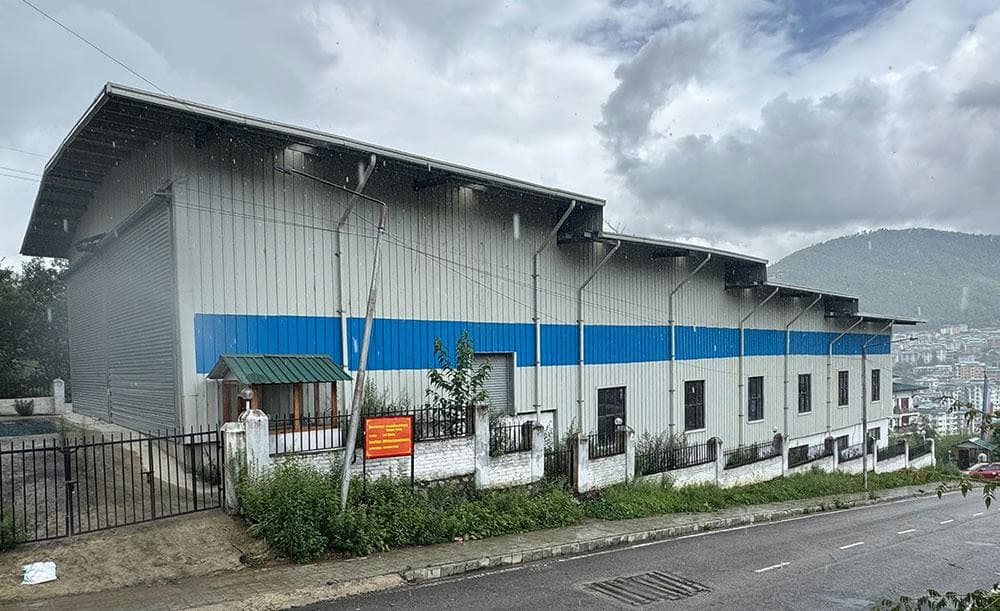
A Multi-Million Rupee Investment Gone to Waste 🚨
Bhutan's waste management infrastructure has encountered a significant setback that raises troubling questions about government accountability and project oversight. The Taba Material Recovery Facility, a substantial investment completed in June 2021 with support from the Government of India, has sat completely unused for five years—processing zero tonnes of waste despite being designed to handle 40 tonnes daily.
This situation represents more than just a failed infrastructure project; it symbolizes systemic gaps in how the government manages specialized facilities and holds stakeholders responsible for disappointing outcomes.
The Facility That Never Operated ⚠️
What Was Built and Why
The Material Recovery Facility (MRF) at Taba was envisioned as a cornerstone of Thimphu's waste management transformation. Established under the Waste Management Flagship Project during the 12th Plan, the facility was meant to revolutionize how the capital city processes municipal solid waste.
With a designed processing capacity of approximately 40 tonnes daily, the MRF was supposed to receive segregated waste and recover valuable recyclable materials—plastics, paper, metals, and other dry waste. The broader vision aligned with Bhutan's ambitious goal of achieving Zero Waste by 2030, promoting a circular economy approach rather than relying solely on landfill disposal.
The Stark Reality Today
Visitors to the Taba site today encounter a scene of abandonment. The blacktopped compound features two storage buildings, a parking area, and locked metal gates corroded by years of rust. Grass grows unchecked around the perimeter, water pipes lie scattered across the ground, and the facility remains completely unattended. The contrast with its intended purpose could hardly be more pronounced.
Accountability Questions Remain Unanswered 🤔
The Royal Audit Authority's Findings
The Royal Audit Authority's performance audit report on waste prevention and management, released in June this year, highlighted the facility's persistent inactivity as a critical failure. Despite five years of dormancy and substantial public resources invested in the project, the report failed to identify any specific agency or individual responsible for the situation.
This absence of accountability represents a concerning pattern in how Bhutan's government addresses infrastructure failures. When projects underperform, the responsibility often becomes diffused across multiple agencies, allowing no single entity to be held answerable for the outcome.
Parliamentary Scrutiny and Minister's Response
The issue gained prominence during a National Council question-and-answer session with the former Energy and Natural Resources Minister. Council members pressed on several critical points: Had a formal technical and financial audit been conducted? Who would be held accountable? What corrective measures did the government plan to implement?
The minister acknowledged that the project had resulted in "significant financial loss" to the government, yet stopped short of naming responsible parties or proposing concrete accountability measures. He did indicate that relocation plans were under consideration, citing the facility's problematic proximity to a private building adjacent to the site.
The Cost Question
When asked about the total establishment cost, the Department of Environment and Climate Change (DECC) declined to disclose specific figures. This lack of transparency compounds public frustration and prevents meaningful assessment of the financial implications of the failure.
Comparing Success and Failure: Lessons from Babesa 📊
The Greener Way Contrast
Thimphu operates two Material Recovery Facilities, and the comparison between them is instructive. The Babesa MRF, operated by private firm Greener Way, functions effectively and consistently recovers substantial quantities of recyclable materials monthly:
- 5,000 kg of low-density polyethylene
- 4,500 kg of high-density polyethylene
- 160 bales of cardboard
- 50 bales of tin
- 70 bales of PET bottles
- 15 bales of cans
This operational success demonstrates that material recovery facilities can work effectively in Bhutan's context when properly managed and maintained. The Babesa facility's consistent performance starkly illuminates the Taba facility's complete failure.
Why One Succeeded, One Failed
The difference between the two facilities offers crucial insights. Private sector involvement at Babesa appears to have provided necessary operational expertise, accountability mechanisms, and sustained commitment that the government-led Taba project lacked. This comparison suggests that Bhutan may need to reconsider its approach to specialized waste management infrastructure.
Technical Barriers and Explanations 🔧
DECC's Account of the Delay
Department of Environment and Climate Change officials provided explanations for the facility's non-operation. According to their statement, infrastructure of this specialized nature requires extensive technical assessments, physical verifications, and safety checks before commissioning. As Bhutan's first facility of this type, certain technical concerns were identified during pre-commissioning processes.
Officials emphasized that the country possesses limited technical experience and capacity in designing, installing, commissioning, and operating specialized waste management facilities. This capacity gap, they argued, necessitated additional assessment and corrective measures.
The Commissioning Challenge
However, this explanation raises uncomfortable questions. If technical concerns were identified, why weren't they resolved during the initial design and construction phases? Why did it take five years to acknowledge that the facility couldn't operate? And why were these technical limitations not anticipated before India provided financial support for the project?
Industry Context: Global Waste Management Trends 🌍
Bhutan's Waste Management Goals
Bhutan's commitment to Zero Waste by 2030 positions the nation among countries pursuing ambitious circular economy objectives. This target requires not just infrastructure investments but also behavioral changes, policy frameworks, and operational excellence.
Material recovery facilities represent a critical component of this strategy. They bridge the gap between waste generation and final disposal, extracting economic value from materials that would otherwise burden landfills. For a small nation like Bhutan, this approach aligns with sustainable development principles and environmental stewardship.
Regional and Global Comparisons
Across Asia and globally, many countries face similar challenges with waste management infrastructure. However, successful implementations typically feature clear accountability structures, private sector partnerships, and sustained technical support. Bhutan's experience suggests the need for institutional reforms in how specialized infrastructure projects are managed.
Broader Systemic Issues 🏛️
Project Management Gaps
The Taba facility failure reflects broader systemic challenges in how Bhutan manages complex infrastructure projects:
- Inadequate pre-project planning and feasibility assessment
- Insufficient technical expertise during design and construction phases
- Weak commissioning protocols and quality assurance mechanisms
- Unclear accountability frameworks when projects underperform
- Limited coordination between implementing agencies
Institutional Learning Challenges
DECC officials suggested that the experience has provided "important lessons" for future projects. However, without formal accountability measures or clear corrective actions for the Taba facility, these lessons risk remaining theoretical rather than translating into substantive improvements.
Institutional learning requires not just acknowledging failures but implementing systemic changes to prevent recurrence. The absence of named responsible parties suggests that genuine organizational learning may not occur.
Relocation Plans and Future Prospects 🔄
Current Status and Next Steps
DECC indicated that the facility would likely be relocated due to its proximity to private construction and existing buildings. However, specific timelines, costs, and operational frameworks for the relocated facility remain unclear.
The department stated it is "assessing options" with relevant agencies, considering technical requirements, operation and maintenance costs, and long-term sustainability. This vague language suggests that concrete plans have not yet materialized.
Sustainability Considerations
For any relocated facility to succeed, several conditions must be met:
- Clear operational framework with defined responsibilities
- Adequate technical support and capacity building
- Sustainable funding mechanisms beyond initial capital investment
- Performance monitoring and accountability systems
- Private sector engagement or partnership models
- Regular maintenance protocols and equipment replacement schedules
What Accountability Should Look Like 📋
Current Gaps
The absence of identified responsible parties represents a fundamental governance failure. In effective public administration, specific individuals and agencies should be accountable for project outcomes. This accountability serves multiple purposes:
- Deters negligence and poor decision-making
- Enables corrective action against underperforming officials
- Builds public trust through transparent governance
- Creates incentives for excellence and careful stewardship
Recommended Framework
Moving forward, Bhutan's government should establish clear accountability mechanisms:
- Conduct independent investigation into why the facility remained non-operational
- Identify responsible officials and agencies
- Implement disciplinary measures where appropriate
- Establish clear consequences for future project failures
- Create transparent reporting on infrastructure project status
- Implement regular audits of specialized facilities
Key Takeaways and Looking Forward 🎯
The Taba waste facility's five-year inactivity represents more than a single failed project—it reflects systemic challenges in how Bhutan manages complex infrastructure and holds stakeholders accountable. While the government has acknowledged financial losses and acknowledged the situation requires attention, the absence of clear accountability measures remains troubling.
For Bhutan to achieve its Zero Waste by 2030 goal, the government must move beyond vague explanations and implement concrete reforms. This includes establishing clear accountability frameworks, learning from the Babesa facility's success, and potentially reconsidering whether private sector partnerships could enhance future waste management infrastructure.
The relocation and eventual operationalization of this facility will serve as a critical test of whether Bhutan's government has genuinely learned from this experience or whether similar failures will continue to plague infrastructure development. The nation's citizens deserve nothing less than transparent governance and responsible stewardship of public resources.
You May Also Like
Environment
Climate Crisis in the Himalayas: Bhutan's Cold Reminder
August 29, 2026

Environment
WBH Conservation Project Delivers Clean Water to Rural Homes
August 29, 2026
Environment
HKH Climate Crisis: Why Regional Unity Matters Now
August 29, 2026
Environment
Bhutan's Solar Power Revolution: Energy Security Strategy
August 26, 2026