Category:
EconomyBhutan's Food Supply: Import Dependency Challenges
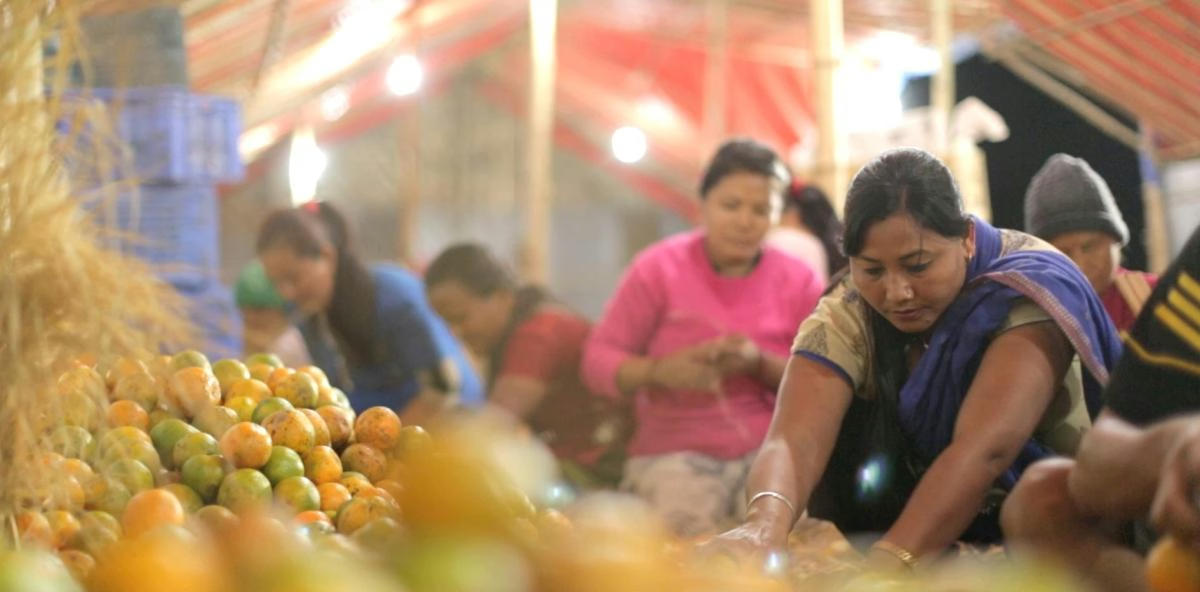
In recent years, Bhutan has faced significant challenges in achieving self-sufficiency in essential food supplies. The nation's heavy reliance on imports for dietary staples such as cereals and vegetable oils highlights a critical issue in its food security landscape. 🌾🇧🇹
The Current Landscape of Food Supply
According to the National Statistics Bureau's Food Balance Sheets Report, Bhutan's dependency on imported food is substantial. The report, compiled with the Food and Agriculture Organization, reveals that only one-third of the cereals and less than one-fifth of the vegetable oils consumed domestically are produced within the country. This reliance poses a challenge to Bhutan's goal of achieving food security and aligns with broader global trends in food supply chains.
Key Statistics on Import Dependency
- Cereals: Constituting the backbone of Bhutanese diets, cereals have an import dependency ratio of 67%.
- Vegetable Oils: Even more critical, these oils have an 88% dependency ratio.
- Sugar and Stimulants: Completely reliant on imports, with a 100% dependency ratio.
- Pulses: Another dietary staple, pulses show an 83% dependency ratio.
The Impact of Import Dependency
The dependency on imports affects not only the availability of food but also the nutritional quality. For instance, cereals and vegetable oils contribute significantly to the average Bhutanese diet's calorie and fat intake. This dependency complicates efforts to meet Sustainable Development Goal (SDG) Target 2.1, which aims to end hunger and ensure access to nutritious food by 2030.
Declining Domestic Production
Bhutan's capacity to produce food domestically is declining, exacerbated by a reduction in gross cropped area from 42,000 hectares in 2021 to 36,600 hectares in 2024. This decrease limits the agricultural base needed to close the import gap and heightens reliance on foreign supplies. 📉
Self-Sufficiency in Other Commodities
Despite these challenges, Bhutan demonstrates self-sufficiency in several commodity groups, including spices, starchy roots, fruits, and eggs. However, these do not form the core of the national diet, unlike cereals and oils.
Potatoes and Spices: A Complex Picture
- Potatoes: With a self-sufficiency ratio exceeding 200%, potatoes are a staple that Bhutan produces in abundance. However, much of this production is diverted to non-consumptive uses.
- Spices: While also self-sufficient, spices see a large portion of production exported, demonstrating a volatile self-sufficiency landscape.
The Road Ahead: Policy and Innovation
To address these challenges, Bhutan must adopt innovative agricultural practices and policies to boost domestic production. Expanding cultivation areas for cereals and oils, improving agricultural productivity through technology, and reducing post-harvest losses are critical strategies.
Key Takeaways
- Diversification: Emphasizing a diversification strategy can help reduce dependency on a few key imports.
- Sustainable Practices: Implementing sustainable agricultural practices will enhance food security.
- Policy Support: Government policies should focus on supporting local farmers and providing incentives for increased production.
Conclusion
Bhutan's heavy reliance on food imports poses significant challenges to its food security and economic stability. However, with strategic policies and innovations in agriculture, Bhutan has the potential to reduce this dependency and achieve greater self-sufficiency. The journey toward food security is complex, but with the right focus and commitment, it is certainly within reach. 🌟
In the coming years, stakeholders must collaborate to ensure that Bhutan not only meets its dietary needs but also maintains the nutritional quality of its food supply. As Bhutan works towards its goals, the lessons learned can serve as a model for other nations grappling with similar challenges. 🔍
You May Also Like

Economy
Indian Banks Slow to Adopt Bhutanese UPI Payments
October 12, 2026
Economy
Government Addresses 400+ Business Issues to Boost Economy
October 10, 2026
Economy
Bhutan's Bold Vision: Two USD 50M Enterprises by 2030
September 27, 2026
Economy
Mega Dry Port in Pasakha: Bhutan's Trade Revolution
September 25, 2026