Category:
NewsBhutan's Fencing Programme Falls Short: Smallholders Left Behind
A Growing Crisis in Bhutan's Agricultural Support System 🌾
Bhutan's ambitious agricultural investment strategy faces a significant hurdle as one of its flagship initiatives struggles to meet expectations. The government's substantial Nu 5.1 billion fencing programme—designed to protect farms from devastating wildlife conflicts—has achieved less than half its intended coverage, leaving a critical gap in rural support that disproportionately affects smallholder farmers across the nation.
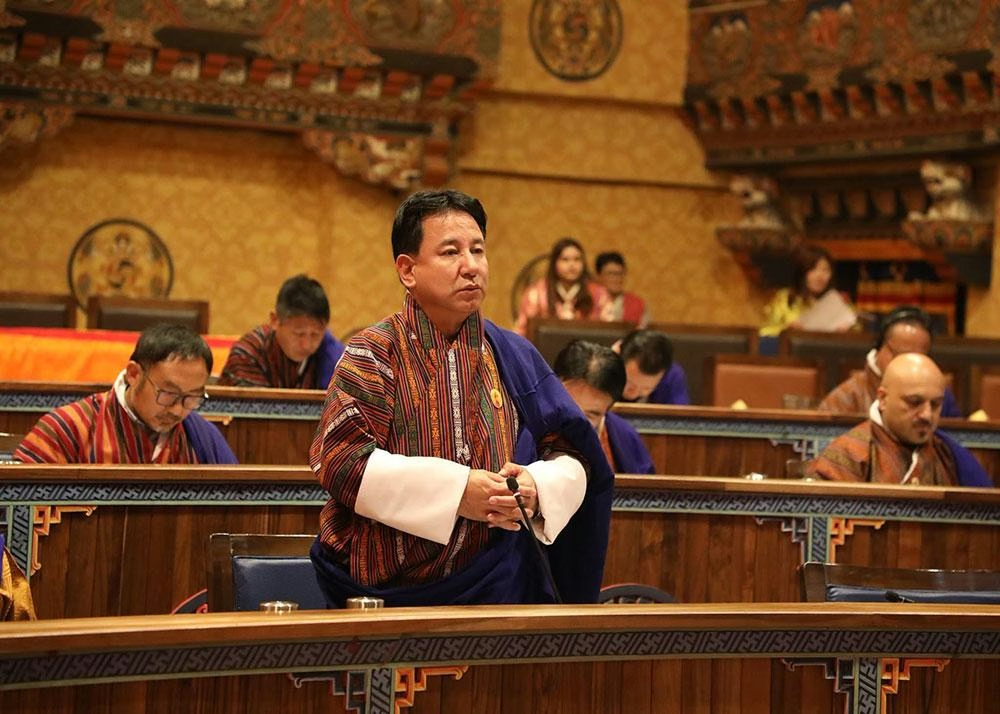
The shortfall became evident during recent deliberations by the National Council, where lawmakers examined the Economic Affairs Committee's comprehensive review of Bhutan's agriculture investment ecosystem. What emerged was a troubling picture: while the programme aimed to construct 3,400 kilometers of protective fencing, only 1,475 kilometers has been completed under 269 schemes, covering approximately 40,000 acres of farmland.
The Eligibility Barrier: Why Smallholders Are Excluded 🚫
At the heart of this implementation gap lies a critical eligibility restriction that has sparked considerable debate among policymakers. The fencing assistance programme requires households to own at least 30 acres of land to qualify for support—a threshold that effectively excludes the majority of Bhutan's smallholder farming community.
This restriction creates a paradoxical situation in Bhutanese agriculture. Farmers holding 30 acres or more receive government assistance to protect their investments, while those operating smaller plots—often representing the most vulnerable segment of the agricultural workforce—must shoulder the burden of wildlife protection independently. The consequence is predictable and devastating: smallholders face escalating losses from human-wildlife conflict without access to the protective infrastructure that could transform their farming viability.
The eligibility requirement has drawn sharp criticism from National Council members, who recognize that this arbitrary threshold undermines the programme's broader objectives. As one prominent lawmaker noted, the restriction essentially bifurcates Bhutan's farming community into the protected and the unprotected, perpetuating existing inequalities in agricultural development.
The Cascading Effects of Incomplete Fencing Coverage 📊
The incomplete fencing network creates downstream problems that extend far beyond individual farm productivity. When some properties remain unfenced while neighbors have protective barriers, wildlife pressure simply shifts to unprotected land. This phenomenon—where fences redirect animal movement rather than eliminating it—means that the benefits of the programme are unevenly distributed across communities.
The situation is further complicated by a troubling agricultural trend: nearly 26 percent of Bhutan's farmland, totaling approximately 66,120 acres, currently lies fallow. This substantial acreage represents lost productive capacity and suggests systemic challenges beyond fencing alone. When fencing is constructed on non-productive land, it provides neither income protection nor production benefits—a reality that policymakers are increasingly recognizing as a misallocation of resources.
An Aging Workforce and Vanishing Agricultural Employment 👴
Underlying the fencing programme's challenges is a more fundamental crisis: Bhutan's agricultural sector is experiencing a dramatic workforce transformation. The proportion of national employment in agriculture has plummeted from 65.3 percent in 2009 to just 43.6 percent in 2025, according to the latest Labour Force Survey. While the sector still employs approximately 166,450 people, the demographic profile is increasingly skewed toward older workers.
This employment shift reflects a harsh economic reality facing rural communities. Agricultural workers earn a mean monthly salary of Nu 12,945—barely half the earnings in industrial sectors and approximately two-fifths of service sector wages. For younger Bhutanese, the economic calculus is straightforward: farming represents diminishing financial returns compared to urban employment opportunities.
The consequences are visible across rural constituencies. Young people are systematically migrating to urban centers, leaving behind an aging population struggling to maintain productive farmland. Several National Council members reported that their constituencies face acute labor shortages during critical farming seasons, as the youth demographic increasingly views agriculture as an occupation of economic necessity rather than genuine choice.
The mechanization picture reveals additional complexity: while Bhutan possesses 13,032 power tillers, 55 percent of households still rely on animal power for cultivation. This technological gap reflects both economic constraints and the reality that smallholders often cannot justify investments in mechanization when access to fencing support—and thus farm viability—remains uncertain.
Broader Agricultural Investment Challenges 💰
The fencing programme's shortcomings exist within a larger ecosystem of agricultural policy decisions that the National Council has scrutinized intensely. The Economic Affairs Committee presented eight recommendations addressing agricultural planning, infrastructure development, governance structures, and market access mechanisms.
Six of these recommendations secured National Council support, but two proved contentious enough to be returned for reworking. The disputed recommendations centered on cost-sharing arrangements and agricultural marketing strategies—issues that reveal fundamental disagreements about how Bhutan should support its farming population.
The Cost-Sharing Controversy
The cost-sharing debate reflects tension between fiscal responsibility and agricultural support. The committee proposed revising 2025 cost-sharing guidelines before the 2027-28 budget cycle, specifically recommending exemptions for essential agricultural inputs like frozen semen and breeding bulls, as well as support for vulnerable households.
Some lawmakers argued persuasively that an aging, shrinking farming population cannot reasonably absorb increasing cost burdens. They contended that as the agricultural workforce shrinks and ages, expecting farmers to contribute more substantially to production costs risks accelerating rural depopulation. Others countered that cost-sharing represents appropriate development progression, where both citizens and government invest proportionally in agricultural advancement.
This philosophical divide masks a practical problem: the Ministry of Agriculture and Livestock designs agricultural programmes while the Finance Ministry controls budgetary allocation, creating potential misalignment between agricultural planning and actual resource availability.
Irrigation Infrastructure Gaps
Assured irrigation currently covers approximately 29 percent of Bhutan's agricultural land—about 67,955 of 234,328 acres. Even completing the 24 central irrigation schemes currently in development would lift coverage only marginally to 31.1 percent.
The disparity between centrally-planned irrigation schemes and local demand is striking. Dzongkhags proposed 474 irrigation schemes, yet only 24 were selected for central government implementation. National Council members urged the government to revive the 474 proposed schemes rather than initiating entirely new projects, recognizing that locally-identified infrastructure needs should take priority over centralized planning.
About Nu 1.1 billion is budgeted in the 13th Plan for irrigation development, with investments currently underway. However, members also emphasized the need for skills training for technical officials and employment opportunities for agriculture graduates—recognizing that infrastructure alone cannot succeed without adequate human capacity.
Market Development and Agricultural Viability 🎯
The committee's recommendations also emphasized shifting government focus from simply helping farmers produce to ensuring they access reliable, remunerative markets. This strategic reorientation acknowledges a critical realization: production capacity means little without viable sales channels and fair pricing mechanisms.
Proposed interventions include developing a comprehensive market development strategy, establishing a revolving fund for the Food Corporation of Bhutan Limited, creating a single-window platform for agricultural exports, and promoting agro-processing industries. Additionally, the recommendations call for developing a national brand for Bhutanese produce—positioning the country's agricultural products competitively in regional and global markets.
These market-focused strategies represent recognition that Bhutanese agriculture faces not merely production challenges but market access barriers that prevent farmers from capturing fair value for their output.
The Funding Disconnect and Local Government Capacity 🏢
One particularly revealing issue emerged during deliberations: the distinction between project-tied assistance from external partners and locally-funded development through block grants. Project-tied assistance from the Government of India, while sometimes viewed skeptically, at least provides dedicated resources for specific initiatives. Local government block grants, conversely, create planning challenges because local administrations cannot effectively plan ad hoc projects or provide farmers timely assistance when funding mechanisms lack flexibility.
The first committee recommendation directly addresses this by proposing that government help dzongkhags and gewogs develop comprehensive agricultural plans for both fenced and unfenced areas, with increased flexibility in block grant utilization. This approach recognizes that agricultural challenges vary significantly across regions and that centralized one-size-fits-all solutions often fail to address local realities.
Looking Forward: Policy Reform and Implementation Challenges 🔮
The National Council's deliberations represent an important moment for Bhutanese agricultural policy. Six of eight recommendations received formal support, while the remaining two were returned to the Economic Affairs Committee for reworking in consultation with relevant agencies. The full review report and revised recommendations are scheduled for adoption on December 9.
Beyond the formal recommendations, National Council members proposed additional measures—all of which received House support through a show of hands—indicating broad consensus that agricultural policy requires significant recalibration.
The fencing programme's failure to reach smallholders symbolizes a broader challenge in Bhutanese agricultural development: policies designed with good intentions sometimes incorporate eligibility thresholds or implementation mechanisms that inadvertently exclude the most vulnerable populations they aim to serve. As Bhutan confronts an aging agricultural workforce, shrinking rural employment, and increasing human-wildlife conflict, policymakers must grapple with fundamental questions about agricultural viability, rural sustainability, and the role of government support in preserving rural livelihoods.
The path forward requires not merely tweaking existing programmes but reconsidering the foundational assumptions underlying agricultural investment strategy. Only by addressing the eligibility barriers, funding disconnects, and market access challenges can Bhutan hope to reverse rural depopulation trends and ensure that agricultural development benefits reach the smallholder farmers who constitute the backbone of rural communities.
You May Also Like
News
NA Endorses Water Shortage Recommendations Ahead of El Niño
November 28, 2026
News
Police Arrest Suspect in Kabesa Rape and Murder Case
November 27, 2026

News
Building Safety Every Day: Bhutan's Fight Against Gender Violence
November 25, 2026
News
550MW Dorokha Hydropower Project Set for 2035 Construction
November 25, 2026