Category:
NewsBhutan's Critical Engineer Shortage Threatens Megaproject Timeline
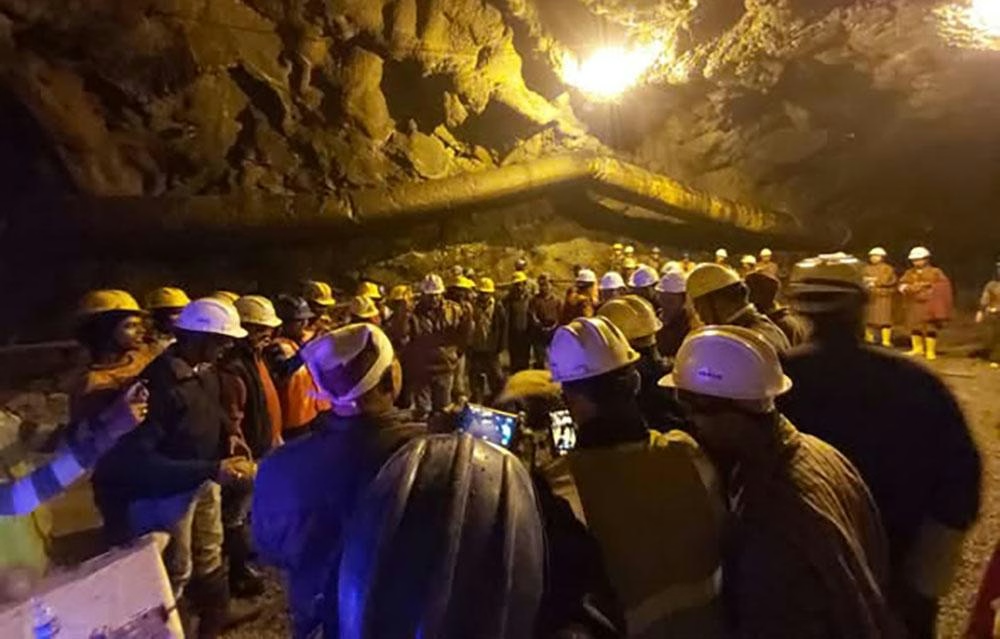
The Growing Crisis in Bhutan's Engineering Workforce 🚧
Bhutan stands at a critical juncture. As the nation accelerates its ambitious infrastructure agenda—from hydropower developments to the groundbreaking Gelephu Mindfulness City—a fundamental challenge threatens to derail progress: a severe shortage of qualified engineers across multiple disciplines.
Over the past two to three years, the gap between engineering demand and available talent has widened dramatically. Construction companies, hydropower contractors, and government agencies find themselves competing fiercely for a shrinking pool of professionals, forcing many organizations to seek solutions beyond Bhutan's borders.
Understanding the Scale of the Problem 📊
The engineering shortage isn't merely an inconvenience—it's reshaping how Bhutan's major projects operate. Leading construction firms report needing 15 to 20 additional engineers within the coming years alone, with no clear pipeline to fulfill these positions.
The shortage manifests most acutely in three key areas:
- Civil Engineering: Infrastructure development and construction projects require experienced professionals to oversee complex designs and implementations
- Electrical Engineering: Power systems and grid management demand specialized expertise
- Hydropower Engineering: This sector faces particularly acute shortages, with multiple contractors reporting failed recruitment campaigns despite repeated job advertisements
The crisis extends beyond senior positions. Even junior engineer vacancies remain unfilled, signaling a systemic problem rather than an isolated recruitment challenge. Government agencies that once had surplus engineers now struggle to maintain adequate staffing levels.
Why Young Talent is Leaving Bhutan 🌍
The root cause of this shortage reveals a painful truth: Bhutan's brightest minds are departing for greener pastures. Young professionals increasingly choose to pursue higher education abroad, seeking better career trajectories and significantly higher earning potential in international markets.
This brain drain accelerates when domestic opportunities fail to compete. While a government engineer with a bachelor's degree starts at approximately Nu 25,000 monthly—a modest salary by international standards—private sector positions offer dramatically more attractive compensation packages.
Experienced engineers in competitive firms earn between Nu 200,000 and Nu 300,000 monthly, while fresh graduates in private companies start around Nu 45,000, reaching Nu 80,000 to Nu 90,000 with overtime. Despite these substantial increases, retention remains problematic, suggesting that compensation alone doesn't solve the underlying issue.
The Public-Private Sector Competition 🏢
A fundamental tension now defines Bhutan's employment landscape. Government agencies, state corporations, and private companies all recruit from the same limited talent pool, creating unprecedented competition.
Historically, government employment represented the preferred career path for engineering graduates. Stability, job security, and social prestige made civil service positions attractive despite lower salaries. This dynamic has reversed completely.
Today's graduates prioritize private sector opportunities, viewing government positions as stepping stones rather than destinations. This preference reflects broader global trends where private companies offer superior benefits, professional development, and advancement opportunities.
The National Housing and Development Corporation Limited (NHDCL) exemplifies this challenge. Campus recruitment efforts have failed repeatedly because competing companies hire graduates before NHDCL can extend offers. Even when NHDCL successfully recruits engineers, retention proves elusive—some professionals leave within four to five months, effectively using the organization as a training ground.
Hydropower Projects Facing Acute Shortages ⚡
Hydropower engineering represents perhaps the most critical shortage area. The Construction Development Corporation Limited (CDCL) has launched multiple recruitment campaigns specifically targeting hydropower engineers, attracting minimal response.
When CDCL advertises positions requiring only one to two years of experience, qualified candidates remain scarce. Compounding this problem, some applicants who express initial interest fail to attend scheduled interviews, suggesting they're preparing to leave the country and viewing interviews as unnecessary.
This phenomenon reveals a troubling pattern: prospective employees may be waiting for international work visas, viewing domestic employment as temporary. Recruiting individuals in this mindset wastes organizational resources and perpetuates instability.
Hydropower contractors acknowledge that current workforce levels cannot accommodate projected demand. As the sector expands and new projects commence, the shortage will intensify dramatically unless immediate interventions occur.
The Gelephu Mindfulness City Factor 🏗️
The Gelephu Mindfulness City (GMC) represents Bhutan's most ambitious development initiative. This transformative project will require substantial engineering expertise across multiple disciplines simultaneously.
Industry leaders recognize GMC as an accelerant to existing shortages. The project's scale and complexity will demand engineers with diverse specializations, further straining the already-depleted domestic workforce.
Construction companies predict that GMC, combined with ongoing hydropower developments, will create unprecedented competition for engineering talent. Multiple organizations simultaneously seeking the same specialized professionals will intensify wage pressures and recruitment challenges.
Procurement Rules Exacerbate the Problem 📋
Government procurement policies inadvertently worsen the shortage. Current bidding systems award higher scores to companies employing engineers with greater experience levels, encouraging firms to compete aggressively for the limited pool of seasoned professionals.
This creates a paradoxical situation: while experienced engineers become increasingly valuable and contested, fresh graduates struggle to secure positions. Companies prioritize experienced hires to improve bid competitiveness, reducing entry-level opportunities.
The Construction Association of Bhutan (CAB) has highlighted this structural flaw. Association leaders note that procurement rules make finding even fresh graduates challenging, as companies focus resources on recruiting experienced professionals to satisfy tender requirements.
The Broader Workforce Crisis 👷
The engineering shortage represents just one dimension of a larger technical workforce challenge. Construction companies simultaneously report difficulties recruiting skilled operators, surveyors, estimators, and other technical professionals.
This broader shortage suggests systemic issues within Bhutan's vocational and technical education system. Educational institutions may not be producing sufficient numbers of qualified graduates across technical disciplines, or graduates may be emigrating at rates exceeding replacement capacity.
Retention Challenges Beyond Compensation 💼
Interestingly, even substantial salary increases fail to solve retention problems. CDCL offers competitive compensation packages exceeding those of most competitors, yet retention remains difficult.
This suggests that factors beyond money influence engineers' decisions to leave organizations. Career development opportunities, workplace culture, project diversity, and international exposure likely play significant roles in retention outcomes.
When engineers depart shortly after recruitment, organizations lose not just manpower but also institutional knowledge and project continuity. The cycle becomes self-perpetuating: high turnover increases workload for remaining staff, reducing job satisfaction and accelerating additional departures.
Foreign Recruitment as a Double-Edged Sword 🌐
Facing persistent domestic shortages, companies increasingly recruit international engineers. While this provides short-term relief, it introduces complications.
Foreign professionals command higher salaries than domestic counterparts, potentially creating pay disparities and morale issues. Additionally, relying on foreign talent may reduce incentives for developing domestic expertise and could raise concerns about brain drain acceleration if Bhutanese professionals feel disadvantaged in their own labor market.
The National Housing and Development Corporation's CEO has cautioned that while increased foreign recruitment could address immediate needs, policymakers must carefully manage implementation to avoid unintended consequences.
Educational System Gaps 🎓
The shortage fundamentally reflects inadequacies in Bhutan's engineering education capacity. Engineering colleges must substantially increase annual intake, particularly in specialized fields like hydropower engineering.
Current educational output cannot match projected demand. As major projects expand, the gap between required engineers and available graduates will widen unless institutions significantly scale production.
Specialized engineering disciplines require particularly focused attention. Hydropower engineering expertise demands specific curricula and experienced faculty—resources that educational institutions may lack currently.
Industry Perspectives on Solutions 🔧
Industry leaders emphasize that addressing this crisis requires coordinated action among educational institutions, private companies, government agencies, and policymakers.
Key recommendations include:
- Salary Competitiveness: Government must increase civil service engineer compensation to compete with private sector offerings
- Educational Expansion: Engineering colleges need funding and faculty development to increase graduate production
- Specialization Programs: Targeted training in critical areas like hydropower engineering could address specific shortages
- Career Development: Structured advancement opportunities and professional development programs improve retention
- International Partnerships: Collaboration with foreign institutions could enhance educational quality and capacity
The Timeline Challenge ⏰
The urgency cannot be overstated. Megaprojects operate on fixed timelines, and engineer shortages directly impact project delivery schedules and productivity.
Delays in major infrastructure projects have cascading effects throughout Bhutan's economy. Postponed hydropower developments reduce planned energy generation, while GMC delays affect broader economic diversification objectives.
Every month without adequate engineering capacity increases project costs, extends timelines, and creates competitive disadvantages for Bhutanese firms bidding against international competitors.
Looking Forward: Building Sustainable Solutions 🚀
Bhutan faces a critical decision point. The nation can either address the engineering shortage through comprehensive, long-term strategies or continue managing crises reactively.
Sustainable solutions require patience and investment. Educational institutions need resources to develop quality programs. Government must adjust compensation structures to remain competitive. Industry must commit to developing junior talent rather than exclusively pursuing experienced professionals.
The construction companies and state corporations now experiencing acute shortages recognize that building a sustainable engineering pipeline represents essential infrastructure for Bhutan's future development. The megaprojects currently straining the system will eventually complete, but Bhutan's development trajectory depends on maintaining robust technical capacity.
Conclusion: A Nation at an Inflection Point 🎯
Bhutan's engineering shortage represents more than a recruitment challenge—it reflects deeper questions about the nation's ability to execute ambitious development plans while retaining talent domestically.
The coming years will test whether coordinated action among stakeholders can reverse current trends. Success requires honest acknowledgment of problems, willingness to implement difficult changes, and sustained commitment from educational, governmental, and private sector leaders.
As Gelephu Mindfulness City rises and hydropower projects expand, Bhutan's engineering workforce will determine whether these megaprojects become catalysts for sustainable development or cautionary tales about ambition exceeding capacity. The time to act decisively is now.
You May Also Like
News
Women Entrepreneurs Master AI and Digital Tools in Phuentsholing
September 1, 2026
News
Can Samtse Keep Up With Its Growing Workforce?
August 29, 2026
News
Nepal Flood Exposes Critical Gaps in Bhutan's Early Warning Systems
August 29, 2026
News
High Court Overturns Acquittal: Doctor Sentenced to 10 Years for Child Sexual Abuse
August 29, 2026