Category:
NewsBhutanese Pilgrims Adapt Routes as Nepal Flooding Disrupts Tibet Border
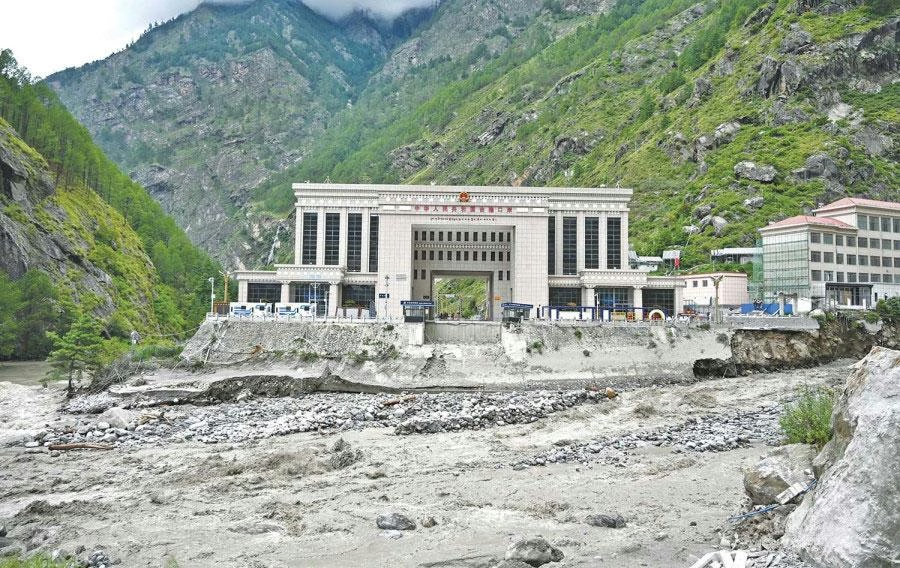
Sacred Journeys Interrupted: Understanding the Crisis 🌏
The spiritual pathways connecting Bhutan to Tibet's holiest sites have faced an unexpected challenge. Recent catastrophic flooding in northern Nepal has severely damaged critical infrastructure at one of Asia's most important pilgrimage crossings, forcing hundreds of devoted travelers to reconsider their sacred journeys. This disruption reveals both the vulnerability of established pilgrimage routes and the resilience of communities determined to maintain their spiritual traditions.
The Kyirong border gate, nestled between Nepal and Tibet, has served as the primary gateway for Bhutanese pilgrims seeking blessings at Lhasa's renowned monasteries for decades. However, the devastating floods have transformed this once-reliable passage into an impassable barrier, with the immigration center—a nearly five-story structure—completely submerged and destroyed by the raging waters.
The Kyirong Route: A Pilgrimage Lifeline 🙏
Historical Significance and Religious Importance
The Kyirong crossing represents far more than a simple border checkpoint. For Bhutanese Buddhist communities, this route embodies centuries of spiritual tradition and cultural continuity. Pilgrims traveling through Kyirong access multiple sacred sites along their journey, making it the preferred gateway for those undertaking the transformative journey to Lhasa.
The route typically accommodates pilgrimage expeditions lasting between 14 and 18 days, allowing travelers to visit monasteries, participate in religious ceremonies, and engage in profound spiritual experiences. The infrastructure at Kyirong was specifically designed to facilitate these regular pilgrimages, with established protocols and experienced staff managing the flow of religious travelers.
Current Impact on Bhutanese Pilgrims
At the time of the flooding crisis, multiple pilgrimage groups were either actively traveling or preparing for their journeys. The situation presented complex logistical challenges:
- Three groups totaling approximately 58 pilgrims were already in Tibet when the floods struck
- Two additional groups comprising pilgrims were positioned in Kathmandu, either returning from completed pilgrimages or preparing for their sacred journeys
- All pilgrims reported safe despite the infrastructure devastation
One group of 27 pilgrims had entered Tibet just seven days before the flooding occurred, placing them safely within Tibetan territory. A second group of 12 had crossed through Kyirong on August 20, while a third group of 19 was scheduled to depart Tibet on August 29.
Adapting to Crisis: The Alternative Route Strategy 🛤️
Introducing the Dram Crossing
The Dram border route, also recognized by its Nepali designation as Tatopani, has emerged as the crucial alternative pathway. Traditionally utilized primarily for trade and commercial activities rather than tourism or pilgrimage, this crossing now serves as the lifeline for displaced pilgrimage groups.
The Dram route presents different operational characteristics compared to the established Kyirong passage. While less familiar to pilgrimage coordinators and potentially more challenging logistically, it remains functional and accessible despite the regional flooding devastation.
Pilgrimage Group Adjustments
Tour operators managing the affected pilgrimage expeditions have demonstrated remarkable adaptability:
Group One (27 pilgrims): Scheduled to return through Dram on September 3 after completing their Lhasa pilgrimage
Group Two (12 pilgrims): Authorized to exit either through Dram or return via commercial flight, providing flexibility based on evolving conditions
Group Three (19 pilgrims): Originally planned to exit through Kyirong but pivoted to Dram given the infrastructure destruction
Group Four (21 pilgrims): Positioned in Kathmandu and initially intending to enter through Kyirong, now redirected to enter via Dram
Broader Implications for Bhutan-Nepal-Tibet Relations 🌐
Infrastructure Vulnerability and Regional Connectivity
This crisis illuminates the fragility of crucial border infrastructure connecting three distinct regions. The flooding has damaged not only the Kyirong immigration facility but also roads, bridges, and supporting infrastructure throughout northern Nepal, creating cascading effects on regional mobility and commerce.
For Bhutan specifically, this disruption impacts both religious tourism and cultural exchange. Bhutanese citizens regularly undertake pilgrimages to Tibetan Buddhist sites as part of their spiritual practice, and the temporary closure of the primary route represents a significant disruption to established cultural patterns.
Economic and Tourism Considerations
Beyond the spiritual dimensions, pilgrimage tourism generates meaningful economic activity. Tour operators managing these expeditions, hospitality providers, and transportation services all depend on reliable border access. The rerouting through Dram creates additional costs, extends travel times, and requires coordination with less-familiar crossing procedures.
The Kyirong route's closure also affects broader Nepal-Tibet-Bhutan tourism patterns, as this corridor serves tourists and traders beyond just pilgrims. The reconstruction timeline for the destroyed immigration center remains uncertain, potentially affecting travel patterns for months or longer.
Tour Operator Response and Coordination 📋
Professional Crisis Management
Tour operators managing the affected pilgrimage groups have communicated consistently that all travelers remain safe and in good health. This proactive communication reflects established protocols and professional coordination among Bhutanese tourism providers, Nepali border authorities, and Tibetan administrative officials.
The operators' ability to pivot multiple groups toward alternative routes demonstrates the maturity of Bhutan's pilgrimage tourism infrastructure. Rather than canceling expeditions or leaving pilgrims stranded, the industry has implemented contingency planning with minimal disruption to the spiritual objectives of the journeys.
Logistical Innovations
The rerouting strategy includes multiple options:
- Ground transportation through Dram
- Commercial flight options for time-sensitive travelers
- Adjusted itineraries accounting for longer transit times
- Enhanced communication with pilgrims regarding route modifications
The Dram Route: Temporary Solution or Permanent Alternative? 🔄
Characteristics of the Alternative Crossing
The Dram/Tatopani border crossing operates under different parameters than Kyirong. Historically focused on trade commerce rather than tourism or pilgrimage, this route requires different documentation procedures and coordination protocols.
However, the crossing's functionality during the flooding emergency demonstrates its viability as a backup pathway. The question now becomes whether this temporary adaptation might inspire permanent infrastructure improvements or redundancy in border crossing options.
Reconstruction and Future Planning
The complete destruction of the Kyirong immigration center raises important questions about border infrastructure resilience. Reconstruction efforts will likely incorporate climate adaptation measures, considering the apparent severity of flooding events in the region.
For Bhutanese pilgrimage planning, this crisis may prompt discussions about diversifying crossing options or establishing more robust contingency protocols. The spiritual importance of these journeys justifies investment in reliable, resilient border infrastructure.
Cultural and Spiritual Continuity Amid Disruption ✨
Despite logistical challenges, the determination of Bhutanese pilgrims to complete their sacred journeys reflects deep spiritual commitment. The willingness to adapt routes, extend travel times, and navigate unfamiliar border procedures demonstrates the profound significance of pilgrimage within Bhutanese Buddhist culture.
These expeditions represent more than tourism—they embody religious devotion, cultural identity, and spiritual practice. The successful rerouting of multiple pilgrimage groups ensures that this important cultural tradition continues despite environmental and infrastructural challenges.
Looking Ahead: Lessons and Preparations 🔮
Regional Cooperation and Planning
This crisis underscores the importance of regional cooperation among Nepal, Tibet, and Bhutan in maintaining reliable cross-border infrastructure. Climate change and environmental volatility may increase the frequency of such disruptions, necessitating proactive planning.
Governments and tourism operators should consider:
- Infrastructure hardening at critical border crossings
- Redundancy in crossing options to prevent complete route closures
- Enhanced communication protocols for pilgrimage coordination
- Climate adaptation strategies for border facilities
- Emergency response training for border personnel
Immediate Recovery Efforts
The reconstruction of the Kyirong immigration center represents a priority for regional authorities. The timeline for reopening this crucial crossing will significantly impact pilgrimage patterns and regional tourism in coming months.
Key Takeaways 📌
The flooding crisis affecting the Kyirong border route demonstrates both vulnerability and adaptability in Bhutanese pilgrimage traditions. While infrastructure destruction poses genuine challenges, the successful rerouting of multiple pilgrimage groups through alternative passages ensures spiritual journeys continue.
This situation highlights the importance of resilient border infrastructure, regional cooperation, and contingency planning in maintaining cultural continuity. As Bhutanese pilgrims continue their sacred journeys through adapted routes, they exemplify the determination to preserve spiritual traditions despite environmental and logistical obstacles.
The coming months will reveal much about border infrastructure reconstruction priorities and whether this temporary adaptation might inspire permanent improvements to cross-border pilgrimage pathways. For now, the pilgrims proceed, their devotion undeterred by flooded rivers and damaged immigration centers.
You May Also Like
News
Women Entrepreneurs Master AI and Digital Tools in Phuentsholing
September 1, 2026
News
Can Samtse Keep Up With Its Growing Workforce?
August 29, 2026
News
Nepal Flood Exposes Critical Gaps in Bhutan's Early Warning Systems
August 29, 2026
News
High Court Overturns Acquittal: Doctor Sentenced to 10 Years for Child Sexual Abuse
August 29, 2026