Category:
NewsBhutanese Diaspora Returns Home for Historic 108 Stupas
A Global Community Unites for Sacred Purpose 🙏
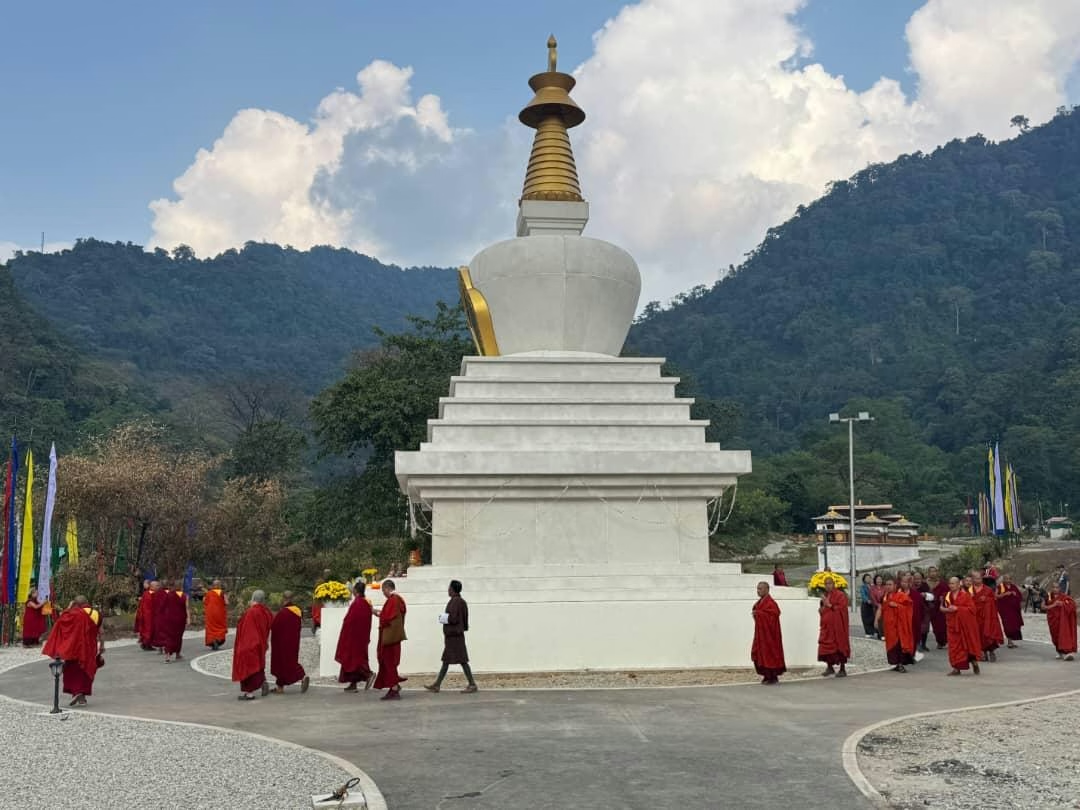
When dawn broke over the Mau River valley on a crisp November morning, something extraordinary was already in motion. Thousands of volunteers had gathered in the pre-dawn darkness, their hands ready to build something that would transform the landscape and touch hearts across continents. By midday, 108 towering stupas—each reaching 15 meters into the sky—lined 12 kilometers of riverbank in what would become one of the most remarkable spiritual undertakings in recent Bhutanese history.
What made this moment truly extraordinary wasn't just the architectural feat or the sheer scale of the construction. It was the faces in the crowd—Bhutanese citizens who had traveled from the far corners of the world, leaving behind their adopted homes to participate in this sacred endeavor. These members of the Bhutanese diaspora had made significant sacrifices to be present, carrying with them not just financial contributions but profound spiritual commitment.
The Vision Behind Gelephu Mindfulness City 🏛️
Gelephu Mindfulness City (GMC) represents a bold reimagining of how modern development can coexist with spiritual values. The 108 stupas project, completed on November 1st—coinciding with the Coronation Day of His Majesty The King—symbolizes the nation's commitment to placing mindfulness and cultural heritage at the center of urban development.
The resonant sound of 58 sets of dhungchen (traditional long ritual horns) echoed across Tendrelthang as the final stupa was ceremonially completed. The harmonic vibrations seemed to carry a message: that Bhutan's diaspora and its citizens at home remain fundamentally connected through shared values and collective purpose.
Diaspora Members Answer the Call 🌍
Tandin Dorji, founder and CEO of EducationPro Group Pty Ltd, exemplified the diaspora's commitment. Flying in from Australia with his family and company staff, Dorji's organization pledged Nu 20 million toward a single stupa. His presence represented more than a financial transaction—it was a statement about maintaining cultural identity and spiritual connection despite geographical distance.
"This speaks volumes about our collective love, faith and commitment to our beloved country," Dorji reflected. "But beyond the financial contribution, witnessing the magic unfold right before our eyes is something words can hardly describe."
From New York, Ugyen Wangchuk organized a group of over 20 Bhutanese expatriates who traveled at their own expense. They carried USD 1,008 in voluntary contributions from Bhutanese scattered across the United States—a symbolic amount reflecting both individual sacrifice and community solidarity. For Wangchuk, learning about His Majesty's vision for the project sparked an immediate desire to participate in this historic undertaking.
"When it was announced and we learnt of this noble vision of His Majesty The King, we wanted to be a part of this historic undertaking," Wangchuk explained. The journey from New York to Bhutan represented more than travel logistics—it was a pilgrimage for those seeking reconnection with their spiritual roots.
The Spiritual Significance of 108 ✨
The number 108 carries profound meaning in Buddhist tradition. It represents the number of defilements in human existence, the number of earthly desires to overcome, and the number of steps to enlightenment in many Buddhist practices. By constructing exactly 108 stupas, the project taps into centuries of spiritual symbolism.
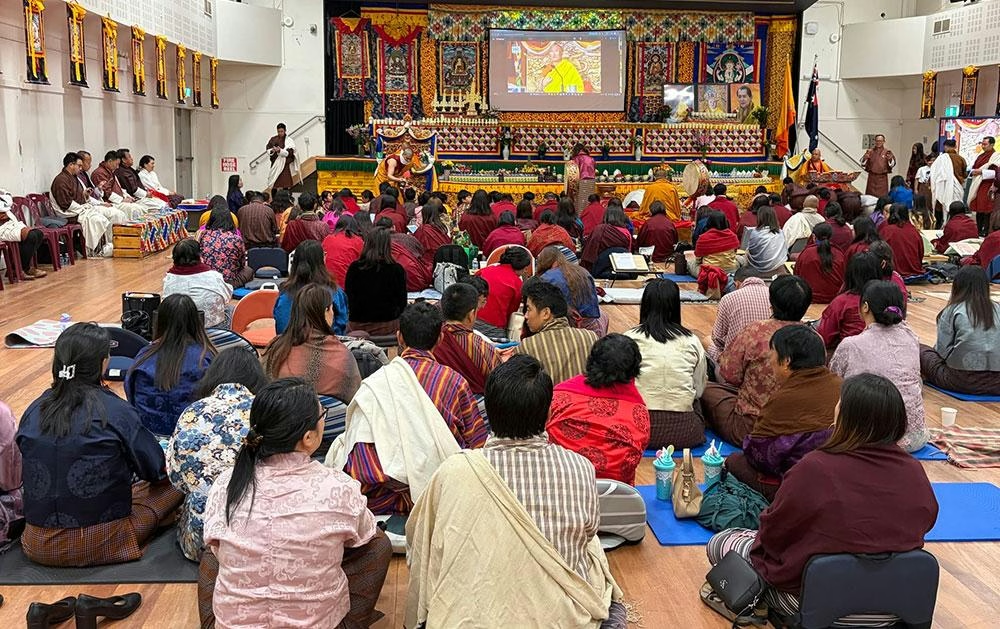
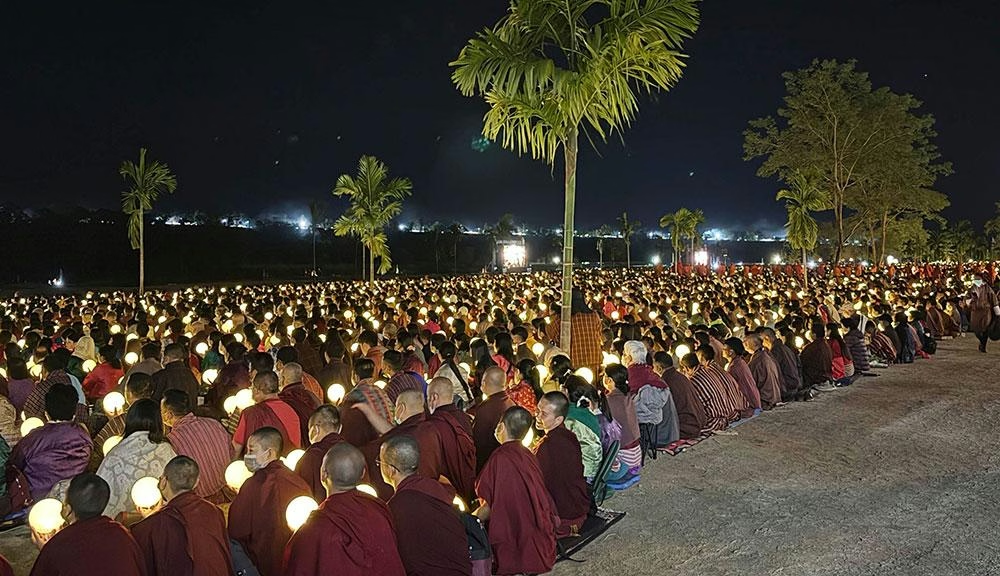
As volunteers worked through the night and into the morning, devotees gathered on the opposite riverbank to offer prayers. The recitation of the Mani—the sacred mantra of Chenrezig, the bodhisattva of compassion—created a spiritual counterpoint to the physical construction. By 9pm, the collective recitation tally had reached an astounding 600 million repetitions.
This synchronization of action and prayer reflected a profound understanding: spiritual development and material progress need not be opposing forces. Rather, they can be woven together to create something transcendent.
A Remarkable Feat of Coordination 🏗️
The logistics of completing 108 stupas in a single day seemed nearly impossible. Yet volunteers began their work at 3am, and by noon—without a single obstacle—all structures stood complete. This wasn't simply construction; it was coordinated spiritual practice manifested through physical labor.
Approximately 200,000 people gathered at Tendrelthang to witness the completion ceremony. This diverse crowd included:
- Bhutanese citizens living abroad who made international journeys
- Local volunteers who contributed their labor and expertise
- Spiritual practitioners engaged in continuous prayer and mantra recitation
- Government officials and dignitaries recognizing the cultural significance
- Families representing multiple generations of Bhutanese heritage
The presence of such numbers reflected something deeper than curiosity or tourism. It demonstrated how a nation's diaspora maintains profound emotional and spiritual bonds with their homeland, regardless of how far they've traveled.
His Majesty's Message of Unity 👑
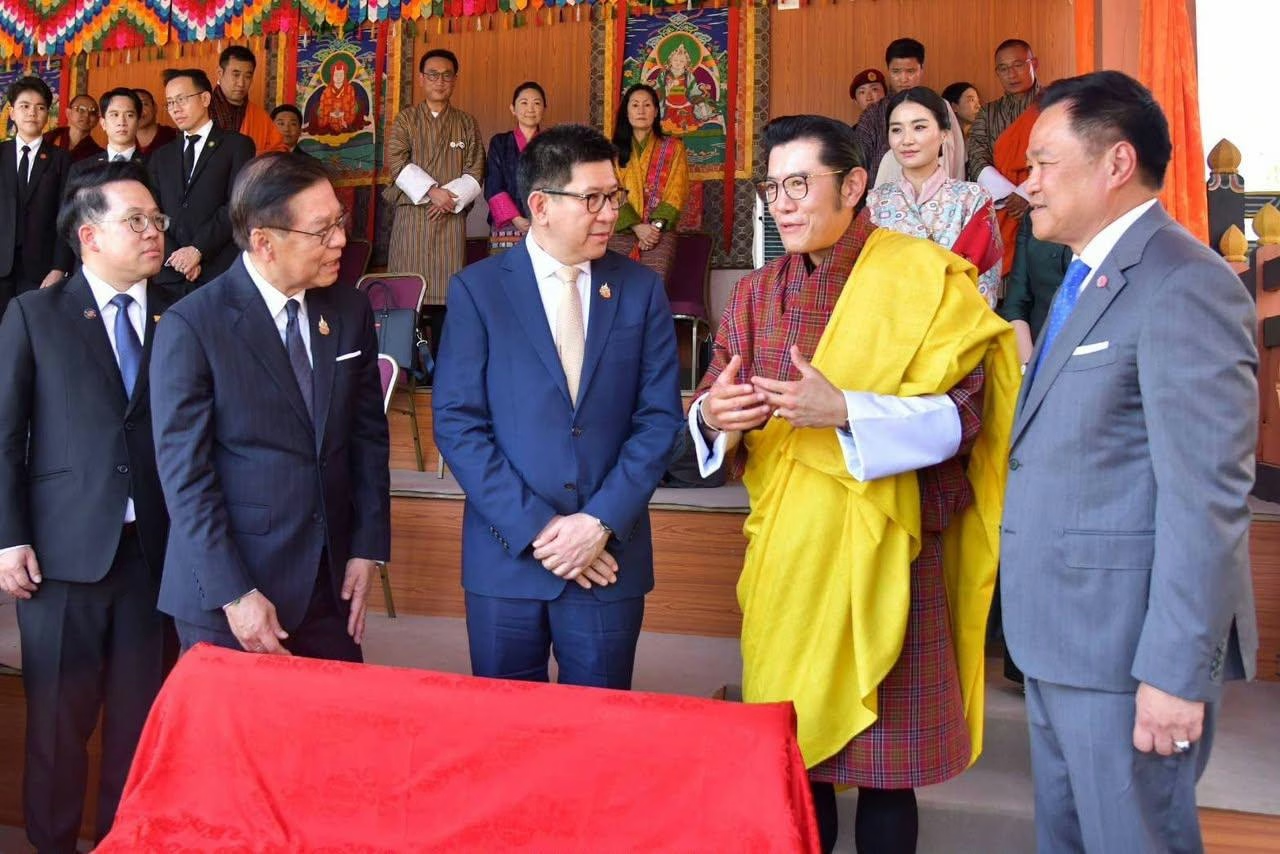
Addressing the assembled devotees, His Majesty The King acknowledged the volunteers as "Pawo"—those blessed in this life and the next. More significantly, His Majesty positioned both diaspora members and domestic citizens as central to Bhutan's continued spiritual and material development.
The choice to complete this project on Coronation Day added another layer of meaning. November 1st transformed from a day of historical commemoration into a day of collective offering—where Bhutanese from every walk of life and every corner of the globe could participate in nation-building through spiritual practice.
This messaging is crucial for understanding Bhutan's modern identity. While many nations view diaspora populations as having moved beyond national concerns, Bhutan's approach integrates them as essential participants in the country's spiritual and developmental narrative.
What This Means for Bhutanese Identity 🌏
The 108 stupas project reveals something fundamental about how Bhutanese culture functions across borders. Unlike diaspora communities that gradually assimilate into their adopted countries' values, Bhutanese abroad maintain active engagement with their nation's spiritual and cultural initiatives.
This phenomenon reflects Bhutan's unique approach to modernization. Rather than viewing economic development and cultural preservation as contradictory, the nation integrates Buddhist principles into contemporary urban planning and infrastructure. Gelephu Mindfulness City exemplifies this philosophy—creating a modern economic zone that prioritizes mindfulness, sustainability, and spiritual values.
For diaspora members like Dorji and Wangchuk, participating in such projects reinforces their identity and purpose. It transforms them from expatriates into active contributors to their nation's trajectory. This has practical implications for Bhutan's future development, as diaspora professionals bring international expertise, financial resources, and global networks to national projects.
The Broader Context of Bhutanese Development 📈
Bhutan's emphasis on Gross National Happiness (GNH) over Gross Domestic Product has created a distinctive development model that resonates with diaspora communities worldwide. Many Bhutanese abroad chose their adopted countries precisely because they offered economic opportunities, yet they maintain deep spiritual commitments that align with GNH principles.
Projects like the 108 stupas serve as tangible expressions of this philosophy. They demonstrate that economic progress—represented by Gelephu Mindfulness City's development—can coexist with spiritual practice and cultural continuity. This message appeals powerfully to diaspora members who often struggle to reconcile their professional ambitions with their cultural values.
The scale of diaspora participation suggests that Bhutan's international community represents an underutilized resource for national development. These individuals possess:
- Professional expertise from global industries
- Financial capacity to make significant contributions
- Established networks in major international centers
- Deep cultural knowledge and spiritual commitment
- Desire to remain meaningfully connected to their homeland
Looking Forward 🔮
The completion of the 108 stupas marks not an endpoint but a beginning. As these structures stand along the Mau River, they represent a commitment to spiritual practice integrated with modern development. For the diaspora members who traveled to witness this moment, it reinforces their connection to Bhutan and their role in its future.
The project raises important questions about how nations can better engage their diaspora populations. Rather than viewing emigration as a loss, Bhutan's approach recognizes diaspora members as extended participants in national projects. This model could inspire other nations seeking to maintain cultural continuity while embracing global economic integration.
As Gelephu Mindfulness City continues development, the presence of 108 stupas will serve as a constant reminder of the values undergirding this project. They stand as monuments not just to Buddhist spirituality but to the power of diaspora communities choosing to remain connected to their roots. In an increasingly globalized world, this choice—to return home, to contribute, to participate in collective spiritual practice—carries profound significance.
The Bhutanese diaspora's journey to witness these stupas rising from the earth demonstrates that home remains more than a geographical location. It's a spiritual anchor, a source of identity, and a place where one's deepest values can find expression. For those who made the journey, the experience of seeing 108 structures simultaneously reaching toward the sky will remain etched in memory—a tangible manifestation of their enduring connection to Bhutan and its sacred traditions.