Category:
SportsBhutan U-17 Football Team Ends AFC Qualifiers Without Victory
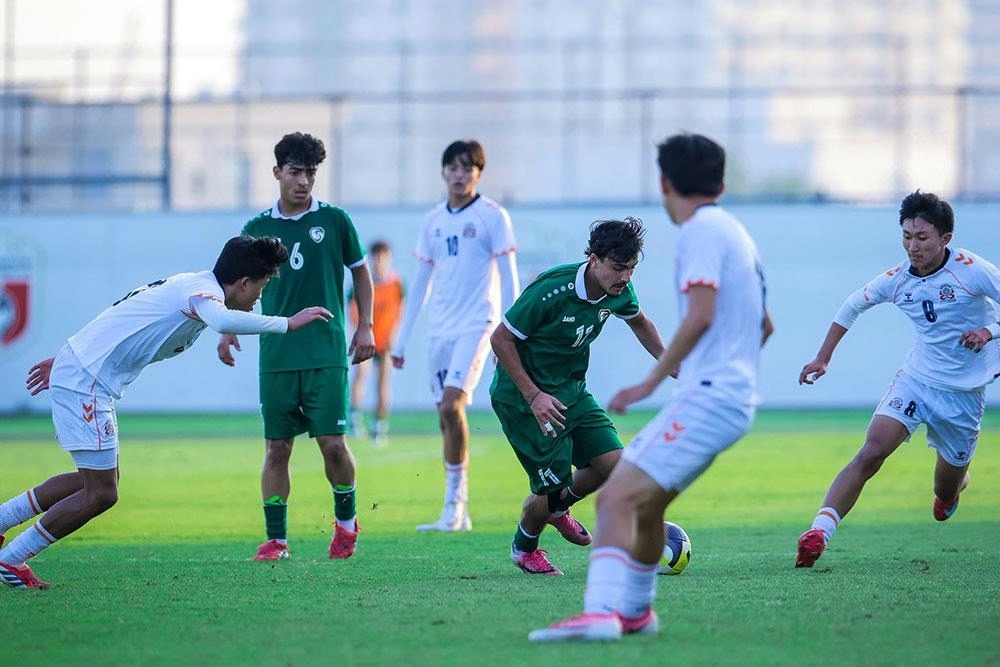
A Challenging Campaign in the AFC U-17 Asian Cup Qualifiers ⚽
Bhutan's under-17 men's national football team has concluded their participation in the AFC U-17 Asian Cup Uzbekistan 2027 qualifying tournament, finishing their Group C campaign without securing a single victory. The young squad faced formidable opponents across four matches, ultimately exiting the competition with zero points and valuable lessons learned about international youth football competition.
The team's journey through the qualifiers was marked by four consecutive defeats, culminating in a devastating 10-0 loss to Syria in their final group stage match. While the results on the scoreboard tell a story of struggle, the experience has provided Bhutan's football development program with critical insights into the gaps that need addressing at the youth level.
Match-by-Match Breakdown: Where It All Began 📋
Bhutan's qualifying campaign kicked off on November 8 in Ras Al-Khaimah, United Arab Emirates, where they faced Macau, China in what would prove to be their most competitive encounter. The match remained closely contested throughout regular play, with Bhutan demonstrating resilience and tactical discipline. However, a second-half penalty proved decisive, handing Macau a narrow 1-0 victory.
Just three days later, on November 11, Bhutan encountered the host nation, the United Arab Emirates. The home side's advantage and superior preparation became evident as they dominated possession and clinical finishing, securing a comfortable 3-0 victory. This match highlighted the significant gap in technical execution and match preparation between Bhutan and more established youth football programs.
The November 14 encounter against Bangladesh saw Bhutan concede four goals without scoring, extending their winless streak. This fixture demonstrated recurring defensive vulnerabilities and an inability to capitalize on any offensive opportunities that emerged during play.
The campaign concluded with the Syria match, which saw Bhutan's heaviest defeat of the tournament. The 10-0 scoreline represented the most lopsided result of the group stage, reflecting the vast disparity in experience, technical proficiency, and tactical maturity between the two sides. Across all four matches, Bhutan conceded 18 goals while failing to register a single goal, painting a stark picture of the challenges facing the nation's youth football development.
The Silver Lining: Learning and Development 🌟
Despite the disappointing results, the tournament served a crucial developmental purpose for Bhutan's football ecosystem. Yonten Tharchen, the Bhutan U-17 team captain, emphasized that representing the nation on the continental stage was an immense honor and source of pride for the entire squad.
Tharchen articulated that the experience underscored a fundamental principle in modern football: success transcends mere technical and tactical proficiency. The importance of teamwork, collective understanding, and synchronized movement emerged as critical lessons from the campaign. He acknowledged that the final match against Syria, despite its overwhelming nature, provided valuable perspective on the level required to compete at Asia's highest youth levels.
The captain highlighted a specific area requiring attention: the balance between individual skill expression and collective team coordination. Some players, Tharchen noted, had relied too heavily on personal performances rather than integrating seamlessly within the team's overall structure. This insight reflects a common challenge in youth football development, where talented individuals must learn to subordinate personal ambitions to collective objectives.
Player Perspectives: Growth Beyond the Scoreline 💪
Choeying Rangdrol, another squad member, shared how the competition fundamentally altered his understanding of professional football's demands. The exposure to international-standard opponents, particularly those demonstrating superior speed and technical mastery, proved transformative. Rather than becoming discouraged, Rangdrol channeled the experience into motivation for personal development.
Rangdrol emphasized that witnessing elite young players from established football nations reinforced the importance of trust, proper guidance, and teamwork when facing superior opposition. This psychological resilience—the ability to learn from defeat rather than become demoralized—represents perhaps the most valuable takeaway from the campaign.
Coaching Staff Analysis: Identifying Structural Challenges 🎯
Yuta, serving as the Bhutan U-17 goalkeeper coach, provided critical institutional perspective on the team's performance. While acknowledging the squad's inability to secure victories, Yuta credited the players for their commitment and effort throughout the qualifiers. His analysis, however, identified a systemic issue affecting Bhutan's youth football development: insufficient access to competitive international matches.
Yuta explained that Bhutan's domestic football structure lacks the regular competitive fixtures necessary to adequately prepare young players for continental-level competition. While the squad maintained training regimens and participated in friendly matches following their final official fixture in late January, these preparatory activities proved insufficient. Friendly matches, by their nature, lack the psychological intensity, tactical rigor, and consequence-driven pressure inherent in official competition.
"Although we continued training and played many friendly matches, we did not have enough competitive experience," Yuta stated, highlighting a core challenge facing Bhutanese youth football. This structural limitation affects not only the U-17 program but reflects broader infrastructure constraints within the nation's football development pathway.
The Broader Context: AFC U-17 Asian Cup Qualifiers Structure 🏆
The AFC U-17 Asian Cup qualifiers represent a critical juncture in youth football development across the Asian continent. These qualifying tournaments determine which nations advance to the continental finals, scheduled for Uzbekistan in 2027. The competition brings together youth national teams from across Asia's diverse football landscape, ranging from established powerhouses to emerging programs.
For smaller footballing nations like Bhutan, participation in these qualifiers offers invaluable exposure to international standards and competitive benchmarking. While victory may remain elusive, the developmental value of competing against established programs cannot be overstated. Each match provides data points for coaching staff to analyze, areas for tactical adjustment, and motivation for players to elevate their performance standards.
Systemic Challenges in Bhutanese Youth Football Development 📊
Bhutan's performance in the AFC qualifiers reflects broader challenges within the nation's youth football infrastructure. The lack of regular domestic competitive fixtures means young players progress through their development without the match experience necessary to transition seamlessly to international competition. This creates a significant gap between domestic performance levels and continental standards.
Additionally, Bhutan's geographic isolation and limited resources affect the frequency of international exposure opportunities. Building a competitive youth program requires sustained investment in coaching education, facility development, and regular competitive opportunities. Many established football nations integrate youth players into domestic professional league structures, providing consistent high-level competition. Bhutan's developing football market lacks these established pathways.
Looking Forward: Building on the Foundation 🚀
The coaching staff and players have expressed commitment to leveraging this experience toward future improvement. The 2027 AFC U-17 Asian Cup in Uzbekistan remains a distant target, but the groundwork for long-term development has been established through this qualifying campaign.
Bhutan's football association must prioritize several initiatives moving forward. Increasing the frequency of international friendly fixtures, establishing partnerships with more advanced football nations for regular youth competitions, and investing in coaching education represent critical next steps. Additionally, developing a more robust domestic competitive structure will provide young players with the match experience necessary for international success.
The Importance of Perseverance in Football Development 💫
While Bhutan's scoreline in the AFC U-17 Asian Cup qualifiers proved disappointing, the campaign demonstrated the squad's willingness to compete at continental level and willingness to learn from adversity. In football development, such experiences often prove more valuable than early success, as they instill resilience, humility, and commitment to improvement.
The players and coaching staff have already begun analyzing performance data and identifying specific areas requiring attention. This reflective approach, combined with sustained investment in youth development infrastructure, positions Bhutan to gradually improve its competitive standing in future tournaments. Football development is inherently a long-term endeavor, and single tournaments represent merely one chapter in an ongoing narrative.
Conclusion: Seeds of Future Growth 🌱
Bhutan's under-17 team may have concluded their AFC qualifying campaign without a victory, but they have planted seeds for future growth within the nation's youth football ecosystem. The experience provided invaluable exposure to international standards, identified specific areas requiring development, and demonstrated the squad's commitment to representing their nation with pride and determination.
As Bhutanese football continues its developmental journey, campaigns like this serve as crucial learning opportunities. The 2027 AFC U-17 Asian Cup in Uzbekistan remains a distant goal, but with sustained investment in youth development infrastructure, increased competitive opportunities, and commitment from players and coaching staff, Bhutan's football program can gradually close the gap with more established nations. The foundation has been laid; now comes the patient, persistent work of building something sustainable.
You May Also Like

Sports
Bhutanese Para-Athletes Train in South Korea
November 18, 2026

Sports
Bhutan and Mongolia Launch Historic Cricket Partnership
November 18, 2026
Sports
Sherig United Perth Dominates 2026 Season with Three Title Wins
November 14, 2026

Sports
Bhutan's Historic SAFF Championship Semifinal Return
November 12, 2026