Category:
SportsBhutan and Mongolia Launch Historic Cricket Partnership
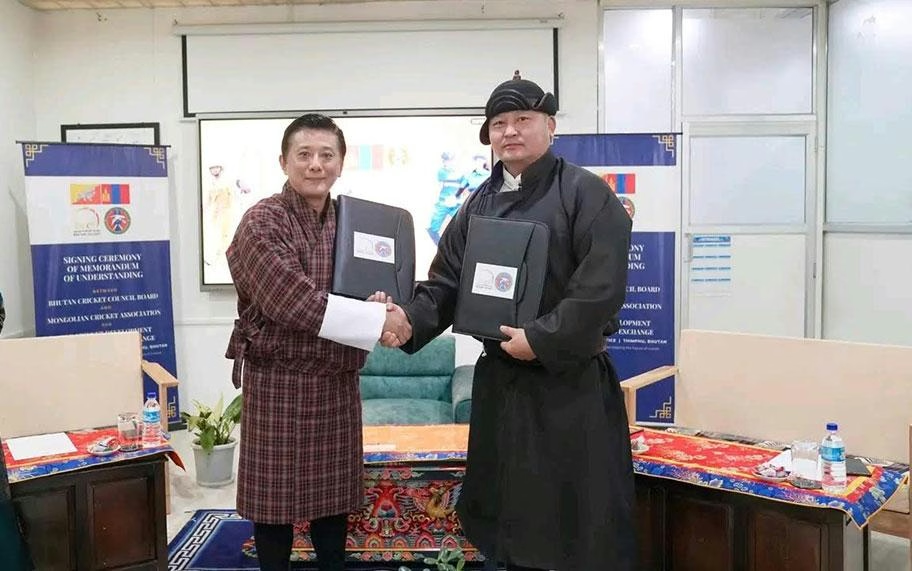
A Historic Moment for Asian Cricket 🏏
In a significant development for emerging cricket nations across Asia, Bhutan and Mongolia have forged an ambitious partnership designed to elevate cricketing standards and foster international competition between their respective teams. The formal agreement, sealed through a Memorandum of Understanding on November 17, represents a watershed moment for both cricket associations and signals their commitment to developing the sport at regional and grassroots levels.
This bilateral cricket partnership between Bhutan and Mongolia extends across five years, creating a structured framework for sustained engagement and mutual growth. Rather than a one-off arrangement, the partnership establishes a foundation for regular competition, technical expertise sharing, and youth development initiatives that will benefit both nations' cricketing ecosystems.
The Partnership Framework: What's Included 📋
The agreement encompasses far more than simply scheduling matches between national teams. Both the Bhutan Cricket Council Board (BCCB) and Mongolian Cricket Association (MCA) have committed to a comprehensive approach that addresses multiple dimensions of cricket development.
Key components of the partnership include:
- Annual bilateral matches and series featuring men's and women's national teams, with hosting duties alternating between the two countries
- Coaching and umpiring exchanges to facilitate knowledge transfer and technical skill development
- Grassroots cricket initiatives including training camps, competitions, and awareness programmes targeting youth participation
- Regional competition participation with collaborative efforts to compete in tournaments hosted by neighboring cricket-playing nations
- Joint annual work plans coordinated through appointed focal persons from each association
The decision to include women's cricket within this partnership framework reflects the evolving landscape of international cricket, where gender parity in sports development has become increasingly important. Both nations recognize that sustainable cricket growth requires investment in female athletes and creating pathways for women's participation at elite levels.
Emerging Cricket Nations Finding Common Ground 🌏
Bhutan and Mongolia occupy unique positions within Asian cricket. Neither nation boasts the cricketing infrastructure or international experience of established cricket powerhouses, yet both have demonstrated genuine commitment to growing the sport domestically. This shared status as emerging cricket nations creates natural synergies and mutual understanding of the challenges involved in cricket development.
The geographical separation between Bhutan in South Asia and Mongolia in Central Asia might suggest limited common ground. However, both nations share deeper cultural connections rooted in Buddhist heritage, environmental stewardship, and a commitment to preserving traditional values while embracing modern development. These shared cultural foundations provide a meaningful context for sporting cooperation that transcends mere competitive rivalry.
Both associations maintain membership in the International Cricket Council (ICC) and represent their nations in continental bodies—Bhutan through the Asian Cricket Council (ACC) and Mongolia through ICC structures. This formal standing within international cricket governance underscores their legitimacy as cricket-playing nations and their aspirations for greater participation in regional and global cricket competitions.
Building Expertise Through Exchange Programs 🤝
One of the partnership's most promising elements involves systematic exchanges of coaching and umpiring expertise. Cricket development depends not only on competitive opportunities but also on the quality of technical instruction and fair, knowledgeable match administration. By rotating coaches and umpires between nations, both associations can expose their personnel to different coaching philosophies, training methodologies, and interpretations of cricket law.
These exchanges serve multiple purposes simultaneously. They create professional development opportunities for cricket administrators and officials while building personal relationships that strengthen institutional ties. Young coaches from Mongolia can observe how their Bhutanese counterparts structure training sessions, manage player development, and prepare teams for international competition. Similarly, Bhutanese umpiring officials can learn from Mongolian peers, ensuring both nations develop officials capable of managing matches at increasingly competitive levels.
The technical cooperation component addresses a critical gap for emerging cricket nations. While established cricket countries benefit from deep institutional knowledge accumulated over decades, newer cricket-playing nations must deliberately construct this expertise. Through structured exchanges, Bhutan and Mongolia compress the learning curve and avoid repeating mistakes that other nations encountered during their cricket development phases.
Grassroots Development: Planting Seeds for Future Success 🌱
Sustainable cricket growth originates in grassroots development. The partnership's commitment to youth-focused initiatives—including training camps, school competitions, and awareness campaigns—acknowledges this fundamental principle. By introducing cricket to young people across both nations, the associations create talent pipelines that will supply future national teams with skilled players.
Grassroots programmes also serve broader social functions. Cricket provides youth with structured recreational opportunities, teaches teamwork and discipline, and can serve as a vehicle for social development in communities where organized sports infrastructure remains limited. In Bhutan and Mongolia, where sports development competes for resources with numerous other national priorities, cricket's potential to engage young people and promote physical fitness carries particular significance.
The partnership's emphasis on "awareness programmes" suggests recognition that cricket remains relatively unfamiliar to general populations in both countries. Building public understanding and enthusiasm for the sport creates the constituency necessary for sustainable development. As more young people understand cricket's basic rules and appreciate its strategic complexity, participation rates naturally increase.
International Competition: Gaining Experience on the Global Stage 🌟
Regular bilateral competition provides invaluable experience for national team players. Cricket at international level demands specific skills—managing pressure situations, adapting to unfamiliar playing conditions, reading opposition strategies, and performing consistently across multiple matches. Players from emerging cricket nations gain these competencies most effectively through regular international exposure.
The partnership's provision for "greater participation in regional competitions" opens additional pathways for international experience. As both nations' teams improve through bilateral competition and domestic development initiatives, they become increasingly competitive in tournaments hosted by established cricket nations. This creates positive momentum—improved teams attract greater media attention and public interest, which generates resources for further development.
For players from Bhutan and Mongolia, bilateral series against each other represent genuine international cricket. These matches carry significance equivalent to encounters between more established cricket nations. Victory becomes meaningful, defeat instructive, and the experience genuine. This authenticity matters psychologically for athletes developing international cricket careers.
Leadership Vision: Voices Behind the Partnership 💬
BCCB President Thinley Wangchuk Dorji characterized the partnership as "an important step towards strengthening sporting relations and raising the standard of cricket in both countries." His emphasis on shared expertise and infrastructure reflects strategic thinking about how emerging nations can leverage cooperation to accelerate development.
Dorji's recognition that Bhutan and Mongolia "share a common ambition to develop the sport and create more opportunities for their athletes" articulates the partnership's fundamental motivation. Rather than viewing each other as competitors in a zero-sum game, both associations recognize mutual benefit in collaborative development. This mindset—cooperation rather than competition—distinguishes successful international sporting partnerships.
Mongolian Cricket Association President Battulga Gombo framed the partnership as transcending mere administrative agreement: "Today is more than just signing a Memorandum of Understanding. It is about building friendship, sharing experiences and creating opportunities for the next generation through cricket." This perspective emphasizes sport's role in building interpersonal connections and cultural understanding across national boundaries.
Gombo's observation that "sport could bring people closer through cooperation and mutual learning" reflects sophisticated understanding of sport's social functions. Cricket becomes a vehicle for diplomacy, cultural exchange, and relationship-building between nations. Young athletes traveling to compete in each other's countries become informal ambassadors, fostering people-to-people connections that strengthen bilateral relationships beyond the cricket field.
Implementation Structure: Making It Work 🛠️
Successful international partnerships require clear governance mechanisms. The agreement's provision for appointing focal persons from each association ensures dedicated coordination and accountability. These individuals serve as primary contacts for scheduling matches, organizing exchanges, and monitoring progress toward partnership objectives.
The commitment to developing "joint annual work plans" provides structure while maintaining flexibility. Rather than rigidly predetermined schedules, annual planning allows both associations to adjust timelines based on domestic priorities, financial resources, and international opportunities. This adaptive approach increases the likelihood of sustained implementation over the five-year partnership period.
Without such implementation mechanisms, even well-intentioned agreements risk becoming dormant. The BCCB and MCA have demonstrated commitment to operationalizing this partnership through concrete governance structures that assign responsibility and create accountability.
Broader Context: Cricket's Expansion in Asia 🏆
This Bhutan-Mongolia partnership reflects broader trends in Asian cricket development. The sport has expanded dramatically across Asia in recent decades, moving beyond traditional cricket strongholds like India, Pakistan, and Sri Lanka to establish footholds in nations where cricket was previously marginal or nonexistent.
Bangladesh's emergence as a competitive Test-playing nation, Afghanistan's rapid rise to international prominence, and growing cricket participation in Southeast Asian countries demonstrate cricket's expanding appeal across diverse Asian contexts. Bhutan and Mongolia represent the frontier of this expansion—nations where cricket remains nascent but where dedicated associations have committed to systematic development.
Regional cricket governance through bodies like the Asian Cricket Council has facilitated this expansion by creating pathways for emerging nations to participate in continental competitions. The ACC's development programs and tournament structures provide frameworks within which nations like Bhutan and Mongolia can gain international exposure while competing against teams at comparable developmental stages.
Looking Forward: The Five-Year Roadmap 🚀
The partnership's immediate priorities include scheduling bilateral series for men's and women's national teams in Bhutan, alongside initiating coaching and umpiring exchanges. These near-term objectives provide concrete targets that both associations can work toward while building momentum for longer-term development initiatives.
The five-year timeframe allows sufficient duration for meaningful progress while remaining manageable for planning purposes. Both associations can assess partnership effectiveness at the halfway point and adjust strategies if necessary. After five years, the partnership can be renewed, expanded, or concluded based on mutual evaluation of outcomes and continued commitment to collaborative development.
Success will be measured not merely by match results but by broader indicators: increased domestic cricket participation in both nations, improved player skill levels, enhanced coaching and administrative capabilities, and strengthened institutional relationships between the associations. These metrics reflect the partnership's comprehensive development philosophy.
Conclusion: A Model for Cricket Development 🎯
The Bhutan-Mongolia cricket partnership demonstrates that meaningful international sporting cooperation need not involve only established cricket powerhouses. Two emerging cricket nations have recognized mutual benefit in collaboration and committed resources to systematic partnership that addresses competition, technical development, and grassroots growth simultaneously.
This model offers valuable lessons for other emerging cricket nations. Rather than viewing international cricket as inherently hierarchical—with established nations at the apex and developing nations perpetually subordinate—partnerships like this one demonstrate possibilities for peer-to-peer collaboration among nations at comparable developmental stages. Such partnerships accelerate cricket development for all participating nations while building diplomatic relationships and cultural understanding.
As Bhutan and Mongolia embark on their five-year partnership, they signal to the international cricket community that emerging cricket nations are committed to serious, sustained development. The bilateral matches to come will showcase their athletes' skills, the exchanges will transfer expertise, and the grassroots initiatives will plant seeds for future cricket generations. Through this partnership, both nations take significant strides toward their cricket aspirations while demonstrating sport's power to unite nations across geographical and cultural distances.
You May Also Like
Sports
Bhutanese Para-Athletes Train in South Korea
November 18, 2026
Sports
Sherig United Perth Dominates 2026 Season with Three Title Wins
November 14, 2026
Sports
Bhutan's Historic SAFF Championship Semifinal Return
November 12, 2026
Sports
Bhutan Reaches SAFF Championship Semi-finals After 18 Years
November 12, 2026