Category:
EconomyBhutan-Japan Business Collaboration: Gateway to Global Markets
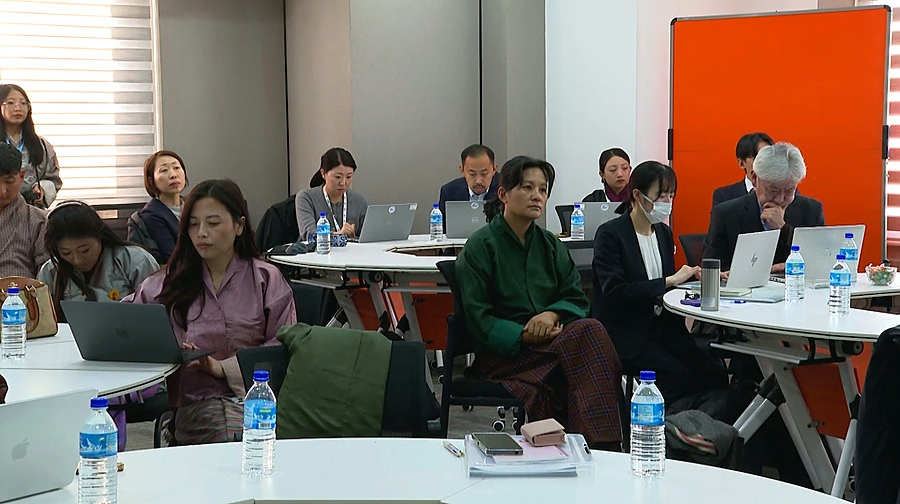
A Historic Moment for Bhutanese Entrepreneurship 🌏
Bhutan's business landscape is experiencing a transformative moment as ten dynamic Bhutanese enterprises recently convened with representatives from five prominent Japanese companies to explore groundbreaking partnership opportunities. This pivotal business matching session marks a significant step toward internationalizing Bhutanese products and services while leveraging Japanese technological expertise and market access.
The gathering brought together companies operating across three strategic sectors: healthcare, food processing, and biotechnology. For Bhutan's growing entrepreneurial ecosystem, this represents more than just a networking opportunity—it signals the country's commitment to fostering cross-border economic collaboration and positioning itself as a hub for innovative, sustainable business ventures.
Understanding the Strategic Importance 💼
Bhutan's economy has traditionally relied on hydropower, tourism, and agriculture. However, recent years have witnessed a deliberate shift toward diversifying the economic base through value-added manufacturing and innovation-driven enterprises. Japanese companies, known for their precision, quality standards, and advanced technologies, represent an ideal partnership avenue for Bhutanese businesses looking to scale operations and access international markets.
The collaboration framework focuses on three critical areas where Bhutan possesses natural advantages: healthcare solutions rooted in traditional knowledge, organic food processing leveraging the nation's pristine agricultural environment, and biotechnology applications that harness indigenous resources.
Breaking Down Barriers to Innovation 🔬
One of the most pressing challenges facing Bhutanese entrepreneurs is the lack of access to advanced research and product testing facilities. Many local businesses currently depend on laboratories located outside the country to validate their products and conduct quality assurance testing. This dependency creates significant delays, increases operational costs, and limits the ability of companies to rapidly innovate and bring products to market.
Ugyen Tshering, Founder of Pure Bhutan, articulated this challenge with particular clarity during the matching session. His company specializes in health and wellness products derived from Bhutan's unique botanical resources. The absence of domestic testing infrastructure has forced Pure Bhutan to conduct research and validation studies internationally, creating bottlenecks in product development cycles.
"The fundamental obstacle we face is demonstrating to our customers—through concrete, scientific data—the efficacy and quality of our offerings," Tshering explained. "Building partnerships that grant us access to research facilities and testing capabilities would fundamentally transform our operational capacity and allow us to provide evidence-based assurances about product benefits and health impacts."
This challenge extends across Bhutan's emerging enterprises. Without local laboratory infrastructure, companies struggle to meet international quality standards and regulatory requirements, which are increasingly demanded by global markets. Japanese companies, many of which operate state-of-the-art research and testing facilities, can provide critical support in overcoming this infrastructure gap.
What Japanese Companies Bring to the Table 🚀
Atsushi Yamanaka, Senior Advisor for Digital Transformation at JICA (Japan International Cooperation Agency), emphasized the mutual benefits inherent in the partnership framework. Japanese enterprises participating in the matching session represent sectors where they have developed cutting-edge technological capabilities and extensive market experience.
"These Japanese organizations bring advanced technologies and proven methodologies to the table," Yamanaka noted. "Our collective vision is to identify synergies between Japanese innovation and Bhutanese resources, creating products and services that are both novel and commercially viable in international markets."
Japanese companies have demonstrated particular strength in:
- Quality assurance protocols that exceed international standards
- Food processing technologies that preserve nutritional value while extending shelf life
- Biotechnology applications for pharmaceutical and nutraceutical development
- Digital transformation capabilities that modernize production and supply chain management
- Market access networks spanning Asia-Pacific and beyond
The Structured Approach to Building Partnerships 🤝
Tashi Wangdi, Founder of Impact Hub Thimphu, outlined the phased strategy for developing these business relationships. Rather than rushing into formal agreements, the framework emphasizes gradual relationship building and trust establishment—a critical element when bridging different business cultures and regulatory environments.
The collaboration process unfolds in distinct phases:
-
Connection Phase: Initial meetings and product presentations allow companies to understand each other's capabilities, vision, and operational requirements.
-
Trust-Building Phase: Follow-up engagements, detailed discussions, and site visits enable deeper relationship development and assessment of compatibility.
-
Partnership Formalization: Once mutual trust and strategic alignment are established, formal partnership agreements and joint venture structures are negotiated.
-
Ongoing Engagement: Virtual webinars and continued communication platforms ensure sustained connection and collaborative momentum.
"Our role is facilitating not just introductions, but genuine relationship development," Wangdi explained. "We're organizing follow-up sessions and hosting webinars to maintain engagement and help both sides navigate the complexities of cross-cultural business collaboration."
Market Opportunities on the Horizon 📈
The business matching session opens unprecedented opportunities for Bhutanese products to penetrate international markets, particularly across Asia and potentially into North America and Europe. Japanese companies often serve as gateway partners for emerging markets, leveraging their established distribution networks and brand credibility.
For Bhutanese enterprises, this partnership avenue offers several distinct advantages:
- Accelerated market entry into regions where Japanese brands have strong positioning
- Enhanced credibility through association with quality-conscious Japanese enterprises
- Technology transfer and access to manufacturing best practices
- Capital and investment opportunities for scaling production capacity
- Regulatory guidance for navigating international compliance requirements
Historically, small nations with limited domestic markets have successfully leveraged partnerships with larger trading partners to achieve economic growth. Bhutan's unique positioning—as a nation with high environmental standards, authentic cultural products, and pristine natural resources—creates compelling value propositions for Japanese companies seeking differentiated, sustainable product lines.
The Broader Context of Bhutan-Japan Relations 🌐
This business collaboration initiative reflects deepening economic ties between Bhutan and Japan. Japan has invested significantly in Bhutan's development through JICA and other bilateral programs, focusing on infrastructure, education, and technological capacity building.
The business matching framework represents an evolution of this relationship—moving beyond traditional development assistance toward reciprocal economic partnership. For Japan, accessing Bhutan's unique resources and market positioning offers strategic value. For Bhutan, partnership with a technologically advanced, quality-focused nation like Japan accelerates the journey toward becoming a knowledge-based economy.
Addressing the Competitiveness Challenge 💡
Bhutan's entrepreneurs face competition from larger regional players with established market presence and greater resources. However, several factors position Bhutanese businesses competitively:
- Authenticity and heritage: Products rooted in Bhutanese tradition and culture command premium positioning
- Environmental credentials: Bhutan's commitment to environmental conservation resonates with globally conscious consumers
- Quality focus: The national emphasis on Gross National Happiness over GDP creates natural alignment with quality-over-quantity business models
- Innovation potential: Access to Japanese technology can rapidly elevate product sophistication and market appeal
What Comes Next? 🔮
The initial business matching session represents just the beginning of what could become transformative partnerships. Success will depend on several factors: genuine commitment from both Bhutanese and Japanese companies, continued facilitation and support from organizations like Impact Hub Thimphu and JICA, and willingness from both sides to invest time and resources in relationship building.
The coming months will be critical as companies follow up on initial connections, conduct deeper due diligence, and explore specific collaboration opportunities. Webinars and virtual engagement platforms will maintain momentum while companies work toward formal partnership agreements.
Key Takeaways for Bhutan's Economic Future 🎯
This collaboration initiative demonstrates Bhutan's strategic positioning as a nation ready to engage with global economic systems while maintaining its unique identity and values. The partnership framework addresses genuine infrastructure gaps that have constrained entrepreneurial growth while creating pathways for Bhutanese products to reach international markets.
For entrepreneurs, policymakers, and development professionals, the Bhutan-Japan business collaboration model offers valuable lessons about structured partnership development, phased relationship building, and leveraging complementary strengths across different economies.
As Bhutan continues its journey toward becoming a knowledge-based, innovation-driven economy, partnerships with technologically advanced nations like Japan will prove increasingly vital. The business matching session represents not just an isolated event, but a template for how Bhutan can engage with the global economy—on its own terms, with its unique resources and values intact, while building prosperity for its entrepreneurs and communities.
You May Also Like

Economy
Government Tackles Rising Costs Through CCAA Pricing Assessment
November 25, 2026

Economy
Bumthang Potato Crisis: Farmers Face Unsold Stock Crisis
November 24, 2026

Economy
Bhutan Launches Revised Accounting Standards for 2026
November 24, 2026

Economy
Tingtibi's Sunday Market Revival Transforms Local Vegetable Sales
November 24, 2026