Category:
EconomyBATIF 2.0 Sparks Major Investments in Bhutan
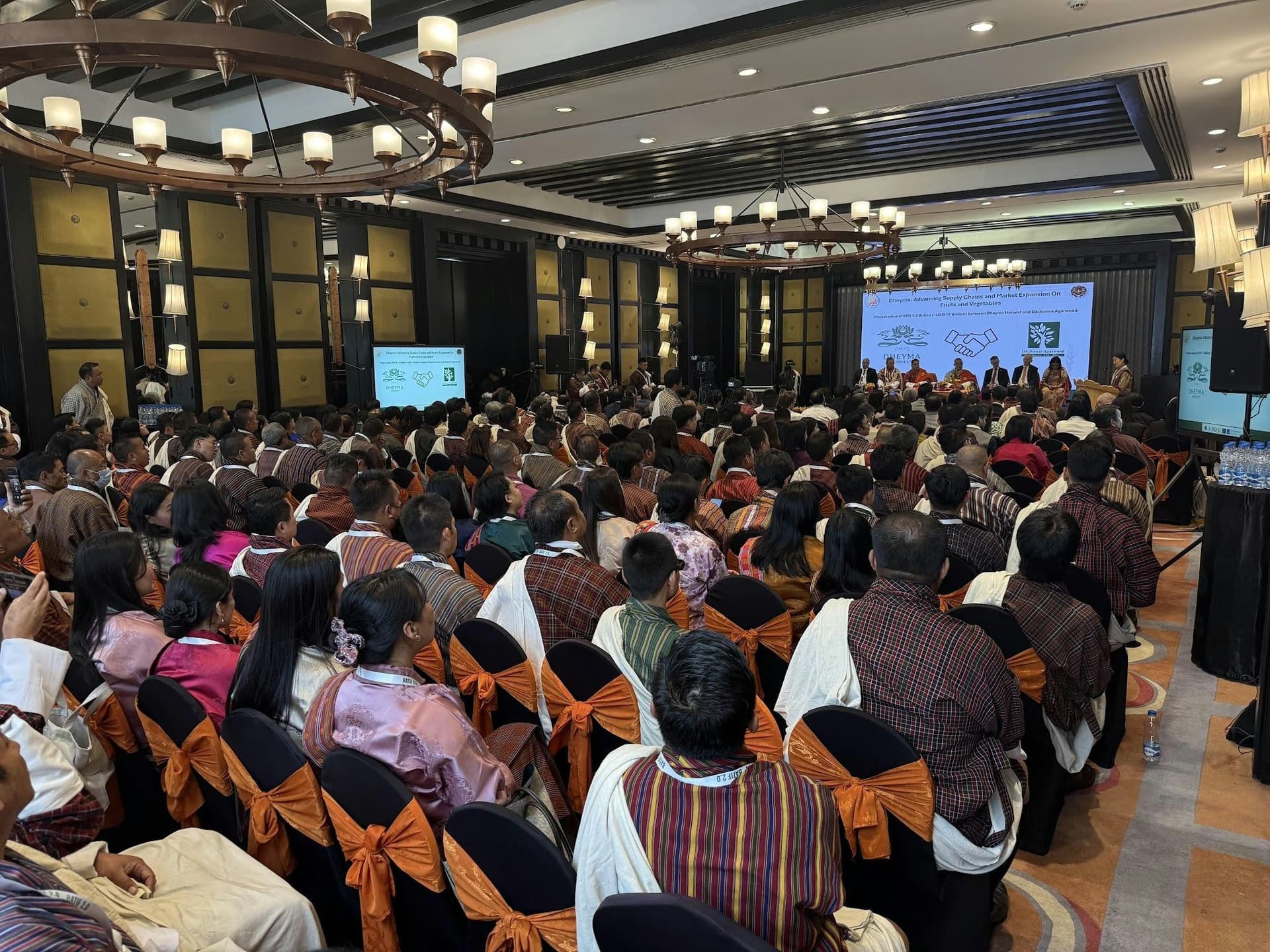
In an impressive show of economic strategy, Bhutan's agrifood sector is poised for a transformative leap, marked by significant investment commitments at the Bhutan Agrifood Trade and Investment Forum (BATIF) 2.0. 🏞️✨ This forum, held in Thimphu, underscores Bhutan's ambition to revolutionize its agricultural landscape through robust private and international partnerships.
Unveiling Bhutan's Agrifood Ambitions
The BATIF 2.0, orchestrated by the Ministry of Agriculture and Livestock (MoAL) in conjunction with the Food and Agriculture Organization of the United Nations (FAO), the Asian Development Bank (ADB), and the European Union, sets a precedent for agrifood transformation. The forum has sealed commitments worth billions of ngultrum, aiming to enhance supply chains and broaden market access. 🌐
Strategic Partnerships and Financial Muscle
A standout partnership between DAdvance Agarwood and Dheyma Harvest promises to inject Nu 1.4 billion over the next decade, focusing on fortifying fruit and vegetable supply chains. Meanwhile, the ADB has pledged USD 2 million to the Bhutan AgriSustain Fund (BAF), a fund initiated to catalyze agrifood advancements.
Other notable collaborations include Japanese firm Strout Inc.'s expertise in developing Bhutan's trout value chain through innovative aquaculture, and the Chaudhary Group's support in creating market linkages for herbs, potatoes, and essential oils. Additionally, NOB Bhutan Farmers will work with MoAL and other stakeholders to bolster potato production, backed by a Nu 98 million investment.
Bhutan's Vision for Sustainable Growth
Bhutan's Prime Minister, Tshering Tobgay, emphasized the importance of these investments in not just discussing possibilities but executing actionable projects that benefit farmers directly. He noted that agriculture is a cultural cornerstone of Bhutan’s rural economy. 🌾
"Agriculture is not just a means of livelihood; it is a culture and the backbone of the rural economy," the Prime Minister said, highlighting the government's commitment to sustainable and transparent development. He urged investors to support Bhutanese agriculture across various sectors, including initiatives that engage youth, women, and highland communities.
Challenges and Opportunities in Agriculture
Despite these promising developments, Bhutan faces significant challenges, such as an aging farming population, youth outmigration, and climate change impacts. Lyonpo Younten Phuntsho, Minister for MoAL, pointed out that while government efforts have been substantial, collaboration with the private sector is crucial for meaningful transformation. 🌍
The Minister stressed the necessity for investments to translate into tangible improvements in livelihoods and job creation. As Bhutan positions itself as a leader in nature-positive financing, these investments are not merely economic drivers but pivotal in supporting sustainable growth. 📈
The Global Context
Bhargav Dasgupta, ADB Vice-President for Market Solutions, praised Bhutan's development model for its sustainability focus. "Bhutan’s development agenda is not defined by economic growth alone," he remarked. Bhutan's emphasis on environmental sustainability and private sector-driven transformation sets it apart on the global stage.
The Road Ahead for Bhutan's Agrifood Sector
As BATIF 2.0 draws to a close, the forum marks a significant step towards unlocking sustainable agrifood growth. The dual pitching format of the event, aimed at deal-making and financing partnerships, has created a dynamic platform for stakeholders.
The MoAL anticipates mobilizing between USD 15 million and USD 20 million in investment commitments for high-priority projects. These investments are expected to formalize multiple MoUs, fostering public-private collaborations.
Conclusion: A New Dawn for Bhutanese Agriculture
The successful conclusion of BATIF 2.0 signals a new era for Bhutan's agricultural sector, blending traditional practices with modern investment strategies. As Bhutan continues to attract international interest, the focus remains on translating these commitments into real-world economic benefits for its farmers and communities. 🌟
In the face of global challenges and opportunities, Bhutan's agrifood sector is on the brink of a transformative journey that promises prosperity and sustainability for generations to come.
You May Also Like
Economy
Bhutan's Bold Vision: Two USD 50M Enterprises by 2030
September 27, 2026
Economy
Mega Dry Port in Pasakha: Bhutan's Trade Revolution
September 25, 2026

Economy
Fixed Deposit Tax Withholding: What You Need to Know
September 13, 2026
Economy
DRC's QR Payment Innovation: Tracking Business Income
September 2, 2026