Category:
NewsAccountability in JDWNRH Radiotherapy Service Failure
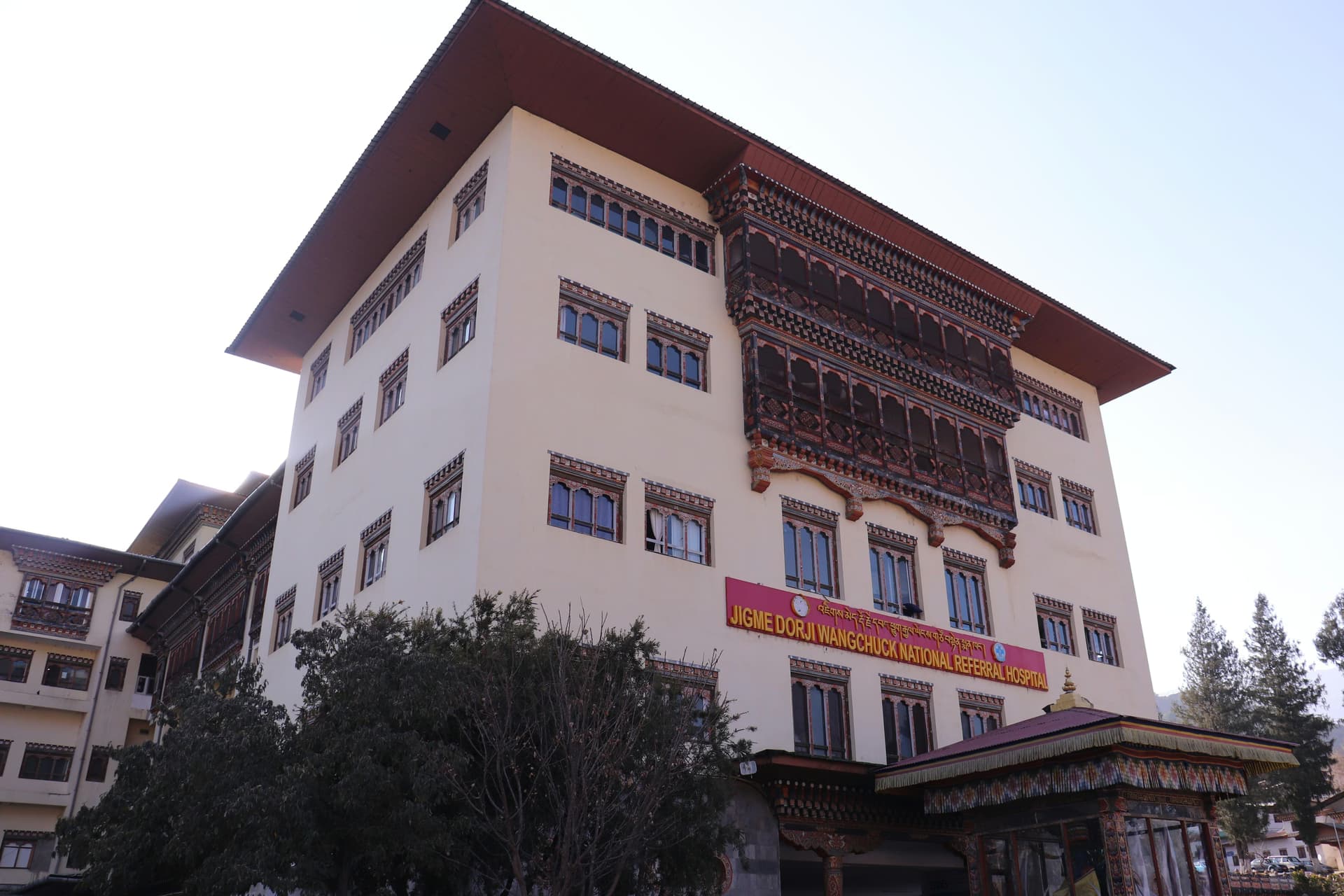
The Jigme Dorji Wangchuck National Referral Hospital (JDWNRH) in Bhutan is embroiled in controversy as its radiotherapy services remain suspended, leaving many questioning who is accountable for this healthcare setback. This multimillion-ngultrum facility, aimed at improving cancer care within the country, has been inactive for nearly five years, prompting scrutiny from various stakeholders. 🎥💡
The Rise and Fall of JDWNRH's Radiotherapy Service
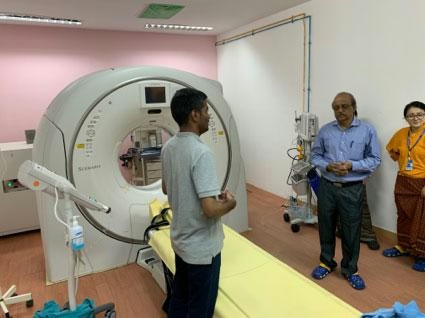
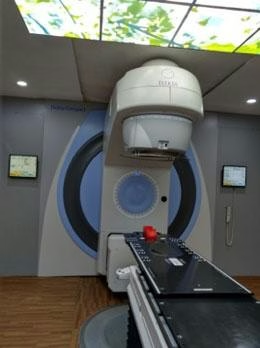
Established in January 2018, the radiotherapy service was intended to reduce the need for overseas referrals and enhance national capacity in cancer treatment. The government outsourced the service to Care Australia, a Kolkata-based vendor, under a contract that included monthly fees for equipment rental and professional services. However, the service was found lacking, leading to its suspension in August 2021. The decision to halt operations followed audit findings that highlighted significant lapses in planning and implementation. 📉🔍
Financial and Operational Oversights
The Royal Audit Authority (RAA) identified key figures like Health Minister Tandin Wangchuk and former JDWNRH officials for accountability due to inadequate due diligence before the service's approval. Despite this, audit certificates were issued post-investigation by the Anti-Corruption Commission, leaving many questions unanswered. The financial implications were severe, with the government incurring losses of nearly Nu 117.98 million. 💰🔎
Impact on Cancer Patients
The suspension has forced over 500 cancer patients annually to seek treatment in India, increasing the burden on patients and their families. In the 2014-15 financial year alone, JDWNRH spent Nu 46 million on overseas treatments for 393 patients. This setback underscores the urgent need for reliable and accessible cancer care within Bhutan. 🏥🇧🇹
Accountability and Future Prospects
The situation raises broader questions about responsibility and oversight in public healthcare initiatives. The RAA's audit revealed a lack of proper feasibility studies and cost-benefit analyses prior to the service's establishment. Former JDWNRH President Lhab Dorji argued that the decision did not require external consultancy, stating the necessity for specialized services was apparent. However, such assertions have done little to clarify accountability. 🧐📝
Broader Implications for Bhutan's Healthcare
This incident is not just a local setback but part of a broader trend of challenges in Bhutan's healthcare sector. The failure to deliver promised services reflects systemic issues in project management and accountability. It also highlights the importance of stringent health technology assessments and adherence to national policies to avoid similar pitfalls in the future. 📊⚠️
Moving Forward: Lessons and Recommendations
To prevent future failures, it is crucial to establish transparent processes for health technology assessments and ensure rigorous due diligence. Strengthening policy frameworks and accountability mechanisms will be key to rebuilding trust and improving healthcare delivery. Additionally, fostering collaborations with reputable international partners can help Bhutan leverage global expertise while building local capacity. 🌱🤝
In conclusion, while the JDWNRH radiotherapy service failure has been a significant setback, it presents an opportunity for Bhutan to reassess and strengthen its healthcare strategies. By learning from these challenges, the nation can pave the way for a more resilient and effective healthcare system. 🏆✨
You May Also Like
News
Women Entrepreneurs Master AI and Digital Tools in Phuentsholing
September 1, 2026

News
Can Samtse Keep Up With Its Growing Workforce?
August 29, 2026
News
Nepal Flood Exposes Critical Gaps in Bhutan's Early Warning Systems
August 29, 2026
News
High Court Overturns Acquittal: Doctor Sentenced to 10 Years for Child Sexual Abuse
August 29, 2026