Category:
NewsInside Bhutan's Illegal Timber Trade
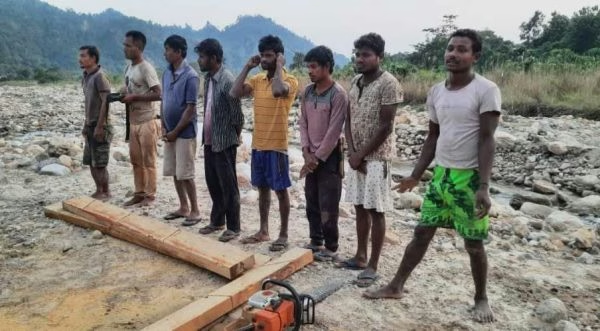
The Shadowy World of Timber 🌳
Nestled amidst the majestic Himalayas, Bhutan is a country known for its lush forests and serene landscapes. However, beneath this verdant canopy lies a shadowy world where the illegal timber trade thrives. This clandestine business not only threatens the environment but also undermines the country's economic potential and governance systems.
Root Causes of the Timber Crisis 🌐
The illegal timber trade in Bhutan can be traced back to systemic corruption and lax enforcement. Despite government efforts to monitor timber-rich regions, illegal activities continue unabated. From the dense teakwood forests in the south to the pinewood reserves in the north, the trade persists due to a mix of bribery, collusion, and the ever-present allure of high profits.
Modus Operandi of the Illegal Trade 🎭
The operations are often covert, conducted under the cover of darkness or disguised within legal shipments. Corrupt officials and middlemen play a pivotal role, exploiting loopholes and using insider information to evade capture. This intricate web of deception has made it increasingly difficult for authorities to clamp down on illegal activities effectively.
Economic Implications and Environmental Impact 🌍
Illegal timber extraction not only depletes forest resources but also causes significant economic loss. Legal timber exports could greatly enhance Bhutan's economy, yet a substantial portion of potential revenue is siphoned off by black market operations. Moreover, the environmental damage inflicted by unsustainable logging practices poses a long-term threat to biodiversity and ecological balance.
The High Price of Timber 📈
As legal timber prices soar, the black market becomes more lucrative. For instance, the cost of blue pine timber in urban centers like Thimphu has seen a noticeable increase, further fueling illegal activities as businesses seek cost-effective alternatives.
Policy Measures and Technological Interventions 📊
Addressing the illegal timber trade requires robust policy interventions and technological advancements. Implementing a track-and-trace system could enhance transparency and accountability from felling to sale. Equipping forestry check posts with state-of-the-art scanning technology could also deter illegal transport by making clandestine activities easier to detect.
The Role of Community and Governance 🤝
Empowering local communities to participate in forest management can also play a critical role. By involving residents in decision-making processes and offering them a stake in sustainable forestry practices, the government can create a grassroots movement against illegal activities.
Conclusion: A Path Forward ✨
Curbing the illegal timber trade in Bhutan is undoubtedly a daunting task, but not an impossible one. Through a combination of technology, policy reforms, and community involvement, Bhutan can preserve its forests for future generations while bolstering its economy. As the country continues to navigate this complex issue, a sustainable and transparent timber industry remains a beacon of hope for both the environment and the economy.
You May Also Like
News
Women Entrepreneurs Master AI and Digital Tools in Phuentsholing
September 1, 2026
News
Can Samtse Keep Up With Its Growing Workforce?
August 29, 2026
News
Nepal Flood Exposes Critical Gaps in Bhutan's Early Warning Systems
August 29, 2026
News
High Court Overturns Acquittal: Doctor Sentenced to 10 Years for Child Sexual Abuse
August 29, 2026