Category:
OpinionWill Banning Social Media Reshape Our Kids?
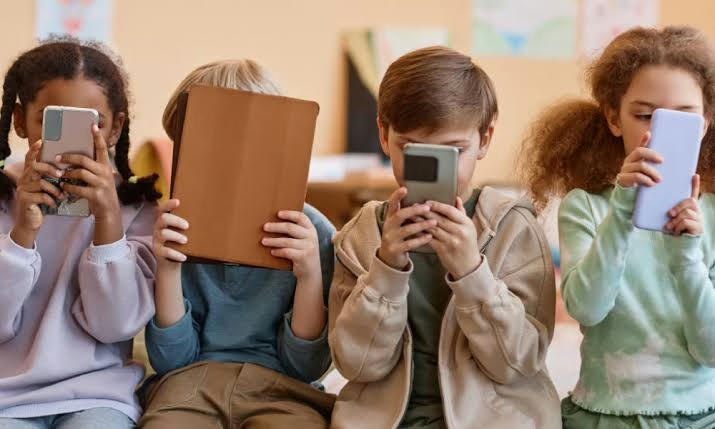
The debate about banning social media for children has sparked a heated discussion across the globe 🌍. While some advocate for restrictions, others emphasize the importance of guidance and education. But what are the implications of such a ban?
The Current Digital Landscape 🖥️
In today's world, social media is ubiquitous. Platforms like Facebook, Instagram, and TikTok have become integral parts of daily life, offering both opportunities and challenges. For children, these platforms can be a double-edged sword.
Risks and Concerns 🚨
- Cyberbullying: A significant concern, cyberbullying can have severe emotional consequences for young users.
- Exposure to Harmful Content: Children may encounter inappropriate content that can influence their behavior and perceptions.
- Reduced Attention Spans: The fast-paced nature of social media may contribute to shorter attention spans.
- Unhealthy Comparisons: Social media often highlights idealized images, leading to self-esteem issues.
The Positive Aspects 🌟
Despite the risks, social media also offers numerous benefits:
- Learning and Creativity: Platforms provide access to educational content and creative outlets.
- Communication: Children can connect with peers, fostering friendships and collaboration.
- Information Access: Social media is a valuable tool for staying informed about current events.
Global Approaches to Protecting Children 🔒
Countries worldwide are exploring various strategies to safeguard children online:
- Age Restrictions: Some nations are considering bans for users under 16.
- Parental Controls: Enhanced parental control features can help monitor usage.
- Education Initiatives: Teaching digital literacy is becoming a priority in many educational systems.
The Case for Responsible Usage 📚
Rather than imposing outright bans, many experts argue for teaching responsible social media usage:
- Digital Education: Incorporating digital literacy into school curriculums can empower children to navigate social media safely.
- Parental Involvement: Active parental guidance can provide children with the support they need to make informed decisions online.
Bhutan's Perspective 🇧🇹
In Bhutan, the discussion reflects broader concerns seen globally. The Bhutanese Ministry of Education has raised the idea of banning social media for children, sparking debate among parents, educators, and policymakers. The focus is on balancing protection with preparation for the digital future.
Conclusion: Finding the Balance ⚖️
As we navigate the complexities of the digital age, the question remains: will banning social media reshape our children? Perhaps the answer lies not in elimination but in education. By fostering a responsible digital culture, we can equip our children to thrive in the digital world, ensuring they are both protected and prepared for what lies ahead.
In the end, it's about walking the fine line between shielding our children from harm and giving them the tools to succeed in an increasingly connected world.