Category:
NewsUS Ends Duration of Status for Student Visas
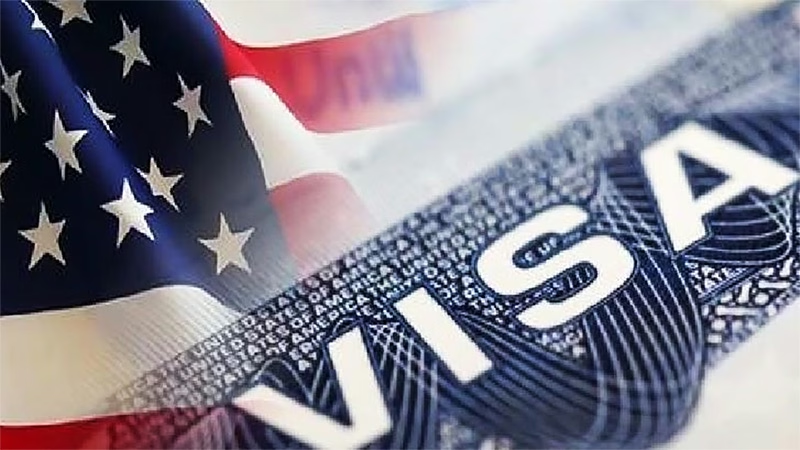
The Shift in US Visa Policy: A New Era for Foreign Students 🇺🇸📚
In a pivotal move that could reshape the academic landscape for international students, the United States Department of Homeland Security (DHS) has unveiled significant changes to its visa policies. The long-standing "duration of status" system, which allowed foreign students, exchange visitors, and foreign media representatives to stay in the US as long as they maintained their visa status, is being replaced with fixed periods of stay. This regulatory shift, set to take effect 60 days after its publication in the Federal Register, introduces a more structured framework for F, J, and I visa categories.
Understanding the New Visa Rules 📑
Under the new rules, students on F visas and exchange visitors on J visas will be granted admission for the duration of their approved programs, with a cap of four years. For those who need extra time to complete their studies, an Extension of Stay must be requested through the US Citizenship and Immigration Services (USCIS). This application will involve comprehensive federal reviews, including background checks and fraud screening.
Implications for F, J, and I Visa Holders 🎓✈️
- F Visas: Primarily issued to international students at US educational institutions.
- J Visas: For exchange visitors in programs for students, scholars, and cultural participants.
- I Visas: Granted to foreign media representatives working in the US.
The new regulation also reduces the grace period for F-1 students post-graduation or when transferring schools from 60 days to 30 days, urging students to transition more swiftly.
A Focus on Security and Oversight 🔍
The DHS cites bolstered immigration oversight as a primary motivator for these changes. By implementing fixed periods of stay, the US aims to enhance national security through regular screenings and monitoring, thereby preventing visa abuse. According to DHS Secretary Markwayne Mullin, these measures are designed to "properly screen, vet, and monitor individuals within our borders."
Impact on Bhutanese Students 🌏👨🎓
The policy shift is poised to impact international students, including those from Bhutan. Approximately 1,500 Bhutanese nationals are officially registered with the Bhutanese Embassy in the US, although estimates suggest the actual number may be as high as 5,000 by 2025. Bhutanese students, like other international scholars, will need to navigate the new rules as they pursue academic opportunities in the US.
Historical Context and Future Outlook 📜🔮
The "duration of status" system was introduced in 1978, allowing students to remain in the US by continuously enrolling in academic programs. This flexibility often led to extended stays beyond the completion of original academic goals. The new regulation aims to streamline the system, ensuring students focus on completing their education in a timely manner before returning to their home countries.
The Broader Trend in Global Education 🎓🌍
This policy change aligns with broader trends in global education, where many countries are tightening immigration controls amid increasing globalization. As international student mobility continues to grow, countries are balancing the benefits of diverse academic communities with national security and economic considerations.
Key Takeaways and Future Considerations 💡
- Structured Visa Periods: Fixed stay durations enhance oversight and security.
- Impact on Bhutanese Students: Bhutanese students in the US must adapt to new regulations.
- Global Education Trends: Reflects a global shift towards tighter immigration controls.
As the US implements these new rules, international students and educational institutions must remain informed and adaptable. The evolving landscape of global education requires continuous dialogue and collaboration between nations to ensure that academic exchanges continue to thrive while addressing security concerns.
In conclusion, while the new US visa regulations present challenges, they also offer an opportunity for enhanced bilateral relations and mutual understanding through well-managed academic exchanges.
You May Also Like
News
Women Entrepreneurs Master AI and Digital Tools in Phuentsholing
September 1, 2026
News
Can Samtse Keep Up With Its Growing Workforce?
August 29, 2026
News
Nepal Flood Exposes Critical Gaps in Bhutan's Early Warning Systems
August 29, 2026
News
High Court Overturns Acquittal: Doctor Sentenced to 10 Years for Child Sexual Abuse
August 29, 2026