Category:
EconomyUnderstanding the Cost of Parenthood

Parenthood is a profound journey that brings joy, challenges, and significant financial considerations. In Bhutan, the economic landscape has shifted, impacting family planning decisions for many.
Rising Costs and Changing Decisions 💰
For many Bhutanese couples, the dream of a large family is increasingly elusive. Rising living costs, including housing, education, and healthcare, have made it difficult for families to afford more than one or two children. A 39-year-old mother of two reflects the sentiment of many, as the economic pressures make the idea of a third child seem unrealistic.
The Shift in Birth Rates 📉
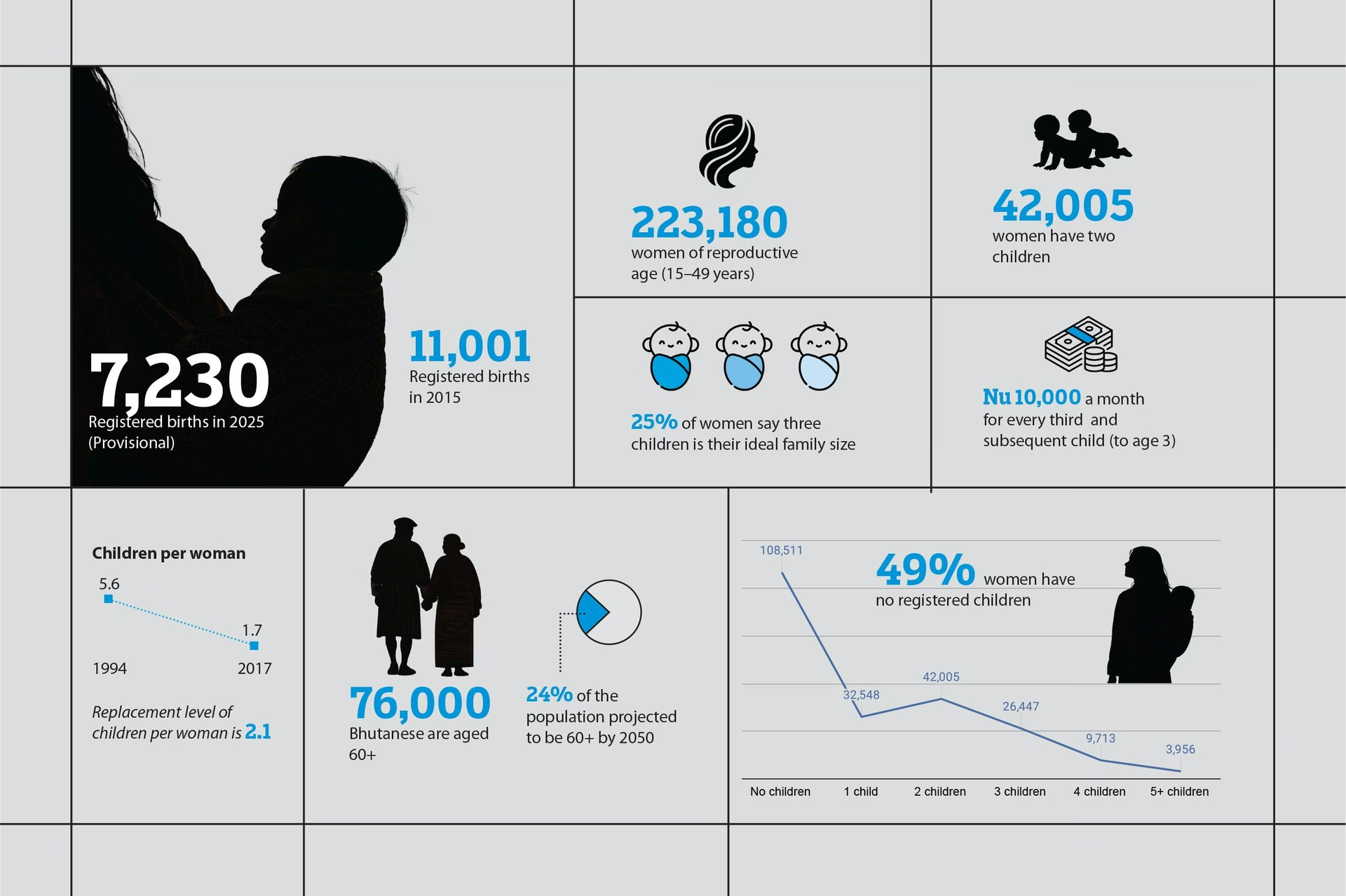
Bhutan's fertility rate has seen a drastic decline, dropping from 5.6 children per woman in 1994 to 1.7 in 2017. This sharp decrease is attributed to several factors, including the high cost of living and the lack of support for working parents. These factors have forced many to reconsider their family planning choices.
Demographic Changes and Economic Implications 📊
The demographic landscape in Bhutan is rapidly changing. The United Nations Bhutan’s “Annual Horizon Scan 2025” highlights this shift, warning of a shrinking workforce and increasing dependency ratio. As life expectancy increases, the proportion of elderly people is expected to rise, placing additional pressure on healthcare and social systems.
Women's Roles and Career Choices 👩💼
The pursuit of higher education and career advancement has led many women to delay marriage and parenthood. This trend is contributing to a shorter window for childbearing. A former lecturer and mother of one noted that the challenges of work-life balance and the high cost of childcare are significant barriers to having more children.
The Reality of Work-Life Balance ⚖️
Balancing a career and family responsibilities is a common struggle for many. With both parents often working full-time, the lack of adequate childcare and parental leave makes raising a larger family difficult. Hiring a full-time caregiver is a luxury that many cannot afford, further complicating the decision to expand their families.
The Financial Burden of Childcare 🍼
Childcare costs in Bhutan have risen sharply, adding to the financial burden on families. Many workplaces lack family-friendly policies, such as onsite childcare facilities, which exacerbates the challenges for working parents.
Future Outlook 🔮
As Bhutan continues to navigate these demographic and economic challenges, the government and society must explore solutions to support families. Policy changes that provide better support for working parents, such as improved childcare options and parental leave, could help alleviate some of the pressures faced by families today.
Conclusion: Navigating Parenthood in Bhutan
The journey of parenthood in Bhutan is shaped by economic realities and changing societal norms. As the nation grapples with these challenges, it is crucial for policymakers to consider strategies that support families and address the economic barriers to larger households. By doing so, Bhutan can ensure a balanced demographic future and a thriving society.
You May Also Like
Economy
Government Addresses 400+ Business Issues to Boost Economy
October 10, 2026
Economy
Bhutan's Bold Vision: Two USD 50M Enterprises by 2030
September 27, 2026
Economy
Mega Dry Port in Pasakha: Bhutan's Trade Revolution
September 25, 2026

Economy
Fixed Deposit Tax Withholding: What You Need to Know
September 13, 2026