Category:
EconomyToyota Import Ban: Indian Dealers Stop Sales to Bhutan
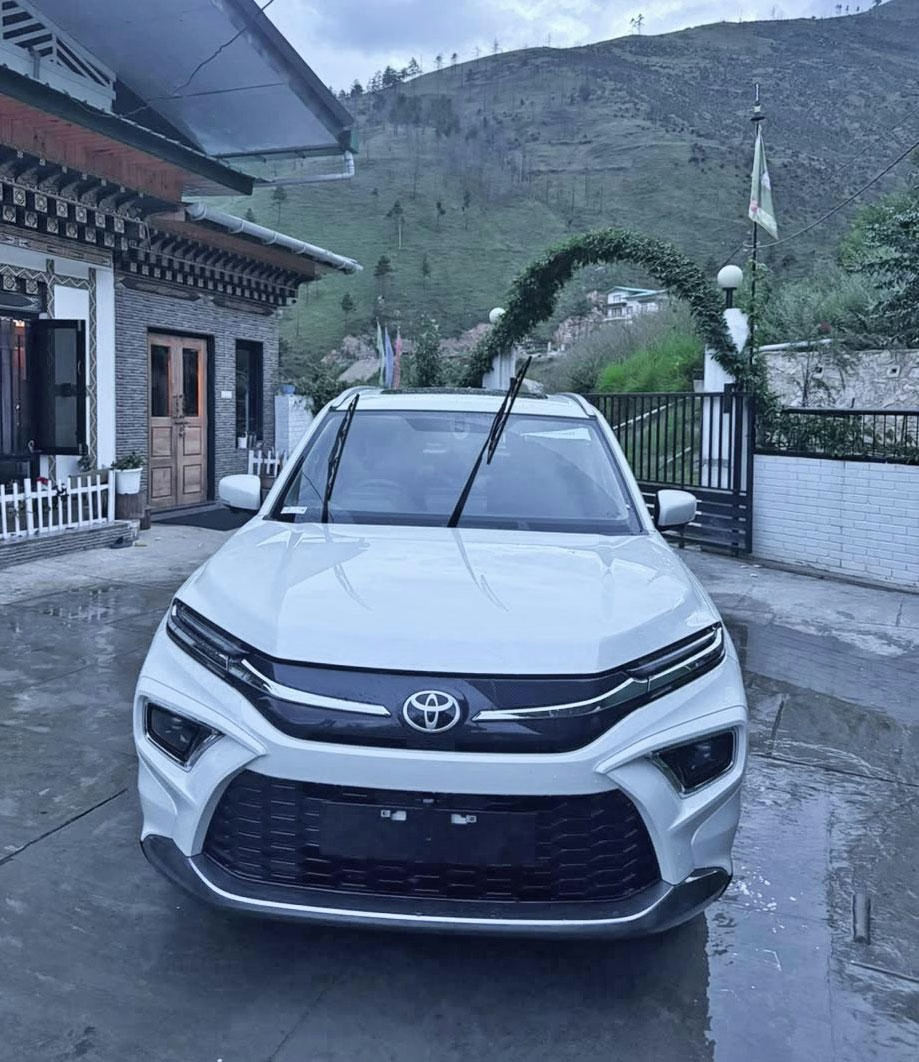
A Sudden Halt to Direct Vehicle Imports 🚗
Bhutan's automotive market has been thrown into turmoil as Indian Toyota dealers across Siliguri have abruptly ceased selling vehicles to Bhutanese buyers. This dramatic shift has left hundreds of consumers stranded, holding government-approved import authorizations that have suddenly become worthless. The situation represents a significant disruption to what was previously a thriving direct import channel for price-conscious vehicle buyers seeking better deals than those offered by local authorized dealerships.
The controversy centers on alleged intervention by the State Trading Corporation of Bhutan Limited (STCBL), which has reportedly instructed Indian dealers to halt all vehicle exports to Bhutanese purchasers without explicit no-objection letters from the corporation. What began as a routine administrative process has evolved into a complex dispute touching on monopolistic practices, consumer rights, and regulatory authority.
Understanding the Import Authorization System 📋
Bhutan's Department of Trade has established a legitimate framework allowing citizens to import vehicles directly from India when specific models aren't available through authorized local dealers. Since January 2026, the DoT has issued an impressive 688 import authorization letters, demonstrating substantial demand for this alternative purchasing channel.
The breakdown reveals the scale of this initiative:
- 630 authorizations for Toyota Urban Cruiser Hyryder variants
- 39 authorizations for Toyota Innova Hycross models
- 12 authorizations for Toyota Hilux trucks
- 3 authorizations for Isuzu S-CAB Z vehicles
- 4 authorizations for other vehicle models
This system was designed to provide consumers with options when local dealers couldn't meet demand or didn't stock specific configurations. Buyers who received these authorizations were expected to pay applicable taxes and duties while bringing vehicles across the border from India. The process appeared straightforward and legally sanctioned—until dealers suddenly changed course.
The Price Disparity Driving Demand 💰
Understanding the dramatic price differences between direct imports and locally-sold vehicles is crucial to grasping why so many Bhutanese buyers pursued this avenue. The financial incentives are substantial and difficult to ignore.
Urban Cruiser Hyryder Pricing: The base model costs approximately Nu 1.47 million in Indian dealerships. After applying Bhutan's combined excise tax (5%) and GST (5%), the total reaches roughly Nu 1.65 million. For a vehicle originally priced at Nu 1.45 million, buyers face excise tax of Nu 71,392 and GST of Nu 76,139—totaling Nu 147,532 in taxes alone.
Innova Hycross Pricing Gap: This model demonstrates an even more dramatic price variance. The base variant costs approximately Nu 1.936 million in India, climbing to nearly Nu 2.2 million after Bhutan's 14% combined tax rate (9% excise plus 5% GST). A fully-equipped variant priced at Nu 2.323 million in India becomes Nu 2.66 million after taxation.
When compared to locally-authorized dealer prices ranging between Nu 2.7 million and Nu 2.8 million for similar Innova Hycross configurations, the disparity becomes starkly apparent. Direct imports offer savings of Nu 40,000 to Nu 140,000 depending on the model and specification—a meaningful difference for most consumers.
Why Hybrid Technology Sparked Interest 🔋
Many Bhutanese buyers weren't simply chasing bargains; they were seeking practical solutions to rising fuel costs. The Toyota Urban Cruiser Hyryder V Hybrid and Innova Hycross hybrid variants represent cutting-edge fuel efficiency technology increasingly relevant in Bhutan's economic landscape.
Hybrid vehicles offer several compelling advantages:
- Superior fuel efficiency reducing long-term operational costs
- Lower emissions aligning with environmental consciousness
- Reduced maintenance expenses due to regenerative braking systems
- Better performance in varied terrain and driving conditions
One affected buyer specifically sought a fully-equipped Innova Hycross to transport international guests, only to be informed by STCBL that the desired configuration wasn't available locally. After an authorized Indian dealer initially agreed to the sale, they mysteriously reversed their decision—citing new corporate instructions.
Another group of importers emphasized that "hybrid technology offers better fuel efficiency and was therefore considered a practical and economical choice." Their interest stemmed from genuine transportation needs and economic rationality, not mere price-hunting.
STCBL's Dealership Ambitions 🤝
The State Trading Corporation of Bhutan Limited has been pursuing a formal dealership agreement with Toyota for approximately seven months. This timeline is crucial—it suggests the corporation viewed direct imports as competitive threats to their potential future dealership arrangement.
STCBL CEO Leki Dendup acknowledged the corporation applied to Toyota's principal company for dealership status but hasn't yet received approval. He stated that STCBL isn't authorized to issue no-objection letters for direct imports, yet Indian dealers have been told precisely such letters are now required.
This apparent contradiction raises serious questions about whether STCBL is attempting to circumvent regulatory processes by pressuring dealers directly. The corporation initially posted on social media that "direct Toyota imports bypassing the local authorised distributor had been halted following a visit from stakeholder officials"—a post subsequently deleted, suggesting awareness of potential controversy.
The Regulatory Response and Gaps 📊
When asked about vehicle pricing practices and monopolistic concerns, government officials offered surprisingly limited responses. The Competition and Consumer Affairs Authority confirmed it does not monitor vehicle prices, leaving this critical market function entirely to market forces and dealer discretion.
A Department of Trade official acknowledged that vehicle pricing is "largely shaped by market forces and contractual agreements between dealers and manufacturers." They noted that manufacturers often designate certain models for specific regions based on "pricing strategy, design considerations, and market suitability."
However, this explanation doesn't address why STCBL appears to be restricting legitimate direct imports that were previously authorized through official channels. The regulatory framework seems insufficient to address the current situation, with no clear mechanism for resolving conflicts between corporate entities and individual consumers holding valid government authorization.
Affected Buyers Speak Out 💬
The human impact of this dispute cannot be overlooked. Multiple buyers who obtained proper authorization and even proforma invoices from Indian dealers now find themselves unable to complete purchases they've already committed to financially.
One frustrated importer articulated a common sentiment: "Vehicle dealers in the country are operating like a monopoly and maximising their profits." This perception, whether entirely accurate or not, reflects growing consumer frustration with what many view as anti-competitive practices.
A group of affected buyers has formally requested the Ministry of Finance intervene to facilitate imports for those holding valid DoT authorizations. They've expressed concern that routing all purchases through STCBL would "push prices significantly higher," essentially locking consumers into the dealer-controlled pricing structure they sought to escape.
Toyota's Export Restrictions 🌍
STCBL CEO Leki Dendup offered an additional explanation: the Hyryder and Innova models in question are "built primarily for the Indian domestic market and have not been approved by Toyota's principal company for international export."
He cited that "specifications for export markets can differ based on regional requirements and regulations." This statement, while technically plausible, raises important questions about why the DoT issued 688 import authorizations for vehicles that may not meet international export standards.
If Toyota truly restricts these models from international export, this represents a fundamental regulatory failure—either the DoT shouldn't have issued the authorizations, or STCBL should have raised these concerns before dealers began receiving complaints.
Broader Questions About Market Competition 🎯
This episode illuminates critical gaps in Bhutan's automotive regulatory framework. With no government body actively monitoring vehicle prices and no mechanism preventing exclusive dealership arrangements from creating de facto monopolies, consumers have limited recourse when facing what they perceive as unfair pricing.
The situation raises several important questions:
- Should regulatory bodies actively monitor vehicle pricing to prevent excessive markups?
- Do exclusive dealership arrangements serve consumer interests or primarily protect dealer profits?
- What oversight mechanisms exist to prevent state-owned enterprises from circumventing official authorization processes?
- How can Bhutan balance supporting local businesses with protecting consumer choice and competitive pricing?
These aren't merely academic questions—they directly affect thousands of Bhutanese consumers' purchasing power and access to affordable transportation.
What Happens Next? 🔮
At present, STCBL has declined to comment extensively, stating only that "the investigation is currently ongoing" and promising "a further update once the facts are fully confirmed." This measured response suggests awareness of the controversy's sensitivity.
The Ministry of Finance hasn't publicly addressed the situation, though affected buyers have formally appealed for intervention. The Department of Trade faces pressure to clarify whether its authorization letters remain valid or have been effectively nullified by corporate pressure on Indian dealers.
Meanwhile, hundreds of Bhutanese consumers remain in limbo—holding government-approved authorizations for vehicles they can no longer purchase, watching their planned transportation solutions evaporate due to forces seemingly beyond their control.
Key Takeaways 📌
This situation represents more than a simple commercial dispute—it's a test of Bhutan's commitment to fair competition, consumer protection, and transparent governance. The sudden halt to direct Toyota imports raises fundamental questions about whether regulatory frameworks can withstand pressure from state-owned enterprises pursuing commercial interests.
For consumers, the immediate lesson is sobering: government authorization doesn't guarantee transaction completion when powerful corporate entities decide to restrict supply. For policymakers, the episode underscores urgent needs for clearer regulatory authority, active price monitoring, and mechanisms preventing monopolistic practices in essential markets like automotive sales.
As this situation develops, it will likely shape Bhutan's approach to direct imports, dealership regulations, and consumer protection for years to come. The outcome will signal whether Bhutan prioritizes consumer choice and competitive pricing or protects established commercial interests through regulatory restrictions.
You May Also Like
Economy
Bhutan's Bold Vision: Two USD 50M Enterprises by 2030
September 27, 2026
Economy
Mega Dry Port in Pasakha: Bhutan's Trade Revolution
September 25, 2026

Economy
Fixed Deposit Tax Withholding: What You Need to Know
September 13, 2026
Economy
DRC's QR Payment Innovation: Tracking Business Income
September 2, 2026