Category:
NewsThimphu Thromde Demolition Ultimatum: Olakha Workshop Crackdown Begins
🚨 Deadline Looms for Olakha Workshop Operators
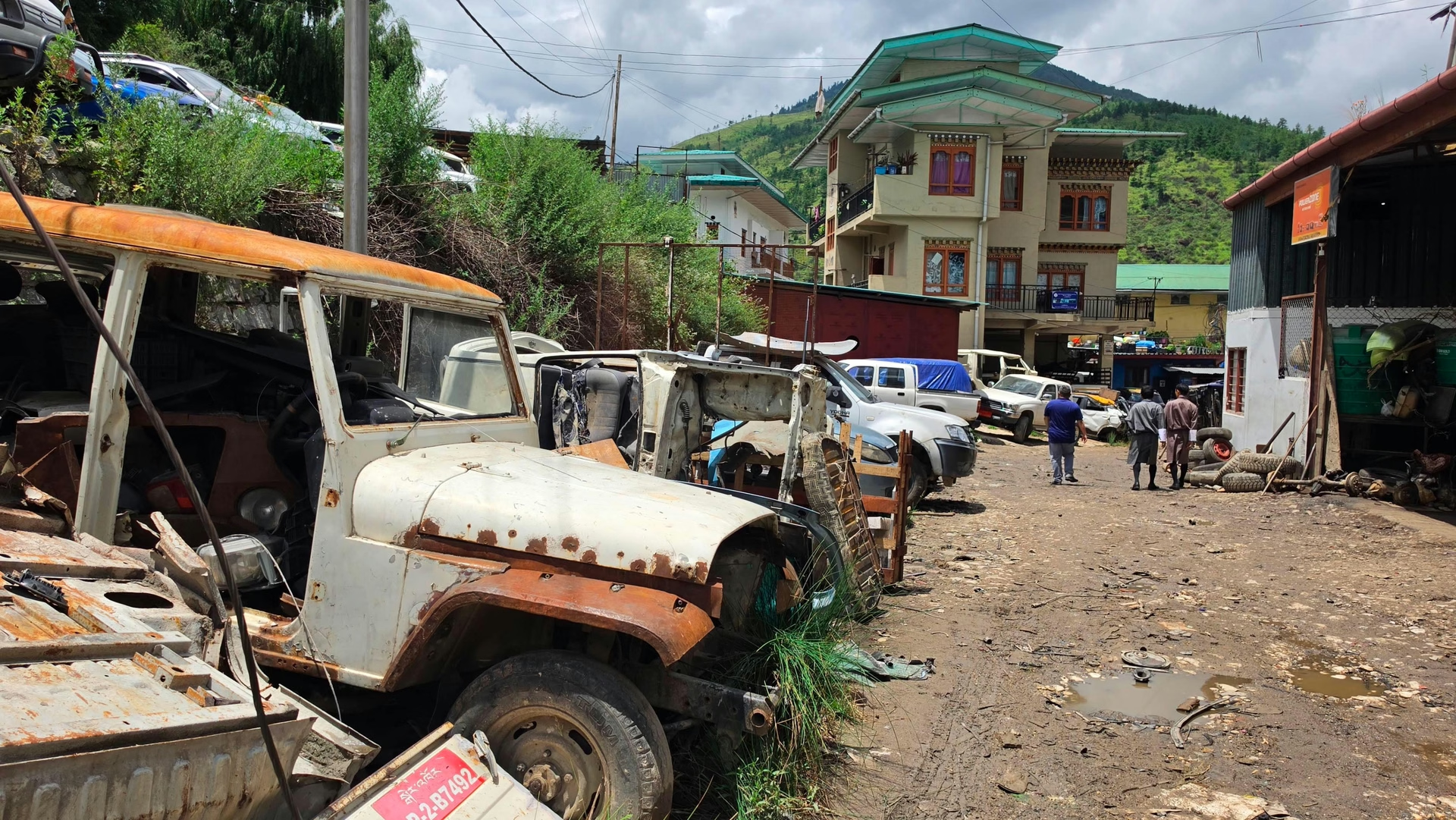
Thimphu's automotive and manufacturing hub faces a critical turning point as city authorities have delivered a firm ultimatum to workshop owners and building occupants in the Olakha area. The Thimphu Thromde has set August 7 as the final deadline for clearing all unauthorised structures, abandoned vehicles, scrap materials, and obstructions from the Right of Way (ROW). This enforcement action marks an escalation in efforts to reclaim public land and facilitate ongoing infrastructure development in one of Bhutan's most economically active zones.
The stakes are extraordinarily high. The municipal authority has made clear that any remaining encroachments will face immediate demolition without further notice, while unclaimed vehicles and scrap materials will be disposed of through public auction beginning August 8. For the more than 100 automobile workshops currently operating in the area, this represents a watershed moment that demands swift action.
📋 The Background: Months of Warnings and Persistent Violations
This ultimatum didn't emerge suddenly. The Thromde administration first issued directives over a month ago, instructing occupants to remove encroachments from state land and clear stranded vehicles and scrap materials. Despite these repeated reminders and formal notifications, many property owners and workshop operators have chosen inaction, allowing the situation to deteriorate further.
The core issue stems from years of gradual encroachment on public land. What was originally a six-metre gap between buildings—maintained for essential drainage and fire safety purposes—has been systematically invaded. Building owners have extended structures into reserved spaces, erected temporary sheds, and created makeshift storage areas where infrastructure should remain accessible.
Kinga Dorji, Executive Director of the Automobile Association of Bhutan, revealed that the association immediately mobilised its network upon receiving the Thromde's notification. "We circulated the letter through our social media group with 123 members and also wrote directly to workshop owners," he explained. While many operators have responded positively, removing scrap materials and off-road vehicles, others remain reluctant to comply, creating a compliance crisis.
🏗️ Infrastructure Crisis: Why the Crackdown Matters
The encroachment problem extends far beyond aesthetic concerns. Workshop owners have illegally constructed water-servicing facilities on government land, converted parking areas into dumping grounds for abandoned vehicles, and filled reserved spaces with waste materials. Several proprietors have even constructed toilets within the ROW, directly obstructing both the drainage system and essential access routes.
This deterioration has created genuine safety hazards. One workshop owner highlighted the catastrophic risks: "Scrap is piled up in the narrow spaces between buildings. If a fire breaks out, workshop owners would suffer huge losses and escaping would be extremely difficult." In an area housing over 100 active workshops with hundreds of employees, such fire safety concerns represent a genuine public health emergency.

💼 The Contractor's Perspective: Construction Cannot Proceed
Chencho Tshering, Chief Executive Officer of Tobden Construction Pvt. Ltd, has repeatedly requested that the Thromde clear the ROW as originally agreed before the project commenced. Development works began in June and are progressing on schedule, but the remaining encroachments pose serious obstacles to timely completion.
The Olakha workshop area development represents a Nu 75 million investment in urban infrastructure, with completion targeted within 10 months. The project will feature:
- Pebble block paving for all internal roads (replacing inadequate surfaces)
- Precast drainage systems to address the area's persistent water management issues
- Improved sanitation facilities for the working community
- Properly maintained Right of Way corridors for safety and accessibility
The contractor has explicitly stated: "We are planning the works carefully so that workshops can continue operating while keeping disruption to a minimum." However, this careful planning becomes impossible when encroachments block essential work areas.
😤 Workshop Owners' Grievances: A Two-Sided Story
While the Thromde's enforcement is justified, workshop operators have raised legitimate concerns about systemic neglect. Many proprietors have highlighted the paradox of their situation: they pay substantial taxes yet lack basic municipal services.
Key complaints from workshop owners include:
- No proper water supply infrastructure despite operating in an industrial area
- Inadequate drainage systems requiring operators to arrange private solutions
- Non-functional street lights installed by the Thromde
- Some buildings constructed without maintaining the mandatory nine-metre Right of Way
- Allegations that certain building owners illegally extended structures onto state land and collected additional rent from tenants
- Insufficient Thromde monitoring and enforcement against property owners violating regulations
One workshop operator articulated the frustration succinctly: "We pay substantial taxes but still have no proper water supply or drainage system. We have to arrange our own water." These grievances suggest that while workshop owners bear responsibility for encroachments, municipal service delivery failures have contributed to the problem.
✅ Compliance Progress and Remaining Challenges
The Automobile Association's intervention has yielded mixed results. Many workshop owners have begun compliance, actively removing scrap materials and abandoned vehicles. However, a significant subset remains reluctant, creating enforcement challenges for municipal authorities.
The most problematic cases involve:
- Illegal structures constructed without permits or proper setbacks
- Water-servicing facilities built on encroached government land
- Temporary workshop sheds occupying reserved road spaces
- Retaining walls constructed illegally within the ROW
- Years-old abandoned vehicles with unclear ownership
Some workshop owners have alleged that the Thromde's enforcement has been inconsistent, with penalties applied selectively and monitoring inadequate in certain cases.
🌟 The Silver Lining: Infrastructure Improvement Ahead
Despite anxieties about temporary business disruptions during construction, workshop owners have acknowledged the significant long-term benefits. The Olakha workshop area development will fundamentally transform urban infrastructure in this economically vital zone.
Expected improvements include:
- Enhanced drainage systems preventing flooding and water damage
- Improved sanitation throughout the industrial area
- Properly maintained internal roads facilitating vehicle movement
- Better fire safety through adequate spacing and emergency access
- Professional infrastructure supporting business operations
The development represents a pivotal moment for Bhutan's automotive and manufacturing sectors, signalling the government's commitment to professionalising industrial zones and enforcing building regulations.
🎯 What Happens Next: The August 7 Deadline Approaches
Workshop owners now face a critical decision point. The August 7 deadline is immovable, and the Thromde has demonstrated resolve in enforcement. Those who fail to comply should expect:
- Immediate demolition of unauthorised structures
- Vehicle removal and impoundment of abandoned automobiles
- Public auction of confiscated scrap materials and vehicles beginning August 8
- Potential penalties for continued violations
The Automobile Association continues mobilising compliance through its member network, but individual workshop owners must take personal responsibility for clearing their properties and removing encroachments.
📌 Key Takeaways
The Thimphu Thromde's ultimatum reflects a broader pattern of urban governance prioritising infrastructure development and regulatory compliance. While workshop owners have legitimate grievances about municipal service delivery, the encroachment problem has become untenable—creating safety hazards, obstructing essential development, and undermining the rule of law.
The August 7 deadline represents a genuine turning point for Olakha. Workshop owners who act swiftly will position themselves to benefit from the Nu 75 million infrastructure investment. Those who delay face significant consequences. As Bhutan continues modernising its urban spaces and industrial zones, the Olakha workshop area development serves as a case study in balancing economic activity with professional infrastructure standards and public safety requirements.
The coming weeks will determine whether Thimphu's automotive and manufacturing hub emerges as a modernised, professionally-managed industrial zone or remains hampered by encroachments and infrastructure deficits. 🚗✨
You May Also Like
News
Women Entrepreneurs Master AI and Digital Tools in Phuentsholing
September 1, 2026
News
Can Samtse Keep Up With Its Growing Workforce?
August 29, 2026
News
Nepal Flood Exposes Critical Gaps in Bhutan's Early Warning Systems
August 29, 2026
News
High Court Overturns Acquittal: Doctor Sentenced to 10 Years for Child Sexual Abuse
August 29, 2026