Category:
NewsProject 108: Massive Healthcare Deployment for Gelephu Event
Healthcare Infrastructure Mobilized for Historic Project 108 Event 🏥
Bhutan is witnessing an unprecedented mobilization of medical resources as preparations intensify for Project 108 in Gelephu Mindfulness City. With over 200,000 attendees anticipated, the National Medical Services (NMS) has orchestrated one of the largest healthcare deployments in the nation's recent history, demonstrating the country's commitment to public health and event management excellence.
The scale of this undertaking reflects both the magnitude of the event and Bhutan's proactive approach to ensuring visitor safety. This comprehensive medical response showcases how a nation with limited healthcare resources can strategically deploy personnel and infrastructure to handle mass gatherings effectively.
Building a Comprehensive Medical Response Network 💪
The NMS coordination effort has assembled approximately 200 dedicated health workers who have volunteered to ensure seamless medical coverage throughout the event. This diverse team represents a cross-section of Bhutan's healthcare professionals, each bringing specialized expertise to different aspects of emergency response.
The deployment structure includes:
- 18 specialists providing advanced medical consultation and diagnosis
- 24 medical officers managing general healthcare needs and triage operations
- 67 nurses delivering frontline patient care and support
- 22 emergency medical responders trained in acute situation management
- 36 technicians supporting diagnostic and laboratory services
- 13 mobile medical unit personnel equipped for rapid response deployment
- 14 dedicated drivers ensuring swift ambulance and supply transportation
- 6 logistics personnel maintaining resource coordination and inventory management
This carefully structured team composition reflects best practices in mass gathering medicine, where diverse skill sets are essential for handling everything from minor injuries to life-threatening emergencies.
Strategic Facility Placement and Infrastructure 🏗️
The healthcare infrastructure for Project 108 extends far beyond traditional hospital settings. Recognizing the dispersed nature of the event across multiple sites, NMS has implemented a decentralized approach to medical service delivery.
A temporary 10-bed medical facility has been established at Tareythang Gyalsung Academy, where international guests are accommodated. This dedicated facility operates with 26 staff members and provides comprehensive inpatient services for visitors requiring extended observation or treatment.
Chhuzagang Primary Health Centre has undergone expansion to function as an additional 10-bed hospital, staffed with two doctors and supporting medical personnel. This expansion demonstrates how existing healthcare infrastructure can be rapidly scaled to meet surge capacity demands during special events.
The Gelephu Central Regional Referral Hospital (GCRRH) has enhanced its emergency response capabilities by extending its emergency department with two additional treatment bays and eight additional beds, increasing its surge capacity significantly.
Mobile Medical Units: Bringing Healthcare to the People 🚑
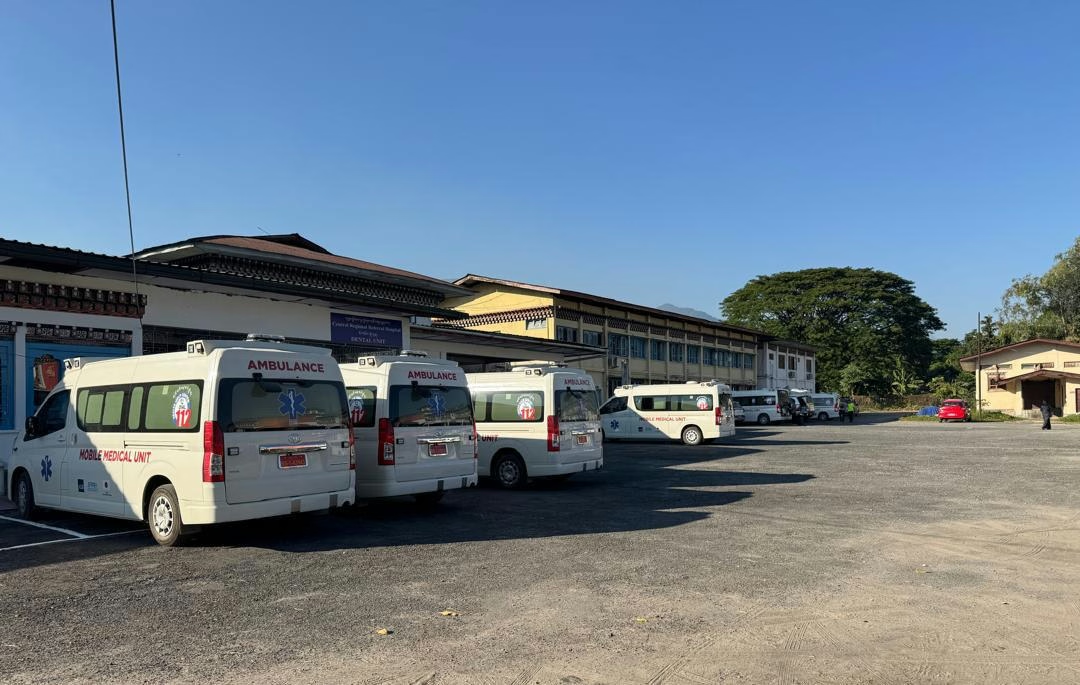
One of the most innovative aspects of this deployment involves 13 mobile medical units strategically positioned near the Zerey sites throughout the event venue. These units function as mini-clinics, capable of delivering primary care, basic diagnostics, and emergency stabilization before patient transport if necessary.
The military hospital has committed health workers to provide coverage across all 108 chorten sites, ensuring that no location within the sprawling event area lacks immediate medical access. This distributed presence significantly reduces response times for medical emergencies and allows for rapid intervention.
A Basic Emergency and Resuscitation (BEAR) team maintains standby status at designated locations, ready for rapid deployment to any critical situations. This specialized team represents the highest level of emergency response capability available at the event.
The ambulance fleet comprises 13 vehicles, providing transport capacity for patient evacuation and inter-facility transfers. This redundancy ensures that no delays occur in moving patients who require higher levels of care.
Comprehensive Preparation and Resource Planning 📋
According to Dr. Choeda Gyaltshen, Medical Superintendent of GCRRH, preparation activities commenced one month prior to the event. Personnel and medical equipment were systematically gathered from healthcare facilities across the entire country, reflecting a nationwide mobilization effort.
Medicines and medical supplies have been pre-positioned and verified, including specialized pharmaceuticals not commonly stocked in Bhutan. This forward-thinking approach eliminates potential delays in accessing critical medications during the event.
Dr. Choeda Gyaltshen emphasized the commitment to healthcare quality: "We won't compromise on healthcare services. We have kept all the medications ready, even those that are not easily available." This statement underscores the determination to provide world-class medical care despite logistical challenges.
Special Considerations for Vulnerable Populations ⚠️
Health officials have identified specific populations requiring enhanced attention during the event. Older attendees and individuals with pre-existing medical conditions warrant particular focus, given their increased susceptibility to complications during mass gatherings.
Persons managing chronic conditions such as diabetes are strongly advised to:
- Carry an adequate supply of prescribed medications
- Maintain regular medication schedules despite event activities
- Inform medical personnel of existing health conditions upon arrival
- Seek immediate assistance if experiencing symptoms of their chronic illness
Environmental factors also demand attention. The Mau Chhu area is expected to experience significant dust generation during the event, potentially affecting respiratory function in sensitive individuals. Health authorities recommend that attendees bring face masks to minimize dust inhalation.
Regional Healthcare Network Integration 🔗
The medical response for Project 108 doesn't exist in isolation but rather integrates seamlessly with Bhutan's broader healthcare infrastructure. In situations requiring specialized care beyond event-site capabilities, patients will be referred to the Jigme Dorji Wangchuck National Referral Hospital, ensuring continuity of care for complex cases.
This tiered approach to healthcare delivery—from on-site primary care through mobile units, temporary hospitals, regional facilities, and ultimately the national referral center—represents a comprehensive safety net for event attendees.
Round-the-Clock Medical Vigilance ⏰
All medical facilities established for Project 108 will operate continuously throughout the event duration, ensuring that healthcare services remain available regardless of time. This 24-hour operational model demands significant staffing resources and reflects the commitment to participant safety.
The continuous presence of medical personnel allows for consistent monitoring, early identification of health issues, and rapid intervention when complications arise. This proactive stance has proven effective in preventing minor health concerns from escalating into serious emergencies.
Lessons in Mass Gathering Medicine 🎓
The Project 108 medical deployment offers valuable insights into how developing nations can effectively manage healthcare logistics for mass gatherings. By strategically combining temporary facilities, mobile units, and existing healthcare infrastructure, Bhutan demonstrates that comprehensive medical coverage doesn't require unlimited resources—it requires intelligent planning and coordination.
This event serves as a case study in healthcare preparedness, showing how advance planning, multi-disciplinary team composition, and strategic resource allocation can create robust medical safety systems for large-scale public events.
Looking Forward: A Testament to Bhutanese Healthcare 🌟
The mobilization of 200 health workers, 13 ambulances, and multiple medical facilities for Project 108 represents more than logistical achievement—it embodies Bhutan's dedication to public welfare and health security. As over 200,000 people gather to celebrate this historic moment in Gelephu Mindfulness City, they will do so with the confidence that comprehensive medical care stands ready to address any health concerns.
This deployment demonstrates that even with limited resources, strategic thinking, professional dedication, and nationwide coordination can create healthcare systems capable of protecting public health during major events. The success of this initiative will likely inform future large-scale event planning in Bhutan and may serve as a model for other nations facing similar challenges in healthcare resource management.
You May Also Like
News
India Clears Road for Project 108: Border Security & Preparations
October 31, 2026
News
108 Stupas: Bhutan's Ambitious Wonder of the World
October 31, 2026
News
Bhutan Raises 108 Sacred Chortens on Historic Day
October 31, 2026
News
Bhutan's Mindfulness City: 108 Sacred Chortens Rise on Holy Ground
October 31, 2026