Category:
SportsSnowman Race Begins: 17 Athletes Challenge 185km Himalayan Route
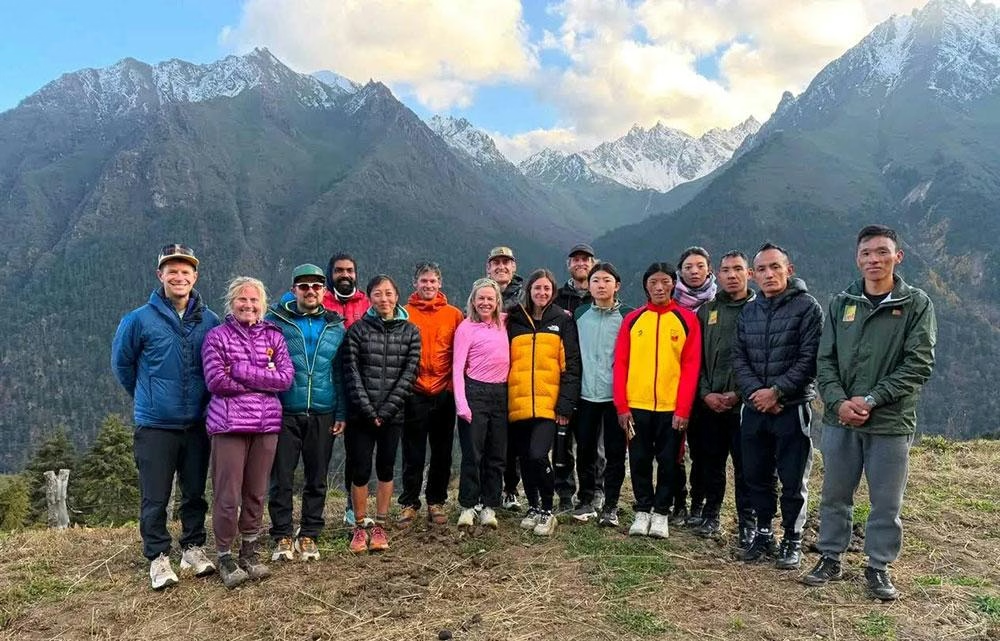
The Ultimate Mountain Challenge Unfolds in Bhutan's Remote Highlands 🏔️
One of the world's most demanding ultramarathon events is underway, as 17 elite runners—comprising 11 international competitors and six Bhutanese athletes—embark on an extraordinary 185-kilometre journey through some of Asia's most unforgiving terrain. The Snowman Race, which commenced today and continues through October 28, represents far more than a test of physical endurance; it's a powerful statement about climate advocacy, mountain conservation, and the indomitable human spirit.
This prestigious race traverses the remote Himalayan landscape connecting Laya to Bumthang, passing through iconic waypoints including Tarina, Lhedi, Geche Gom, and Julay Tsho. Participants will face mountain passes soaring to 5,470 metres above sea level, where oxygen levels plummet and the air itself becomes a formidable adversary. Over five grueling days, runners must navigate not only the physical demands of ultramarathon running but also the psychological challenges posed by extreme altitude, unpredictable weather, and accumulated fatigue.
A Global Platform for Climate Advocacy 🌍♻️
The Snowman Race has evolved into a vital international platform for drawing attention to climate change and environmental conservation. With eight first-time international participants joining three returning competitors, the race carries unprecedented global significance. Organisers emphasize that this diverse international field enables Bhutan to amplify its climate action message to a worldwide audience, transforming athletic competition into environmental activism.
"The race continues to serve as a powerful platform for climate advocacy," organisers stated. "With an international line-up, the race offers a vital opportunity to carry Bhutan's call for climate action to a worldwide audience."
The connection between athletic excellence and environmental stewardship reflects Bhutan's unique positioning as a carbon-negative nation and global leader in sustainability initiatives. By hosting international athletes in its pristine highlands, Bhutan demonstrates the urgent need for mountain ecosystem protection while showcasing the beauty worth preserving.
Meet the Athletes: Stories of Determination 💪✨
Among the international contingent is Olivia Susan Amber from the United States, for whom the Snowman Race represents both her first visit to Bhutan and her inaugural ultramarathon experience in the Himalayan region. Despite the formidable challenges ahead, Amber's enthusiasm remains undiminished.
"It's been the most incredible experience of my life," Amber reflected. "I am really excited to embrace the difficulties with all my friends and teammates and the people that I have met here."
Her perspective captures the spirit pervading the entire event—a recognition that suffering, when shared with a community of like-minded individuals, transforms into something transcendent.
On the domestic front, Bhutanese runner Tashi Norbu returns for his second consecutive year after making his competitive debut in 2024. Having completed the grueling course once before, Norbu brings invaluable experience to the starting line. "The weather is also good, and I wish all the participants good luck," he remarked, reflecting the camaraderie that characterizes this unique sporting event.
Preparation: The Science Behind Success 🔬⚡
The Bhutanese contingent has undergone rigorous, scientifically-designed preparation under the guidance of Tshetrim Yoezer, technical head and ultramarathon coach with the Snowman Secretariat. Rather than relying on conventional training methodologies, the team completed a comprehensive programme addressing physical, technical, tactical, and mental dimensions of ultramarathon performance.
A particularly intensive closed-door training camp held at Haa Damthang provided athletes with altitude acclimatization and terrain-specific conditioning. This multi-faceted approach recognizes that success at extreme elevation requires more than cardiovascular fitness.
"The biggest challenges will be the thin air and reduced oxygen availability above 4,000 metres, which can affect endurance, breathing and recovery," Yoezer explained. "The rugged terrain, unpredictable weather and accumulated fatigue over five days will test the runners' physical and mental resilience."
These challenges are not merely theoretical. Hypobaric hypoxia—the physiological condition resulting from decreased atmospheric pressure and oxygen availability—triggers cascading effects throughout the body. Athletes must manage acute mountain sickness, compromised oxygen saturation, elevated heart rates, and impaired cognitive function simultaneously.
Safety First: Comprehensive Medical Support Systems 🏥🚑
Recognizing the inherent risks of ultramarathon racing at extreme altitude, organisers have implemented a comprehensive safety infrastructure that reflects international best practices in remote area emergency medicine.
All participants undergo mandatory pre-race medical evaluations and follow a structured acclimatization schedule designed to minimize altitude-related complications. The course itself features five strategically positioned checkpoints and four overnight halt stations, each staffed by qualified medical personnel prepared to address emergencies ranging from minor dehydration to life-threatening conditions.
A dedicated sweeper team follows the final runners, ensuring no participant is abandoned on the mountain. This commitment to inclusivity—that finishing times matter less than ensuring everyone reaches their destination safely—distinguishes the Snowman Race from many elite ultramarathon events.
Technology enhances these safety measures significantly. A central control room in Thimphu monitors real-time runner positions and coordinates with field teams. This year, organisers integrated Starlink satellite internet with regional mobile networks, dramatically improving live tracking, emergency communications, and coordination capabilities in areas where conventional infrastructure is absent.
The Route: From Laya's Heights to Bumthang's Valleys 🗺️🏔️
The course design itself reflects careful consideration of both athletic challenge and environmental significance. Beginning in Laya, the race descends to Tarina before climbing toward Lhedi and Geche Gom. The route then passes Julay Tsho—a pristine alpine lake—before concluding in Bumthang's more temperate valleys.
This trajectory ensures participants experience multiple altitude zones, diverse ecosystems, and the dramatic geological transitions that characterize the eastern Himalayan region. Each segment presents distinct physiological challenges: the initial high-altitude exposure tests cardiovascular adaptation, mid-race sections demand mental fortitude as cumulative fatigue accumulates, and final stages require careful pacing to avoid catastrophic performance deterioration.
Historical Context: From Vision to Reality 📚🏛️
The Snowman Race emerged from a visionary perspective regarding highland community development and environmental stewardship. First held in 2022, the event was discontinued before returning in 2024, reflecting organisers' commitment to establishing a sustainable, internationally-recognized ultramarathon event.
The race's origins trace to His Majesty's deep concern for remote highland communities and their precarious relationship with a changing climate. This vision also manifests in the Royal Highland Festival, another initiative promoting highland community welfare while celebrating Bhutanese cultural heritage.
"The mountains may be our racecourse, but protecting them is our shared responsibility," organisers emphasized. This philosophy transcends athletic competition, positioning the race as a vehicle for environmental consciousness and community empowerment.
Climate Change and Mountain Ecosystems: The Broader Message 🌡️❄️
The Snowman Race highlights interconnected environmental challenges facing the Himalayan region. Glacial melt accelerates annually, threatening water supplies for millions downstream. Weather patterns grow increasingly unpredictable, jeopardizing traditional livelihoods dependent on seasonal predictability. Mountain ecosystems face unprecedented pressure from climate change, habitat fragmentation, and human activity.
For highland communities in Bhutan, these changes translate into immediate hardship. Farmers struggle with shortened growing seasons, herders face reduced grazing availability, and younger generations increasingly migrate to urban centers, abandoning traditional practices.
By bringing international athletes to these fragile ecosystems, the Snowman Race creates powerful advocacy opportunities. Athletes become environmental ambassadors, returning to their home countries with visceral understanding of climate change's concrete impacts. Global audiences watching these runners struggle with altitude and weather gain intuitive comprehension of environmental pressures that statistics alone cannot convey.
"We want athletes, local communities and global audiences to recognise that climate change is a shared responsibility, and that individual actions, no matter how small, contribute to a sustainable future," organisers stated.
Bhutanese Athletes: Ambassadors for Environmental Protection 🇧🇹🌿
The six Bhutanese competitors represent more than athletic achievement; they embody their nation's commitment to environmental stewardship and sustainable development. By competing at the highest levels of ultramarathon athletics, these runners demonstrate that environmental consciousness and athletic excellence are complementary rather than contradictory pursuits.
Their participation carries symbolic weight within Bhutan's broader national development framework. As the world's only carbon-negative country, Bhutan has positioned environmental protection as central to national identity. Bhutanese ultramarathon runners competing on the international stage reinforce this commitment while inspiring domestic audiences to embrace sustainable practices.
What Lies Ahead: The Five-Day Journey 🏃⛰️🔥
As the race progresses over the coming five days, runners will face moments of profound physical and psychological challenge. The combination of extreme altitude, technical terrain, unpredictable weather, and accumulated fatigue creates a unique proving ground for human resilience.
Yet beyond the competition itself lies something more significant: a global conversation about climate change, mountain conservation, and humanity's relationship with fragile ecosystems. Each runner who crosses the finish line in Bumthang carries that message forward, becoming an ambassador for environmental action in their home communities.
The Snowman Race reminds us that athletic achievement and environmental advocacy need not exist separately. Through extraordinary human effort in extraordinary places, we can illuminate the urgency of climate action while celebrating the indomitable capacity of the human spirit. 🏁✨
You May Also Like

Sports
Bhutan's Historic FIFA U-15 World Cup Debut in Azerbaijan
October 24, 2026
Sports
Bhutan's Para-Sports Gap: Lessons from Asian Para Games
October 23, 2026
Sports
FIFA's $25 Million Investment in Bhutan's Football Future
October 21, 2026
Sports
From Grassroots to AFC: Bhutan's Football Journey
October 19, 2026