Category:
SportsBhutan's Para-Sports Gap: Lessons from Asian Para Games
The Asian Para Games Wake-Up Call 🎯
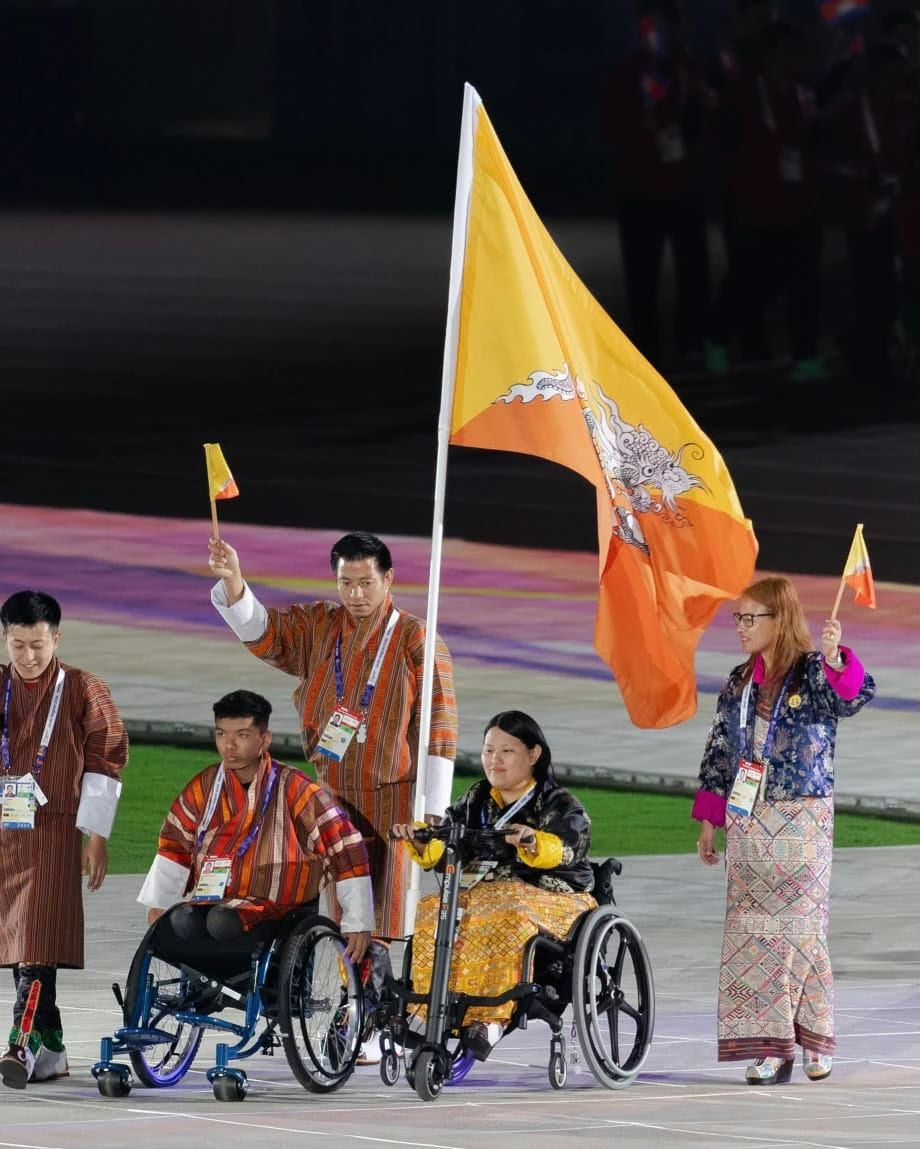
Bhutan's representation at the 5th Asian Para Games in Aichi-Nagoya, Japan, served as a revealing mirror reflecting the country's para-sports development landscape. Three dedicated athletes—Kinley Dem in para shooting, Tika Ram Ghalley in para archery, and Cheyang Kuenchap in para badminton—competed against some of Asia's most experienced para-athletes, exposing critical infrastructure and training gaps that demand immediate attention.
The continental competition, which concluded in October, provided invaluable insights into where Bhutan stands on the regional para-sports stage. While the athletes demonstrated remarkable determination and skill, their performances highlighted systemic challenges that extend far beyond individual capability.
Breakthrough Moments and Challenges 💪
Tika Ram Ghalley's Archery Journey
Tika Ram Ghalley's performance in men's recurve archery exemplified both promise and potential. Scoring 565 points in the ranking round to finish 19th, he created a memorable moment by defeating Japan's Tadatsugu Otsuka 6–5 in a thrilling shoot-off after their match ended in a tie.
This victory wasn't merely a win—it was a psychological breakthrough. "Winning the shoot-off against Japan increased my confidence and showed me the importance of patience, concentration and self-belief," Tika reflected, capturing the essence of competing at the highest continental level. His subsequent elimination loss in the next round, however, underscored the consistency challenges facing Bhutanese para-athletes.
Tika's honest assessment of his needs revealed the core issue: para-sports development in Bhutan requires more international exposure, quality coaching, and structured training programs. His recognition that improved accuracy and pressure management skills need development demonstrates the self-awareness necessary for growth in competitive para-sports.
Kinley Dem's Shooting Performance
Kinley Dem's experience in women's 10m air rifle standing SH1 competition tells a similar story of untapped potential constrained by systemic limitations. Scoring 611.3 points in qualification to finish 16th, she narrowly missed advancing to the finals—a result that frustrated her but also illuminated specific areas requiring intervention.
"I did not achieve the result I expected because nervousness affected my concentration and consistency," Kinley acknowledged. Her candid reflection points to a critical need: para-athletes in Bhutan require more competitive opportunities within their home country to build confidence and develop pressure management techniques.
Beyond psychological factors, Kinley raised a practical concern often overlooked in para-sports discussions—wheelchair-accessible facilities. The absence of proper toilet and washroom facilities creates unnecessary barriers for training convenience, a challenge that reflects broader infrastructure gaps in Bhutan's para-sports ecosystem.
Cheyang Kuenchap's Badminton Struggles
Cheyang Kuenchap's para-badminton campaign in the men's WH2 category demonstrated the significant skill gap between Bhutanese athletes and their regional counterparts. Facing opponents from Thailand, Malaysia, and South Korea, he experienced decisive losses—8–21, 8–21 against Thailand's Kittichai Rakjaingam; 10–21, 8–21 against Malaysia's Noor Azwan Noorlan; and 7–21, 7–21 against South Korea's representative.
The consistent scorelines weren't coincidental—they reflected fundamental preparation differences. Cheyang identified his specific challenge: "The international level is very high, and I need to improve my upper-body strength and movement around the forecourt."
His most revealing insight concerned training conditions at home. Para-badminton development in Bhutan suffers from a critical shortage of wheelchair-playing opponents, forcing athletes like Cheyang to train with standing coaches. This fundamental mismatch between training conditions and competitive reality creates a significant disadvantage when facing internationally experienced wheelchair players.
The Infrastructure and Systemic Gaps 🏗️
Dedicated Training Facilities: The Missing Piece
The Bhutan Paralympic Committee (BPC) clearly identified the most pressing challenge: the absence of a dedicated, fully equipped training centre. This isn't merely an inconvenience—it's a fundamental barrier to para-sports development.
Without centralized facilities, the logistical burden becomes overwhelming. Athletes living in different locations across Bhutan face coordination challenges in bringing together training groups and national federation support. This geographic fragmentation directly impacts training consistency, athlete development, and the ability to implement systematic improvement programs.
While the BPC reported no major equipment-related problems during Asian Para Games preparations, this reflects successful problem-solving despite systemic constraints rather than adequate infrastructure.
Competitive Exposure Deficit
Bhutan's para-athletes lack sufficient domestic and regional competitive opportunities. This creates a vicious cycle: without regular competitions, athletes cannot develop pressure management skills, test new techniques, or build the competitive experience necessary for international success.
The Asian Para Games represented a rare high-level competitive opportunity, making it simultaneously valuable and overwhelming. Athletes who rarely face international competition suddenly confronted experienced para-athletes competing in their home regions with established support systems.
Coaching and Technical Support Limitations
The recurring theme across all three athletes centered on coaching quality and specialization. Para-sports coaching requires specific expertise—understanding disability classifications, movement adaptations, and sport-specific techniques for athletes with varying impairments.
Bhutan's para-athletes currently lack access to specialized coaches with international experience. This knowledge gap translates directly into performance limitations, as athletes cannot receive coaching informed by global best practices in their respective disciplines.
International Participation as Assessment Tool 🌏
The Bhutan Paralympic Committee strategically views international competition as more than just medal pursuit. For para-archery and para-badminton athletes making their Asian Para Games debut, the competition served as a comprehensive assessment opportunity.
This perspective reflects sophisticated thinking about long-term para-sports development. Rather than focusing solely on immediate results, the BPC recognizes that international participation provides:
- Objective performance measurement against globally competitive standards
- Identification of specific technical and physical improvement areas
- Psychological preparation for future high-level competitions
- Valuable experience that informs training program adjustments
This assessment-focused approach suggests the BPC understands that sustainable para-sports development requires data-driven decision-making and realistic goal-setting.
Strategic Development Plans Moving Forward 📋
The Bhutan Paralympic Committee has outlined an ambitious yet realistic development strategy addressing identified gaps:
Talent Identification and Expansion: The BPC plans to identify additional potential para-athletes and expand participation across different disciplines. This recognizes that current representation (three athletes) likely doesn't reflect the full pool of talented individuals with disabilities in Bhutan.
International Knowledge Exchange: Collaboration with other National Paralympic Committees will facilitate knowledge sharing, technical support, coaching development, and increased access to international competitions. This partnership approach leverages regional expertise without requiring Bhutan to develop all capabilities independently.
Sustainable Development Focus: Rather than pursuing isolated medal victories, the BPC's strategy emphasizes building sustainable systems that create long-term para-sports growth.
Broader Context: Para-Sports Development Globally 🌟
Bhutan's challenges reflect broader patterns in para-sports development across smaller nations and developing countries. The International Paralympic Committee has consistently highlighted that:
- Infrastructure investment remains the primary barrier to para-sports participation in developing regions
- Coaching expertise and specialized knowledge transfer drive performance improvement
- Domestic competitive opportunities build the foundation for international success
- Athlete support systems—including medical, psychological, and logistical support—significantly impact performance
Bhutan's situation, while unique to its geographic and economic context, shares these common challenges with many emerging para-sports nations.
The Path Forward: Realistic Expectations and Ambitious Goals 🚀
Bhutan's para-athletes demonstrated genuine competitiveness and determination at the Asian Para Games. Their performances, while not yielding medals, provided the foundation for meaningful progress.
Turning Asian Para Games experience into tangible improvement requires sustained commitment to addressing infrastructure gaps, expanding coaching capacity, and increasing competitive opportunities. The BPC's strategic approach suggests this commitment exists.
For a small nation like Bhutan, para-sports development won't follow the trajectory of larger countries with established systems. Instead, progress will emerge through strategic partnerships, targeted investment in facilities and coaching, and consistent athlete identification and development.
The athletes themselves—Tika, Kinley, and Cheyang—have already demonstrated the essential ingredient: the willingness to compete at the highest levels despite systemic disadvantages and the self-awareness to identify improvement areas. With proper support systems, this foundation can yield significant progress in coming years.
Key Takeaways 💡
Bhutan's participation in the Asian Para Games illuminated both promising potential and critical development needs. The three athletes proved capable of competing internationally, yet their experiences revealed that para-sports development in Bhutan requires dedicated training facilities, specialized coaching, increased domestic competition, and sustained international exposure.
The Bhutan Paralympic Committee's strategic response—focusing on talent identification, international partnerships, and systematic development—suggests the nation is ready to address these gaps. Success will depend on translating strategic plans into concrete infrastructure investment and sustained commitment to para-athlete support.
For Bhutan's para-sports future, the Asian Para Games represented not an endpoint but a beginning—a clear-eyed assessment of current capabilities and a roadmap for meaningful progress in the years ahead.
You May Also Like
Sports
FIFA's $25 Million Investment in Bhutan's Football Future
October 21, 2026
Sports
From Grassroots to AFC: Bhutan's Football Journey
October 19, 2026
Sports
Coach Pushpa Lal Sharma Eyes AFC Glory with Paro FC
October 19, 2026
Sports
Bhutan Football Federation Secures USD 25M FIFA Investment
October 19, 2026