Category:
NewsRural Bhutan Faces Fencing Challenges as Population Ages
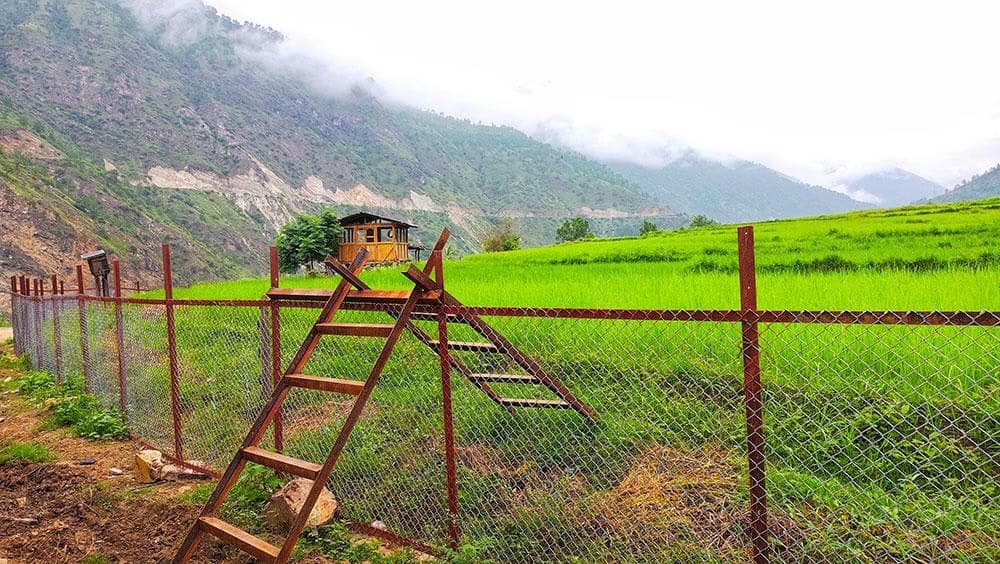
Introduction: A Growing Challenge 🌾
The lush landscapes of Bhutan have long been a sanctuary for diverse wildlife. However, this natural beauty also presents challenges for rural farmers who face increasing human-wildlife conflicts (HWC). To combat this, Bhutan's government has implemented a chain-link fencing expansion programme. Despite its intentions, the program has encountered significant obstacles, particularly due to the ageing rural population and stringent eligibility requirements.
The Chain-Link Fencing Initiative 🔗
In an effort to protect farmlands from wildlife, the Bhutanese government has invested heavily in chain-link fencing. With an expenditure of Nu 1.5 million per kilometre, this initiative has already seen the installation of 1,107 kilometres of fencing, benefiting over 12,900 households. Yet, the initiative's eligibility criteria—requiring at least 30 acres of land—excludes many smaller, fragmented farms.
Impacts on Small Farmers 🌾
The current guidelines have sparked debate, with MPs like Sangay Thinley advocating for a reduction in the acreage requirement to 20 acres. This change would allow more small-scale farmers to benefit from fencing and reduce crop losses. The National Crop and Livestock Insurance Scheme (NCLIS) serves as an alternative, though its reach remains limited.
Ageing Population and Labour Shortages ⏳
A critical issue compounding the fencing programme's challenges is the ageing population in rural areas. With many villages now home to elderly residents, the labour-intensive work of installing fences becomes unfeasible. The decline in the rural workforce, from 65% in 2009 to 43.5% in 2023, highlights the growing labour shortage.
Feminisation of Agriculture 👩🌾
With young men migrating to urban centers, the agricultural workforce has seen a marked increase in female participation—from 52.5% in 2005 to 59.3% in 2017. Despite their pivotal role, these women face significant challenges, particularly when tasked with the physical demands of farm work and fence installation.
Innovative Solutions and Future Prospects 🚀
In response to these challenges, the government, in collaboration with JICA, is piloting advanced fencing models. These designs combine cement barriers, chain-link fencing, and electric fencing to offer enhanced protection. If successful, these models could be scaled across the nation.
Economic Implications 💰
The fencing initiative, while costly, promises significant economic benefits. Areas protected by fencing have reported increased agricultural productivity and reduced wildlife intrusions. However, balancing the cost against the benefits remains a complex issue, especially when considering limited national resources.
Conclusion: A Path Forward 🌟
While the chain-link fencing programme in Bhutan shows promise in mitigating human-wildlife conflicts, its implementation faces hurdles. Addressing the needs of ageing populations, revising eligibility criteria, and leveraging innovative solutions are crucial for the programme's success. As Bhutan navigates these challenges, the potential for improved agricultural outcomes and economic growth remains, offering hope for a sustainable future.
Key Takeaways:
- Revising eligibility criteria could broaden access to benefits.
- Innovative fencing solutions show promise for widespread implementation.
- Addressing labour shortages is crucial for programme success.
You May Also Like
News
Women Entrepreneurs Master AI and Digital Tools in Phuentsholing
September 1, 2026
News
Can Samtse Keep Up With Its Growing Workforce?
August 29, 2026

News
Nepal Flood Exposes Critical Gaps in Bhutan's Early Warning Systems
August 29, 2026
News
High Court Overturns Acquittal: Doctor Sentenced to 10 Years for Child Sexual Abuse
August 29, 2026