Category:
NewsBhutan Sees Surge in Vehicle Ownership Transfers
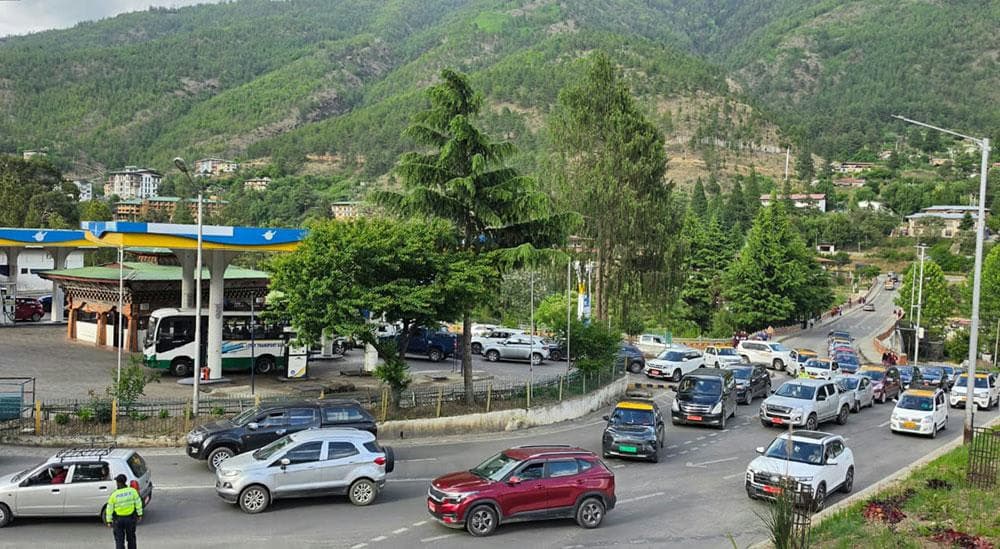
In a recent turn of events, Bhutan has witnessed an unprecedented surge in vehicle ownership transfers. 🚗📈 This trend, observed since the beginning of 2023, is attributed to a strategic initiative by the Bhutan Construction and Transport Authority (BCTA) aimed at simplifying the transfer process.
Key Changes Driving the Surge 🔄
The BCTA's initiative, spanning from January 1 to June 30, has introduced several key changes to facilitate ownership transfers. One significant amendment includes the relaxation of the sale deed requirement. This means individuals unable to locate the original registered owner or sale deed can still transfer ownership by submitting a Letter of Undertaking.
Eased Taxation Policies 💸
Moreover, the initiative has reformed the taxation policy. Previously, the transfer tax was calculated based on the higher value between the depreciated vehicle value and the sale deed value. Now, the tax is levied solely on the depreciated value, making the process financially more accessible for vehicle owners.
- Depreciation Details:
- Vehicles depreciate by 10% annually for the first two years.
- From years three to six, the depreciation rate is 15% annually.
- After six years, the value is fixed at 10% of the original cost.
These measures have encouraged more owners to regularize their vehicle records, resulting in approximately 9,500 transfers by April 2023 alone—nearly matching the total transfers for the entire previous year.
The Importance of Accurate Ownership Records 📑
Accurate vehicle ownership records are crucial for several reasons. They aid in efficient transport planning, ensure compliance with regulations, and facilitate effective law enforcement. The BCTA emphasizes that reliable data is vital for policymaking, and inaccurate records could potentially complicate investigations, especially in cases of crimes or accidents involving vehicles.
Upcoming Regulatory Changes ⚖️
Starting July 1, under the new Road Safety and Transport Rules and Regulations 2026, strict penalties will be enforced for failing to transfer ownership post-sale. Non-compliance could lead to a fine of Nu 100 per day from the date of sale. Additionally, joint inspections by the BCTA and the Royal Bhutan Police (RBP) Traffic Division will ensure adherence to these new rules.
Broader Implications and Insights 🌍
This surge in ownership transfers can be linked to broader trends in Bhutan's automotive sector and urbanization. As the country develops, vehicle ownership is expected to rise, underlining the need for streamlined processes and accurate data management.
What’s Next? 🔮
As Bhutan continues to modernize its transport infrastructure, initiatives like the one introduced by the BCTA will play a critical role in ensuring a seamless transition. The focus will likely remain on enhancing data accuracy and compliance to support the nation's transport policies effectively.
In conclusion, the recent surge in vehicle ownership transfers marks a significant step towards regulatory compliance and efficient transport management in Bhutan. As new rules come into force, vehicle owners must stay informed and proactive in aligning with these changes to avoid penalties and contribute to a well-regulated automotive landscape.
You May Also Like
News
Women Entrepreneurs Master AI and Digital Tools in Phuentsholing
September 1, 2026

News
Can Samtse Keep Up With Its Growing Workforce?
August 29, 2026

News
Nepal Flood Exposes Critical Gaps in Bhutan's Early Warning Systems
August 29, 2026
News
High Court Overturns Acquittal: Doctor Sentenced to 10 Years for Child Sexual Abuse
August 29, 2026