Category:
NewsRenewable Energy Goals Lag as Bhutan Seeks Diversification
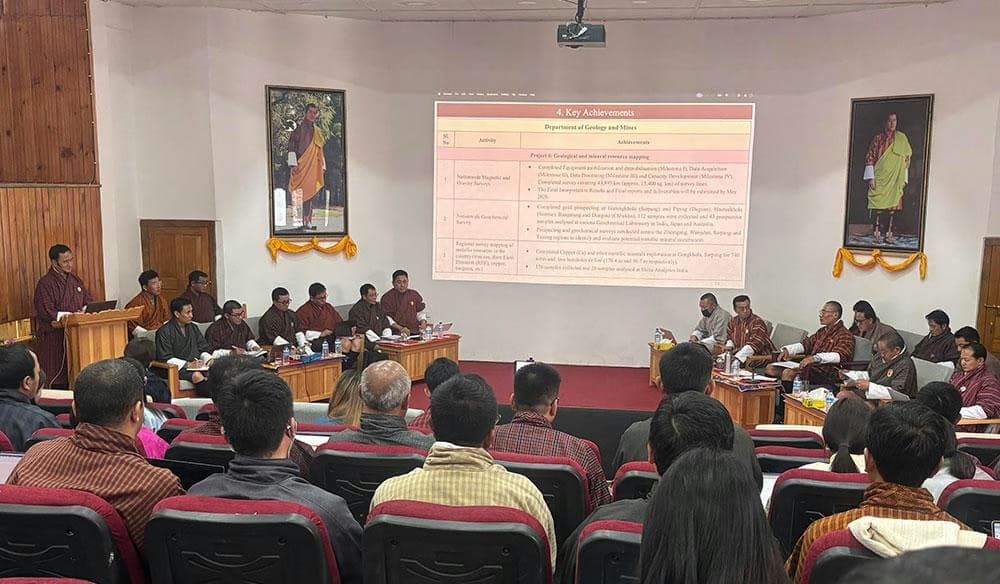
Bhutan, known for its commitment to sustainability, is facing significant hurdles in meeting its renewable energy targets. As the Ministry of Energy and Natural Resources (MoENR) pushes for diversification, the country's progress in expanding its renewable energy portfolio remains slow. While efforts to scale hydropower have been successful, the diversification into other renewable sources like solar and wind energy presents challenges.
Current Progress and Challenges 🌍
During a recent midterm review, MoENR Secretary Karma Tshering revealed that Bhutan's solar energy capacity stands at 32.49 megawatt peak (MWp), which is only 7% of the target set at 467 MWp. Similarly, wind energy development is at a nascent stage, with only a 0.6 MW baseline. Despite these modest figures, the ministry is determined, having completed a Detailed Project Report for a 30 MW wind energy target.
The Road to Diversification 🚀
The MoENR has acknowledged the need for diversification in the energy sector, not only to meet targets but also to ensure energy security. Prime Minister Tshering Tobgay emphasized the importance of this strategy, particularly in light of global geopolitical tensions affecting energy supplies. Bhutan's reliance on hydropower offers some security, but a diversified energy portfolio is essential for long-term stability and sustainability.
Significant Milestones Achieved 🎉
Despite the slow progress, several milestones have been reached. The 22.38 MW Sephu Solar Project, commissioned in phases in 2025, and the construction of the 120 MW Jamjee Solar Project mark significant achievements in the solar sector. The ministry has also rolled out rooftop solar installations, benefiting over 300 households, alongside mini-grid systems for remote areas like Lunana.
Policy and Infrastructure Developments 📜
On the policy front, Bhutan has made strides with the approval of the National Energy Policy 2025, the Renewable Energy Development Roadmap 2024, and the National Solar Energy Roadmap (2025–2040). Additionally, a Hydrogen Roadmap and Domestic Tariff Guidelines have been crafted, with the Energy Bill in the drafting stage for stakeholder consultations. These policies aim to strengthen regulatory governance and support the growth of the renewable sector.
Financial and Economic Considerations 💰
Achieving Bhutan's ambitious energy targets requires substantial investment, estimated at USD 26 billion for a long-term goal of 20 gigawatts (GW) of installed capacity. Financing remains a critical challenge, but the ministry has reported strong performance in climate financing and carbon trading, exceeding targets by over 200% and raising Nu 10.9 billion.
The Path Forward: Strategic Recommendations 🛤️
To accelerate progress, the MoENR recommends increasing the solar target from 467 MWp to 1,000 MWp and revising wind energy targets. Hydropower expansion continues to be a central strategy, with plans to develop new project pipelines, including pumped storage projects.
The completion and commissioning of small hydropower projects such as Suchhu (18 MW), Burgangchhu (54 MW), and Yungichhu (32 MW) further contribute to Bhutan's energy goals.
Conclusion: The Future of Bhutan's Energy Sector 🔮
As Bhutan navigates the complexities of energy diversification, the focus remains on sustainable growth and energy security. With strategic planning, policy support, and investment, Bhutan can achieve its renewable energy ambitions, contributing to a greener and more resilient future. The lessons learned and milestones achieved provide a foundation for continued progress in the country's renewable energy journey.
You May Also Like
News
Women Entrepreneurs Master AI and Digital Tools in Phuentsholing
September 1, 2026
News
Can Samtse Keep Up With Its Growing Workforce?
August 29, 2026
News
Nepal Flood Exposes Critical Gaps in Bhutan's Early Warning Systems
August 29, 2026
News
High Court Overturns Acquittal: Doctor Sentenced to 10 Years for Child Sexual Abuse
August 29, 2026