Category:
EconomyRegulatory Reform Consultation Exposes Key Frustrations
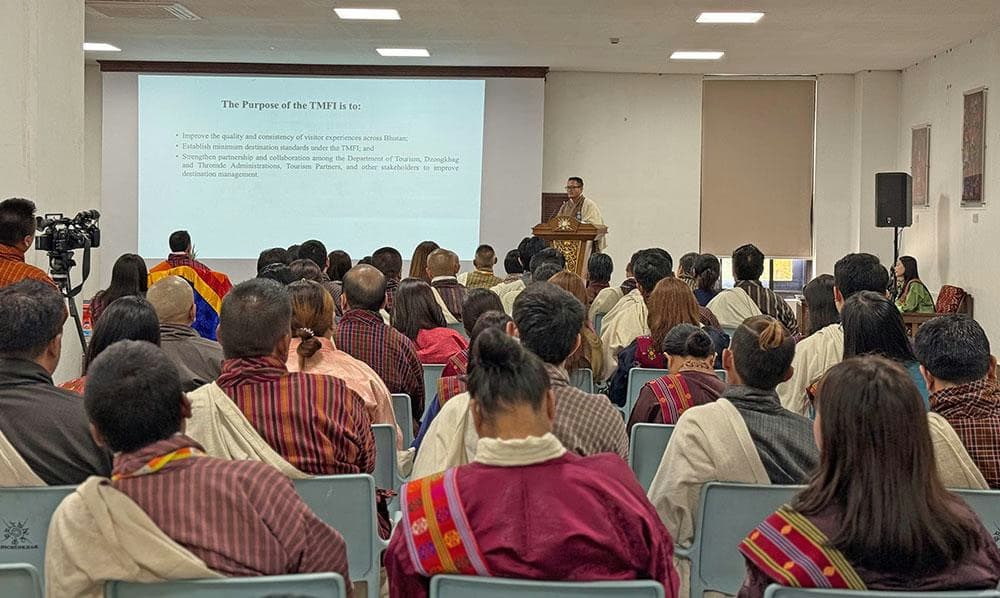
Bhutan's private sector is finally getting its voice heard. 🎤 After years of being called the backbone of economic growth, businesses are now sitting at the table where policy decisions are made. The government has launched an ambitious nationwide consultation on business regulatory reform, and the conversation is revealing deep-seated challenges that have held entrepreneurs back for far too long.
Understanding the Business Regulatory Reform Initiative 🏢
The Business Regulatory Process Review represents a watershed moment for Bhutan's economic landscape. What started as a single consultation in Thimphu has evolved into a comprehensive nationwide engagement spanning all 19 dzongkhags and three thromdes between late July and mid-August. This isn't just another government exercise—it's a systematic effort to review 955 regulatory instruments that currently govern business activities across the country.
The initiative, spearheaded by the Bhutan Chamber of Commerce and Industry in collaboration with the Ministry of Industry, Commerce and Employment and the Cabinet Secretariat, seeks to identify and dismantle regulatory bottlenecks that have constrained private sector growth. The underlying goal is straightforward: create a transparent, efficient, and genuinely business-friendly environment that encourages investment and entrepreneurship.
The Core Issues Hampering Business Growth 📋
During the consultation sessions, several persistent challenges emerged that paint a clear picture of the regulatory environment's current state:
Land Access and Tourism Infrastructure 🏞️
One of the most contentious issues involves government-owned land at tourism sites. Private operators have repeatedly expressed frustration over their inability to establish essential amenities—toilets, restaurants, cafés—on these properties, even when willing and capable of doing so. This creates a paradox: the government promotes tourism development, yet the regulatory framework prevents private sector participation in delivering the visitor experience.
This constraint directly impacts Bhutan's ability to compete with regional tourism destinations. As visitor numbers grow, the infrastructure gap becomes increasingly problematic, potentially limiting the sector's expansion potential.
Licensing and Administrative Procedures ⚙️
Businesses continue to navigate convoluted licensing processes that consume time and resources without clear justification. The consultation revealed that many entrepreneurs view these procedures as unnecessarily complex, creating barriers to entry for new ventures and slowing expansion for existing ones.
Tourism Fee Structure 💰
The Sustainable Development Fee (SDF)—currently USD 200 for international tourists and Nu 1,500 for regional tourists—has become a focal point of debate. Industry participants argue that the current flat-fee model doesn't reflect visitor behavior patterns. Most tourists stay between three to five days, with few extending beyond a week.
Stakeholders proposed a duration-based discount system that could encourage longer stays and deeper exploration of the country. Such a structure might increase overall spending, extend visitor engagement with local communities, and generate more substantial economic benefits than the current approach.
The Tourism Minimum Facilities Initiative: A Step Forward ✨
To complement the broader regulatory reform, the government has rolled out the Tourism Minimum Facilities Initiative (TMFI) under the TASHEL Framework. This initiative represents a meaningful attempt to standardize and elevate tourism experiences across Bhutan.
The TASHEL framework encompasses six core pillars:
- Tidy Environment: Well-maintained, clean destinations
- Accessible Infrastructure: Adequate facilities and transportation options
- Safe Destination: Security and health standards
- Hospitable Experience: Warm, welcoming service culture
- Enduring Heritage: Preservation and authentic presentation of cultural assets
- Local Stewardship: Community involvement and benefit-sharing
These standards aim to ensure consistency across tourism sites while supporting a more business-friendly environment that allows private sector participation in delivering quality experiences.
Addressing the Implementation Gap 🔄
One particularly candid criticism emerged during the consultations: the perception that numerous workshops and meetings produce minimal tangible outcomes. Business representatives questioned the value of repeated consultations without concrete follow-through, suggesting consultation fatigue among stakeholders.
This feedback highlights a critical challenge in governance—the gap between dialogue and implementation. For regulatory reform to succeed, commitments made during consultations must translate into actual policy changes and regulatory adjustments.
The Ministry has acknowledged this concern, noting that over 150 regulatory issues have been addressed over the past two years. However, the pace and visibility of these changes require acceleration to rebuild stakeholder confidence in the reform process.
Financial Sector Pressures in Tourism 💳
Another emerging concern involves the tourism sector's financial health. Financial institutions are increasingly treating tourism-related loans as non-performing assets (NPLs), placing considerable strain on operators. This trend reflects broader challenges in the sector, including seasonal volatility and compressed margins.
Additionally, the conversion of residential flats into hotel accommodations—driven by various sectoral pressures—is creating complications in property management and regulatory oversight. These shifts underscore the need for more adaptive regulatory frameworks that can accommodate evolving business models.
Competitive Pressures from Regional Routes 🌏
A significant share of international tourists now enter Bhutan through Indian tour operators, traveling via India to Phuentsholing rather than flying directly to Paro. This routing pattern reflects cost considerations and package availability, but it also represents a competitive vulnerability.
As neighboring regions develop better infrastructure, amenities, and airport connectivity, Bhutan risks losing market share to alternative routes. Industry participants emphasized that improving service quality, expanding amenities, and potentially developing additional airport capacity could reverse this trend and strengthen Paro's position as the primary gateway.
The Need for Advance Communication 📢
Consultation participants also raised concerns about ad-hoc announcements of government plans and programs. When changes are announced with minimal notice, agencies scramble to implement, often resulting in inefficiencies and suboptimal outcomes.
Stakeholders urged the government to adopt a more predictable communication approach, providing advance notice of policy changes and program adjustments. This would enable businesses and relevant agencies to plan strategically rather than react hastily, ultimately improving implementation quality and reducing disruption.
Building a Trust-Based Economy 🤝
Minister Namgyal Dorji has framed the regulatory reform effort around a central concept: creating a "trust-based economy." This vision requires mutual accountability across all sectors—government, private business, financial institutions, and civil society.
Achieving this requires more than regulatory adjustments; it demands a fundamental shift in how stakeholders interact and collaborate. The consultation process itself represents a step toward this goal, but sustained commitment to implementation and transparent communication will be essential.
Looking Ahead: The Path to Reform 🚀
The nationwide consultation extending through mid-August will provide opportunities for businesses across all regions to voice their concerns and contribute to reform discussions. This geographic breadth is crucial—challenges faced by tourism operators in Thimphu may differ from those in peripheral areas, and a truly comprehensive reform must account for these variations.
The government's commitment to reviewing and addressing regulatory issues suggests genuine intent to improve the business environment. However, the success of this initiative will ultimately be measured by the speed and effectiveness of implementation, not by the quality of consultations alone.
Key Takeaways for the Business Community 📌
The regulatory reform consultation reveals that Bhutan's private sector is ready for change. Businesses are articulate about their challenges, constructive in their suggestions, and eager to partner with government in building a more enabling environment.
For entrepreneurs and investors, these consultations signal an opportunity to influence policy direction. Active participation in regional consultation sessions, clear communication of specific regulatory barriers, and collaborative engagement with government agencies can help shape reforms that genuinely address business needs.
For policymakers, the consultation feedback underscores that regulatory reform isn't merely a technical exercise—it's fundamental to achieving economic growth targets and fulfilling the promise that the private sector truly is the engine of Bhutan's development.
You May Also Like

Economy
Fixed Deposit Tax Withholding: What You Need to Know
September 13, 2026
Economy
DRC's QR Payment Innovation: Tracking Business Income
September 2, 2026

Economy
Single Mother Transforms Life Through Beekeeping in Bhutan
August 31, 2026
Economy
Natural Resources: Turning Ore into National Opportunity
August 29, 2026