Category:
NewsBhutan Raises 108 Sacred Chortens on Historic Day
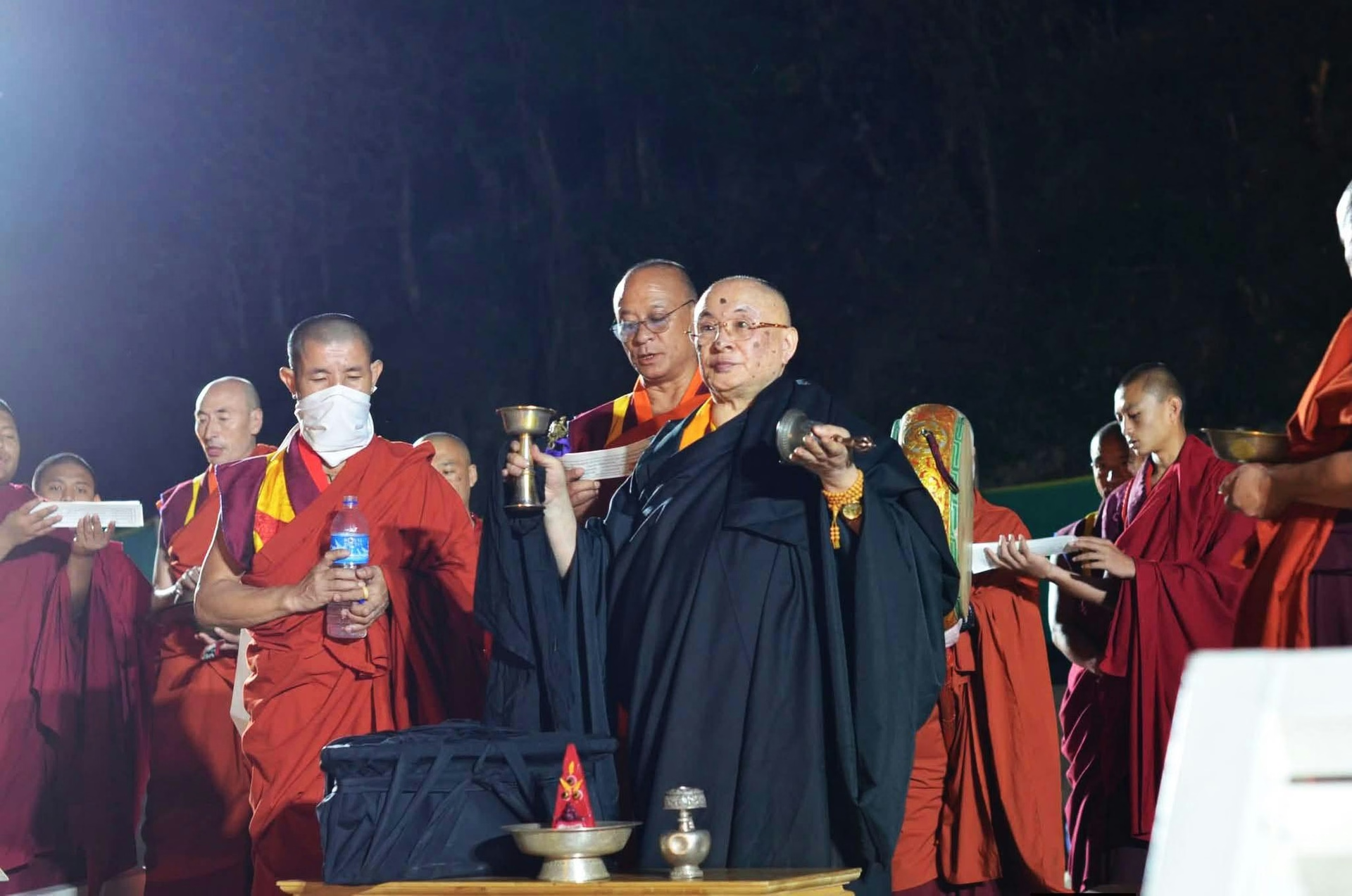
In a momentous convergence of spiritual significance and national pride, Bhutan is witnessing an extraordinary event that occurs once in a generation. 🙏 On November 1st, the Himalayan kingdom will simultaneously celebrate three profound occasions that resonate deeply with Buddhist traditions and national heritage. The raising of 108 sacred chortens in Gelephu Mindfulness City represents not merely a construction milestone, but a spiritual undertaking that carries centuries of Buddhist philosophy and contemporary national aspirations.
This remarkable day encapsulates the essence of what makes Bhutan unique in the modern world—a nation that seamlessly blends ancient spiritual practices with contemporary development initiatives. The convergence of these three auspicious occasions demonstrates how deeply Buddhism remains interwoven with every aspect of Bhutanese life, from governance to community celebrations.
The Sacred Trinity: Three Occasions United 🌟
The November 1st event brings together three spiritually significant moments that would individually warrant national recognition. Their simultaneous occurrence, however, creates what spiritual leaders describe as an extraordinarily auspicious Tendrel—a Buddhist concept referring to interdependent origination and the interconnectedness of all phenomena.
Lord Buddha's Descending Day, known as Lhabab Duechen in Bhutanese Buddhist tradition, commemorates a pivotal moment in Buddhist history. According to Buddhist teachings, after spending three months in the celestial realms teaching the Dharma to gods and to his mother Mayadevi, Buddha descended to earth via a miraculous stairway. This day holds profound spiritual significance because Buddhists believe that the merit accumulated through virtuous actions is magnified manifold during this observance. 🕉️
Simultaneously, Bhutan observes Mothers' Day, which aligns with the Buddha's Descending Day. This dual celebration honors both the spiritual significance of Buddha's mother and the mothers of the nation, reflecting how Bhutanese culture honors feminine compassion and nurturing energy.
The third pillar of this historic convergence is the 18th Coronation Anniversary of His Majesty The King. This milestone marks nearly two decades of His Majesty's reign, a period that has witnessed Bhutan's transformation into a global model for sustainable development and happiness-centered governance.
The 108 Jangchub Chortens: Sacred Architecture Meets Spiritual Purpose 🏛️
The construction of 108 Jangchub Chortens within a single day represents an unprecedented undertaking in contemporary Bhutan. The number 108 itself carries profound Buddhist significance, appearing throughout Buddhist cosmology, prayer beads, and spiritual practices. This isn't arbitrary symbolism—it reflects the deep mathematical and spiritual sophistication embedded in Buddhist philosophy.
According to Sangay Tshering, the Lam Neten (spiritual advisor) of Sarpang Rabdey, these chortens serve multiple spiritual and protective functions. They have been erected to purify accumulated negativity, ward off disease and epidemics, eliminate social unrest, and ensure favorable weather conditions for agriculture. In a nation where farming remains central to rural livelihoods, these blessings carry practical as well as spiritual weight.
The chortens also represent a gift to future generations. "For as long as this aeon lasts, everyone born in Bhutan will have the opportunity to see and pay homage to these chortens and gather merit," Sangay Tshering explained. This perspective transforms a single day's construction into a legacy spanning centuries.
Months of Spiritual Preparation and Ritual 📿
The raising of these chortens wasn't a spontaneous event but the culmination of extensive spiritual preparation. The process demonstrates the meticulous ceremonial framework that underpins major religious undertakings in Bhutan.
Zung Lopens (masters of sacred mantras) from the Rabdeys of all 20 dzongkhags spent approximately five months preparing the zung—sacred mantras and spiritual formulas—for the Jangchub Chortens. Following this preparation, Drupdey Lopens from across the nation performed the Zungdrup ceremony for 21 consecutive days, a period that allowed for the proper invocation and consecration of spiritual power.
The ritual framework extended further with the performance of the Si-Nyon ritual at designated sites in Gelephu. This ceremony, presided over by His Holiness the Je Khenpo alongside senior religious figures, serves to suppress negative forces and eliminate obstacles to successful establishment of the chortens.
A particularly significant element involved His Holiness performing the Zhi-Gye-Wang-Drag—a ritual invoking the four enlightened activities of peace, prosperity, empowerment, and wrath. Dressed in the traditional black hat and ceremonial attire, this performance represented the full spectrum of Buddhist protective practices.
National Unity and Royal Devotion 👑
The chortens' construction emerged from His Majesty The King's personal faith and devotion. This royal initiative carries profound symbolic weight in Bhutanese society, where the monarchy represents not merely political leadership but spiritual stewardship.
Sangay Tshering articulated the deeper significance: "The coming together of these occasions signifies the people's unchanging bond with His Majesty The King, and the love and compassion that flow towards his subjects like an unbroken stream of water." This poetic description captures how Bhutanese citizens perceive their relationship with the crown—not as subjects of authority, but as recipients of continuous spiritual care and protection.
The spiritual advisor emphasized that Bhutan's exceptional fortune stems from what he termed "auspicious Tendrel." The perfect alignment of these three occasions, he suggested, reflects the accumulated merit of the nation and the spiritual power radiating from His Majesty's rule.
Buddhist Cosmology Meets Modern Development 🌏
The location of these chortens—Gelephu Mindfulness City—itself represents a fascinating intersection of Buddhist philosophy and contemporary urban planning. GMC stands as one of Bhutan's flagship development projects, designed to embody principles of mindfulness, sustainability, and human-centered development.
This juxtaposition of 108 ancient Buddhist structures within a cutting-edge mindfulness city encapsulates modern Bhutan's approach to progress. Rather than abandoning traditional spirituality in pursuit of development, the nation integrates sacred practices into its vision of the future. The chortens serve as spiritual anchors within a modern urban landscape, ensuring that rapid development doesn't sever connections to Buddhist heritage.
Broader Spiritual and Social Implications 🕯️
Beyond the immediate ceremonial significance, the raising of these chortens carries implications for Bhutanese society at large. Religious leaders anticipate that the chortens will catalyze increased faith in Buddhist Dharma among the population. In an era when many nations grapple with spiritual erosion and meaning deficits, Bhutan's commitment to large-scale religious infrastructure demonstrates a different model.
The extensive participation of Zung Lopens, Drupdey Lopens, and spiritual authorities from all 20 dzongkhags also reinforces national cohesion. Such undertakings require coordination across regional boundaries, fostering a sense of shared purpose and collective spiritual endeavor.
The emphasis on prayers for His Majesty's long life and the stability of his reign reflects Buddhist concepts of interdependence—the recognition that individual wellbeing and national prosperity are inseparable from the wellbeing of leaders who embody spiritual and temporal authority.
Historical Context: Chortens in Bhutanese Tradition 🏰
Chortens occupy a central place in Bhutanese Buddhist architecture and spiritual practice. These structures, known as stupas in Sanskrit Buddhist terminology, represent the enlightened mind and serve as focal points for meditation and merit accumulation. Throughout Bhutan's valleys and mountainsides, chortens of varying sizes dot the landscape, many constructed centuries ago.
The construction of 108 chortens in a single day represents an extraordinary scale for contemporary times, though it reflects historical precedents where Bhutanese rulers commissioned massive religious construction projects. Such undertakings have traditionally marked significant moments in the nation's spiritual and political history.
Looking Forward: Legacy and Continuity 🌅
As Bhutan marks this historic convergence, the nation demonstrates its commitment to preserving Buddhist traditions while embracing sustainable development. The 108 chortens will stand as physical manifestations of this commitment, visible reminders of the spiritual foundations upon which Bhutanese society rests.
For visitors and citizens alike, these structures will offer opportunities for contemplation, merit-making, and connection to Buddhist teachings. They represent an investment in the nation's spiritual capital—a recognition that lasting prosperity emerges not merely from economic growth but from moral and spiritual development.
The event also signals Bhutan's confidence in its unique developmental model. While many nations struggle to reconcile tradition with modernity, Bhutan continues demonstrating that these forces need not be adversarial. Instead, they can be complementary, with spiritual practices enriching and guiding contemporary development.
Conclusion: A Nation's Spiritual Commitment 🙏✨
The raising of 108 Jangchub Chortens on November 1st represents far more than a construction project. It embodies Bhutan's unwavering commitment to Buddhist principles, national unity, and the vision of a society where spiritual and material wellbeing advance together. The convergence of three auspicious occasions amplifies the significance, creating a moment that will resonate through Bhutanese history.
As these chortens rise across Gelephu Mindfulness City, they carry the prayers and aspirations of a nation. They stand as testament to His Majesty The King's devotion, the spiritual dedication of religious authorities across all dzongkhags, and the enduring faith of the Bhutanese people. For generations to come, these structures will serve as beacons of Buddhist wisdom and symbols of a nation that chose to build its future on foundations of compassion, mindfulness, and spiritual truth.
You May Also Like
News
Gasa Tshachu Buried Under Debris After Flash Flood
October 31, 2026
News
Project 108: Massive Healthcare Deployment for Gelephu Event
October 31, 2026
News
India Clears Road for Project 108: Border Security & Preparations
October 31, 2026
News
108 Stupas: Bhutan's Ambitious Wonder of the World
October 31, 2026