Category:
EconomyOvercoming Financing Hurdles in Bhutan's Agriculture
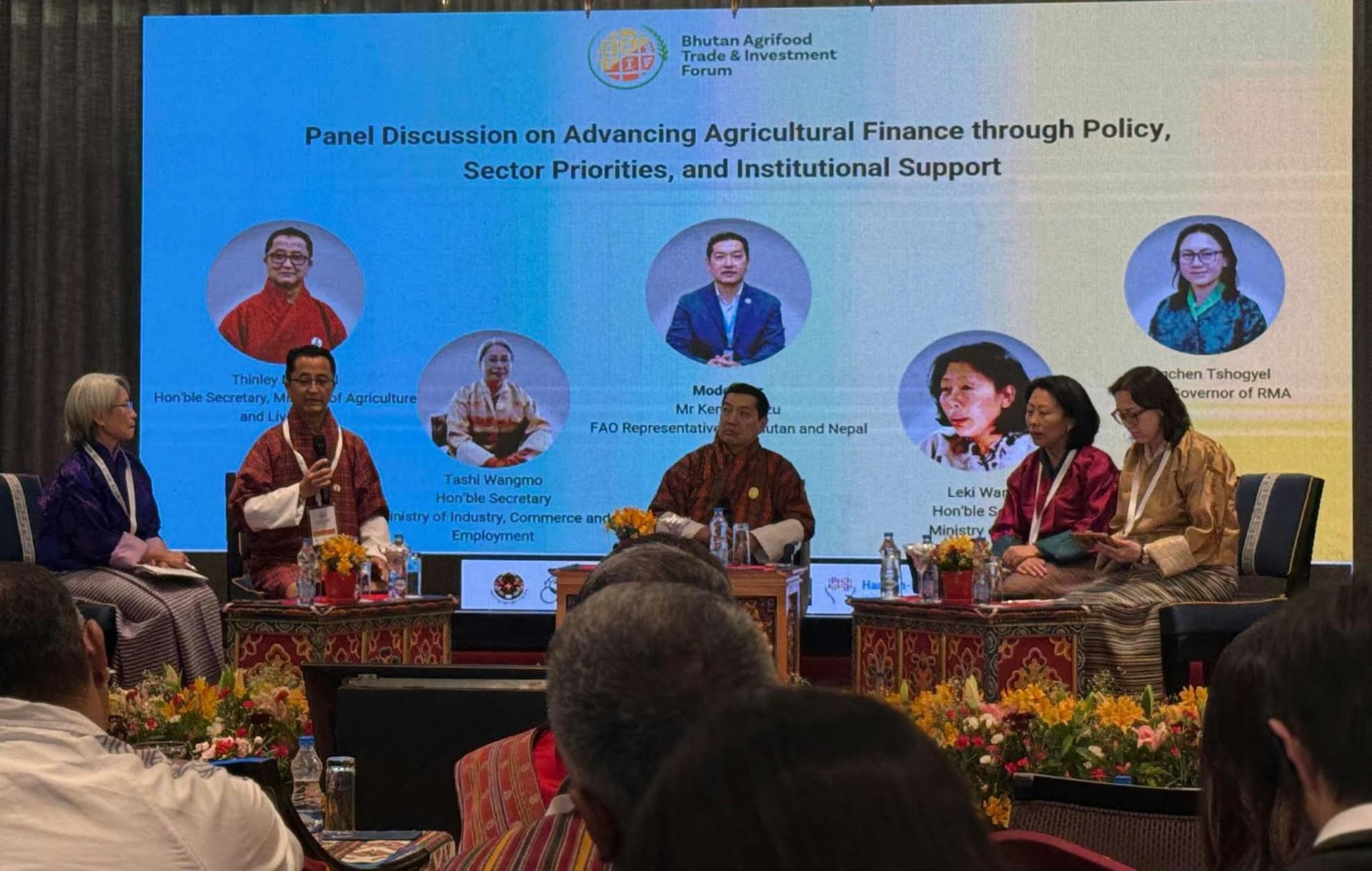
The agricultural sector in Bhutan is at a crossroads, facing significant challenges but also brimming with opportunities. As the country opens its doors wider to foreign investments, the sector's growth remains stunted by high non-performing loans (NPLs) and a lack of robust financing systems. Let's delve into the intricacies of these challenges and explore potential pathways forward.
The Current Landscape 🌾
Agriculture is a cornerstone of Bhutan's economy, contributing 14.15% to the GDP, approximately Nu 39.6 billion. Despite its potential, the sector is grappling with a widening trade deficit. In 2024, agricultural exports stood at Nu 3.9 billion against imports of Nu 13.7 billion, underscoring the need for strategic interventions.

Investment Opportunities and Regulations 🔍
Bhutan has revised its Foreign Direct Investment (FDI) Rules, allowing 100% foreign equity in agriculture and livestock, a significant increase from the previous 74% cap. This regulatory shift aims to attract more investors and enhance productivity. However, the sector still faces barriers such as the high FDI threshold of Nu 20 million, which excludes smaller businesses.
Financial Challenges 🚧
Access to finance remains a major hurdle. The Royal Monetary Authority (RMA) reports that only Nu 5 billion, less than 2% of total lending, is directed towards agriculture, with a startling 51% resulting in NPLs. High lending rates and limited agri-lending products deter investment, while weak institutional coordination further complicates the landscape.
Strategic Initiatives and Future Prospects 🌟
To combat these issues, Bhutan is setting ambitious targets under its 13th Plan, aiming to double the agrifood economy to Nu 50 billion by 2029 and agricultural exports to Nu 6 billion within five years. The government is also striving for 80% self-sufficiency in rice and vegetables.
Strengthening Systems and Policies 🔗
Efforts are underway to enhance public spending efficiency and financial inclusion through the Financial Inclusion National Action Plan (FINAP). The Bhutan AgriSustain Fund is an example of targeted support aimed at fostering a more data-driven investment approach.
Collaborative Efforts and Market Expansion 🌐
Government agencies are working in tandem with investors and financial institutions to streamline processes. The absence of a single-window clearance system remains a bottleneck, yet new policies are being crafted to facilitate smoother operations. Bhutan is also exploring new markets for its GI-tagged products, expanding its reach to India, Bangladesh, the EU, and beyond.
Encouraging Innovation and Inclusivity 💡
The Ministry of Finance is focusing on productivity and value creation rather than mere self-sufficiency. By supporting agripreneurs and private businesses, the government aims to foster a more innovative and inclusive agricultural sector.
Key Takeaways and Future Outlook 🔭
While challenges persist, the reforms and strategic initiatives in place offer a promising outlook for Bhutan's agriculture sector. Enhancing financial systems, improving institutional coordination, and fostering a robust investment environment are crucial steps towards realizing the sector's full potential.
In conclusion, by addressing these systemic issues and leveraging new opportunities, Bhutan can position itself as a leader in sustainable agricultural development. The journey may be complex, but with concerted efforts and innovative solutions, the future of Bhutan's agriculture sector looks promising.
You May Also Like
Economy
Bhutan's Bold Vision: Two USD 50M Enterprises by 2030
September 27, 2026
Economy
Mega Dry Port in Pasakha: Bhutan's Trade Revolution
September 25, 2026

Economy
Fixed Deposit Tax Withholding: What You Need to Know
September 13, 2026
Economy
DRC's QR Payment Innovation: Tracking Business Income
September 2, 2026