Category:
NewsNuns Make History Installing Sacred Relics at Gelephu Chortens
A Groundbreaking Moment in Bhutanese Religious Practice ✨
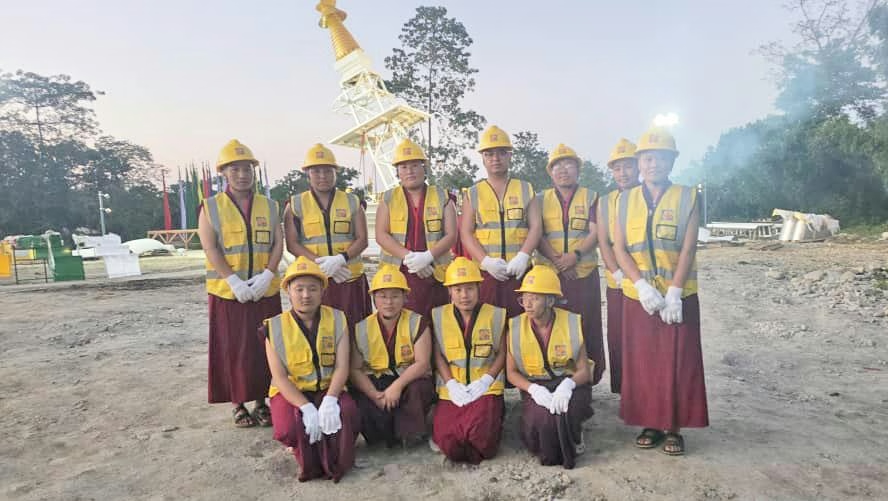
In a remarkable demonstration of gender equality within Buddhist traditions, female monastics recently completed a task historically reserved for their male counterparts. On November 1st, nuns from three prominent nunneries across Bhutan undertook the sacred responsibility of installing zung (holy relics) in five of the 108 Jangchub Chortens at Gelephu Mindfulness City—a project that represents both spiritual significance and cultural evolution.
This momentous occasion marks a departure from centuries-old conventions, challenging long-held assumptions about women's roles in religious ceremonies and monastic practices. The successful completion of this work has sparked meaningful conversations about gender inclusivity within Bhutanese Buddhism and the broader capabilities of female spiritual practitioners.
Understanding the Jangchub Chortens Project 🏛️
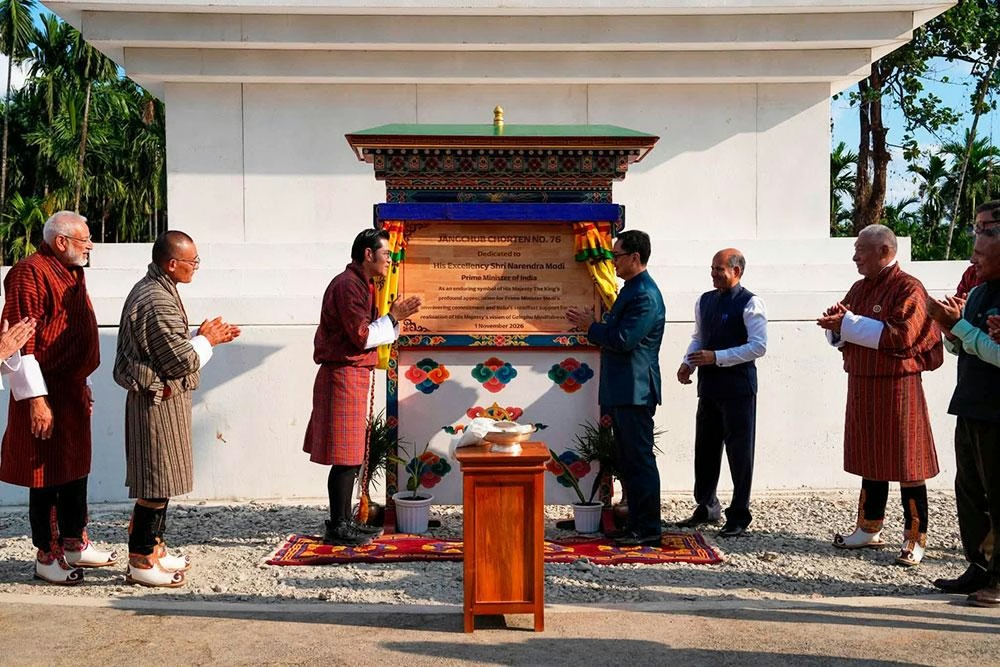
The 108 Jangchub Chortens initiative stands as one of Bhutan's most ambitious contemporary religious construction projects. Chortens, also known as stupas, serve as sacred repositories for relics and represent important pilgrimage destinations within Buddhist communities. The number 108 holds profound spiritual significance in Buddhist cosmology, symbolizing a complete cycle of human existence and enlightenment.
Gelephu Mindfulness City, the project's location, embodies Bhutan's vision of harmonizing spiritual development with modern urban planning. This integrated approach reflects the nation's commitment to maintaining Buddhist values while advancing sustainable development—a cornerstone of Bhutanese policy known as Gross National Happiness.
The Historic November 1st Installation 📅
A total of 55 female monastics from three distinguished nunneries participated in the zung installation ceremony. The participating institutions included Losel Yangchenling Anim Shedra in Mongar, Sangchhen Dorji Lhuendrup Nunnery in Punakha, and Tenchen Choeling Nunnery in Paro. Each of the five designated chortens received specialized teams: 11 nuns focused on the actual relic installation, while seven others managed altar arrangements and supporting ceremonial duties.
The distribution of work demonstrated careful organizational planning:
- Losel Yangchenling Anim Shedra (Mongar) - installed relics in two chortens
- Sangchhen Dorji Lhuendrup Nunnery (Punakha) - installed relics in two chortens
- Tenchen Choeling Nunnery (Paro) - installed relics in one chorten
This collaborative effort involved more than 1,000 monks and nuns across the entire 108-chorten project, representing an unprecedented mobilization of Bhutan's monastic communities.
Voices from the Field: Personal Testimonies 💪
Among the participants was Nguyen Thanh Thanh Tu, a 19-year-old Vietnamese student studying at Losel Yangchenling Anim Shedra. Her international presence highlights Bhutan's role as a center for Buddhist learning and practice, attracting dedicated practitioners from across Asia. Working alongside fellow Vietnamese nun Tran Thi Thuy, Nguyen described the experience as both spiritually meaningful and physically demanding.
"This is our good opportunity to come here and build the chorten in the 108 project, a historic project of Bhutan," she reflected, emphasizing the merit-generating aspect of her participation. The work required extraordinary commitment—she managed approximately one hour of sleep while continuing construction efforts proceeded through the night.
The physical challenges proved substantial. Some sacred relics weighed approximately 100 kilograms, necessitating coordinated group effort for proper installation. The combination of intense internal heat within the chortens and the weight of the zungchen (great relics) tested the nuns' physical endurance and mental fortitude.
"Lifting the particularly heavy zungchen was the most challenging part of the installation," Nguyen acknowledged. Yet she approached obstacles with philosophical resolve: "I think nothing is impossible, so there is no challenge for me. If a challenge comes, I will not think it is hard."
Dechen Tshomo, another nun from the same Mongar nunnery, reported that her team completed their assigned installation within just 90 minutes—a testament to their preparation and coordination. She emphasized that the successful completion directly contradicted assumptions about women's physical capabilities: "The belief that women could not do tasks undertaken by men was unfounded, and that success depended on effort and determination."
Tshering Dechen from Tenchen Choeling Nunnery in Paro initially harbored concerns about whether the team could complete the work within the scheduled timeframe. However, comprehensive training sessions beforehand provided essential confidence. "When we completed the work, we felt proud and happy," she shared, reflecting the emotional significance of their achievement.
A representative from Sangchhen Dorji Lhuendrup Nunnery in Punakha similarly noted that while the relics' weight presented genuine difficulties, the nuns' perseverance and determination enabled successful completion, demonstrating conclusively that women could execute tasks traditionally performed by men.
Breaking Barriers: Women in Buddhist Practice 🌟
The philosophical underpinning of this historic moment extends beyond mere task completion. Nguyen drew from core Buddhist teachings to contextualize women's participation: "In the Buddha's teachings, woman is a form of wisdom and man a form of compassion. Women could also practise the teachings and attain enlightenment."
This perspective challenges the historical marginalization of female monastics in certain ceremonial roles. Throughout Buddhist history, women have contributed profoundly to spiritual practice and scholarship, yet institutional barriers sometimes limited their participation in specific rituals. The Jangchub Chortens project represents a meaningful step toward greater recognition of women's spiritual authority and capability.
Institutional Support and Coordination 🤝
Kinley Norbu, Vice-Principal of Losel Yangchenling Anim Shedra, coordinated the nuns' efforts and acknowledged his initial concerns about whether the team could successfully complete the installation and maintain the schedule. Despite these reservations, the nuns finished their assigned work within approximately 90 minutes without encountering major complications.
Tshokey Drungchen Pema Gyeltshen of the Zhung Dratshang, who oversaw the overall zung installation coordination, provided crucial historical context. Traditionally, monks alone performed zung installations, primarily because fewer nuns were available and organized for such work. However, Pema Gyeltshen clarified an important point: "There was no written rule prohibiting nuns from installing the zung."
This revelation suggests that historical practice reflected practical constraints and cultural conventions rather than doctrinal prohibitions. The successful completion of the November 1st installation now provides evidence that such restrictions were unnecessary and that female monastics possess both the spiritual preparation and physical capability to undertake these sacred responsibilities.
Broader Implications for Bhutanese Society 🌍
This development carries significance extending beyond religious circles. In contemporary Bhutan, where gender equality represents an important national value, the nuns' accomplishment demonstrates that women can successfully engage in roles traditionally reserved for men. The experience challenges societal perceptions about women's physical capabilities and professional potential.
Nguyen specifically noted that her participation could inspire other women to undertake similarly demanding activities. By visibly demonstrating competence in a traditionally male-dominated domain, these nuns contribute to broader cultural conversations about women's agency and capacity.
The project also reflects Bhutan's unique approach to development, where spiritual and material progress advance together. Gelephu Mindfulness City itself exemplifies this philosophy—combining modern infrastructure with Buddhist principles and environmental sustainability.
The Significance of Sacred Relics 🙏
Understanding the importance of zung installation requires appreciation for Buddhist cosmology and practice. Sacred relics represent tangible connections to enlightened beings and spiritual lineages. The installation of these relics within chortens transforms the structures into powerful centers for spiritual practice and pilgrimage.
The meticulous care required for proper installation reflects deep reverence for these sacred objects. Each step—from preparation through actual placement—involves specific protocols and prayers. The nuns' successful execution of this work demonstrates their thorough training in these complex procedures and their spiritual commitment.
Looking Forward: Future Opportunities 🚀
With the successful completion of zung installation in five chortens, the precedent has been established for female monastic participation in similar future projects. Tshering Dechen expressed her readiness for continued involvement: "I am ready to join similar work in the future."
This openness suggests that Bhutan's monastic communities may increasingly embrace collaborative approaches that leverage the talents and dedication of all practitioners, regardless of gender. As the remaining 103 chortens receive their sacred relics through ongoing construction phases, opportunities will likely continue for nuns to participate in this historic endeavor.
Conclusion: A Historic Turning Point ✨
The November 1st installation of sacred relics by nuns in five Jangchub Chortens represents far more than a logistical accomplishment. It marks a significant evolution in Bhutanese Buddhist practice, demonstrating that gender need not determine spiritual authority or capability for sacred work.
The 55 nuns who participated—overcoming physical challenges, maintaining spiritual focus, and completing their assignments with precision—have contributed to a meaningful shift in how Bhutanese society views women's potential. Their achievement honors Buddhist teachings while advancing practical gender equality.
As Bhutan continues developing the 108 Jangchub Chortens at Gelephu Mindfulness City, this historic moment will likely be remembered as a turning point—when tradition evolved to embrace the full participation of all dedicated spiritual practitioners, regardless of gender. The relics now installed by these courageous nuns will inspire pilgrims for generations, serving as enduring reminders of both spiritual wisdom and human capability.