Category:
HealthNew RCID Boosts Bhutan's Infectious Disease Control
A New Era in Public Health for Bhutan
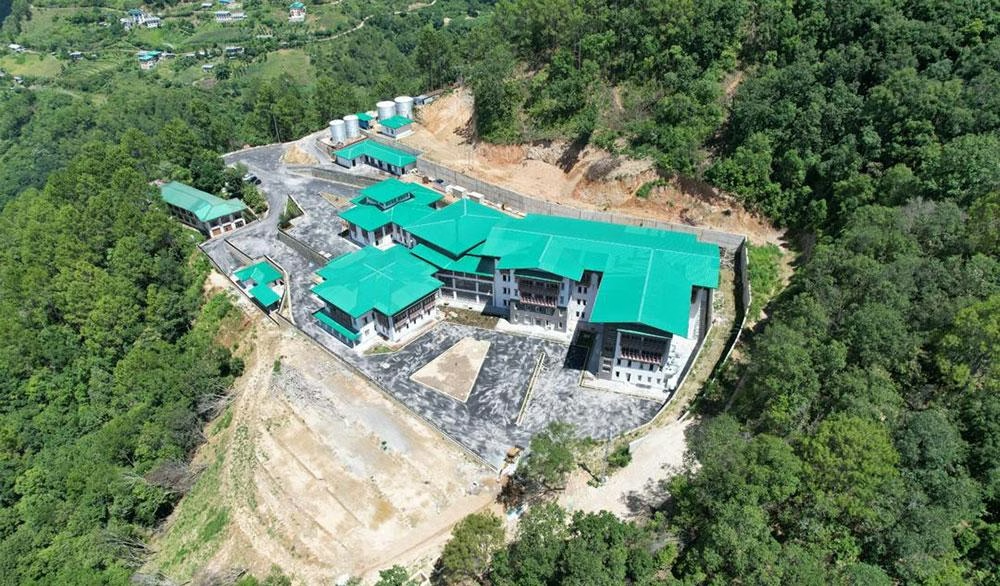
In a significant leap forward for Bhutan's healthcare system, the Royal Centre for Infectious Disease Control (RCID) was inaugurated at Gidagom in Thimphu. This state-of-the-art facility, funded through the generous Grant Aid of Japanese Yen 3.752 billion from the Government of Japan, marks a new chapter in the country's fight against infectious diseases. 🎉
Bridging the Gap in Healthcare
The RCID represents a modern iteration of the Public Health Laboratory, now elevated to address the pressing needs of infectious disease prevention, diagnosis, treatment, and management. With an 80-bed capacity, expandable to 100 in emergencies, this center is poised to significantly enhance Bhutan's surge response capabilities. 🚑
Key Features of the RCID
- Negative-pressure isolation units: These units are critical for managing highly infectious diseases safely.
- Advanced Japanese medical equipment: Ensures high-quality patient care and robust public health services.
- Capacity for comprehensive research: The center will generate reliable scientific data to inform health policies and interventions. 📊
Celebrating International Cooperation
The inauguration coincides with the 40th anniversary of diplomatic relations between Bhutan and Japan. Dr. Akihiko Tanaka, President of the Japan International Cooperation Agency (JICA), emphasized the global significance of the center, stating, "Infectious diseases remain one of the greatest challenges facing humanity." The collaboration represents a shared commitment to strengthening health systems and enhancing global health security. 🌎🤝
A Strategic Response to Future Pandemics
Health Secretary Pemba Wangchuk highlighted the pivotal role the RCID will play in Bhutan's public health strategy, especially during pandemics like COVID-19. "During COVID-19, we experienced first-hand the need for a dedicated infectious disease control centre," he said. The RCID is a direct response to these challenges, designed to serve the nation in future global health crises. 🦠
Enhancing Patient and Staff Experience
Chief Medical Officer Dr. Bhim Nath Subady noted that the RCID offers improved facilities for both patients and staff, including spacious wards, enhanced sanitation, and a reliable 24-hour water supply. However, the advanced capabilities of the center will require additional skilled personnel to fully utilize its potential. 👩⚕️👨⚕️
Implications for Bhutan's Healthcare System
The new RCID is expected to alleviate pressure on existing hospitals, streamline infection prevention, and serve as a national hub for research and professional development in infectious disease management. This development aligns with broader trends in public health, where nations are increasingly investing in specialized facilities to ensure readiness against health threats. 📈
Looking Ahead
As Bhutan embraces this advanced facility, the focus will be on recruiting and training skilled professionals to operate it effectively. The RCID not only symbolizes progress in healthcare infrastructure but also reflects Bhutan's commitment to safeguarding its population against infectious diseases and contributing to global health security. The partnership with Japan sets a precedent for future collaborations that can further strengthen the region's health systems. 🌟
Key Takeaways
- The RCID represents a major advancement in Bhutan's healthcare capabilities.
- It underscores the importance of international cooperation in addressing global health challenges.
- The facility will play a crucial role in managing future pandemics and enhancing public health resilience.
As Bhutan continues its journey towards a robust healthcare system, the RCID stands as a beacon of innovation and collaboration, ensuring a healthier future for its citizens. 🏥✨
You May Also Like

Health
Mental Health: A Shared National Responsibility
August 29, 2026
Health
Mongar Mother and Child Hospital Handover: Ending Years of Healthcare Delays
August 26, 2026

Health
Behind Every Statistic: Understanding Human Impact in Health
August 26, 2026
Health
Breaking the Cycle: Understanding Relapse in Recovery
August 22, 2026