Category:
HealthMongar Mother and Child Hospital Handover: Ending Years of Healthcare Delays
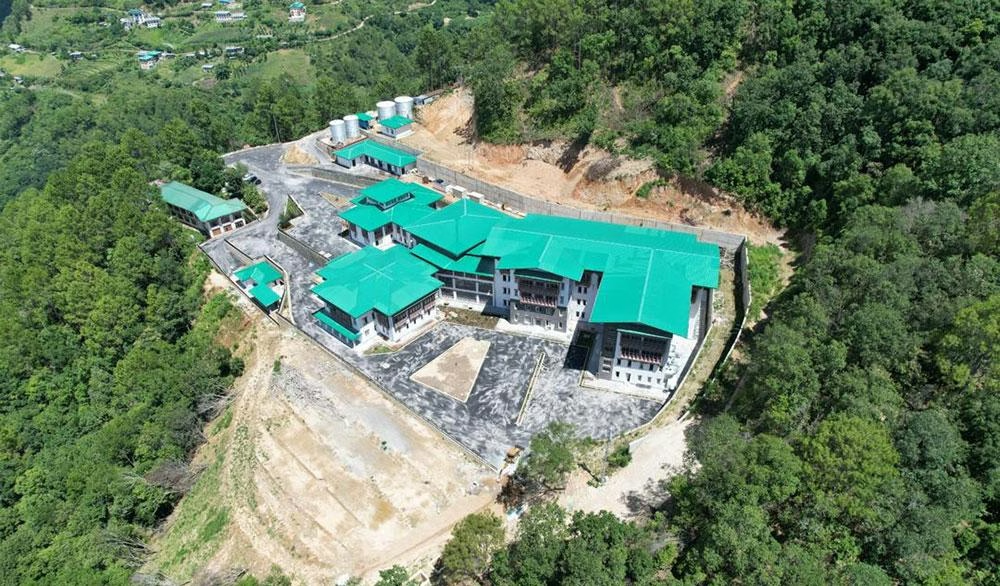
A Game-Changer for Eastern Bhutan's Healthcare System 🏥
After more than a year of anticipated delays, the Gyaltsuen Jetsun Pema Mother and Child Hospital in Mongar is finally approaching its operational debut. This 65-bed specialized facility represents a transformative moment for maternal and child healthcare across Bhutan's eastern region, promising to revolutionize access to medical services for thousands of families who have long struggled with inadequate infrastructure and overwhelming wait times.
The healthcare landscape in eastern Bhutan has faced significant challenges for years. Families from remote gewogs have endured grueling journeys, often traveling for hours through challenging terrain only to encounter overcrowded facilities and extended appointment delays. The new hospital's arrival signals the end of an era marked by healthcare accessibility struggles and the beginning of a new chapter in regional medical excellence.
Understanding the Healthcare Crisis That Led to This Solution 🌍
The eastern region of Bhutan—encompassing Mongar, Trashigang, Pemagatshel, Trashiyangtse, Lhuentse, Samdrupjongkhar, and Bumthang—has experienced mounting pressure on its existing healthcare infrastructure. Local residents have repeatedly voiced frustrations about inadequate maternal and child health services, forcing many to seek care in distant locations or go without essential medical attention.
Karma Yangden, a 37-year-old mother from the region, captures the daily reality many families face. She explains that visits to regional hospitals frequently resulted in returning home without her children receiving necessary medical examinations due to overwhelming patient volumes and scheduling constraints. This pattern has repeated across the region for far too long, creating a genuine public health concern.
The situation becomes even more challenging for families living in surrounding gewogs. Tshering Dema, a mother of two from Serichu, describes her experiences traveling approximately one hour to reach existing healthcare facilities, only to face extensive queues and the possibility of leaving without receiving care. Managing young children while waiting in crowded clinics adds an additional layer of difficulty to an already stressful situation.
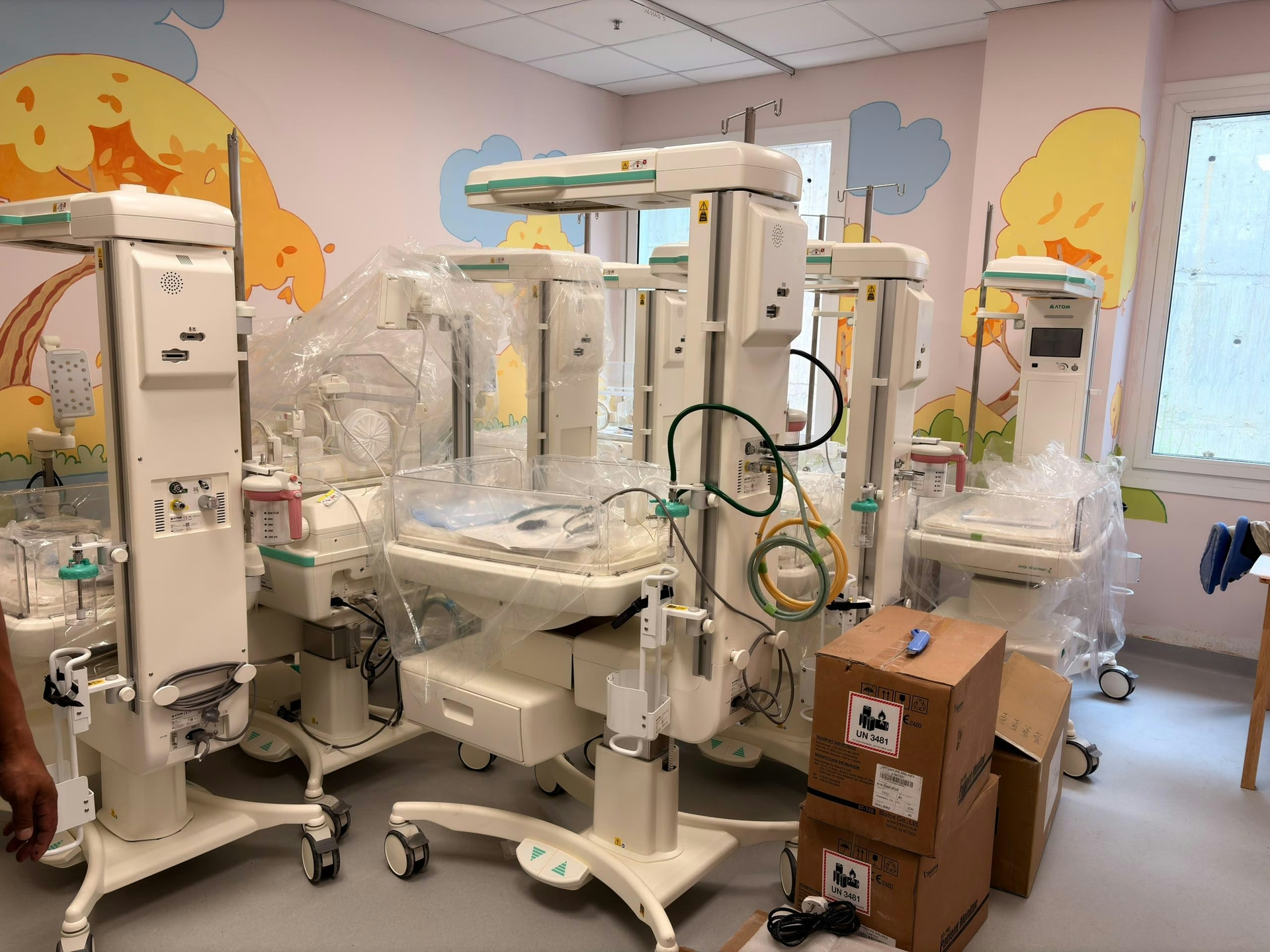
The Hospital's Comprehensive Medical Capabilities 💪
The Mongar Mother and Child Hospital represents a significant leap forward in regional healthcare capacity. The facility will operate with eight specialized clinical units designed to address the full spectrum of maternal and child health needs:
- Obstetrics and Gynaecology – Comprehensive care for pregnant women and maternal health management
- Paediatrics and Neonatology – Specialized treatment for newborns and children
- Paediatric and Neonatal Intensive Care – Critical care services for vulnerable populations
- Emergency and Trauma Services – 24/7 emergency response capabilities
- Operation Theatres – Surgical facilities equipped for complex procedures
- Specialised Clinical Services – Advanced diagnostic and treatment options
- Laboratory Services – On-site diagnostic testing capabilities
- Community Health Services – Preventive care and public health initiatives
This comprehensive approach ensures that families won't need to travel beyond the region for most maternal and child health concerns. The hospital's advanced medical equipment and specialized units will enable healthcare providers to deliver care previously unavailable in eastern Bhutan.
The Journey to Operational Readiness: Overcoming Obstacles ⚙️
The path to the hospital's opening has involved considerable coordination and problem-solving. Project Manager Dorji Rabten explains that the facility underwent rigorous preparation phases to ensure it functions safely and effectively from day one.
A critical milestone occurred on August 10 when the Japan International Cooperation Agency (JICA) began installing advanced medical equipment. Remarkably, the JICA team completed this installation ahead of the originally scheduled early September timeline, accelerating the hospital's readiness significantly. This early completion demonstrates strong international partnership and commitment to serving Bhutanese communities.
Government-supplied medical equipment has been installed, tested, and commissioned, with comprehensive staff training provided to ensure healthcare professionals can operate all systems effectively. The main construction framework is complete, with teams currently addressing final refinements and equipment commissioning tasks.
Current Status and Remaining Preparations 🔧
As the September 10 handover date approaches, project teams continue working on several outstanding items. The Heating, Ventilation, and Air-Conditioning (HVAC) system requires final commissioning to ensure optimal climate control throughout the facility. Laundry equipment installation and commissioning remain in progress, with suppliers instructed to complete this work urgently.
Furniture installation continues across the hospital, with suppliers being directed to expedite remaining work to ensure complete operational readiness. Additionally, signage installation—expected to require approximately 20 days—will help patients, visitors, and staff navigate the facility efficiently and locate services easily.
Dorji Rabten emphasizes that all outstanding activities must be completed before the formal handover to the Ministry of Health. This comprehensive approach ensures the hospital opens as a fully functional, safe, and welcoming healthcare environment capable of serving the region's needs immediately.
Financial Investment and Government Commitment 💰
The Mongar Mother and Child Hospital represents substantial public investment in eastern Bhutan's healthcare infrastructure. The project's initial budget of Nu 935.021 million was funded through the Project Tied Assistance grant from the Government of India, demonstrating strong international collaboration in advancing Bhutanese healthcare.
The revised allocation of Nu 959.844 million reflects adjustments made during the construction process to ensure quality standards and comprehensive facility development. This investment underscores the government's commitment to reducing healthcare disparities between urban and rural regions.
A Historic Gift for the People 👑
The hospital's location at the Royal Guesthouse Colony in Nadangzor holds special significance. This land was graciously gifted by His Majesty The King to the people, transforming a royal property into a vital public health resource. This gesture symbolizes the monarchy's dedication to improving citizens' quality of life and ensuring equitable access to healthcare services across all regions.
Timeline Evolution: Learning From Delays 📅
The project's timeline has undergone several adjustments since its inception. Originally scheduled for completion in July of the previous year, the deadline was extended to May 22 before ultimately settling on the current September 10 target. These adjustments, while extending the waiting period for local families, reflect the commitment to ensuring quality construction and thorough equipment installation rather than rushing an incomplete facility.
These timeline modifications are not uncommon in major infrastructure projects, particularly those involving specialized medical facilities requiring precise technical specifications and international coordination. The extended timeline has allowed project managers to address unforeseen challenges and ensure all systems function optimally.
What This Means for Eastern Bhutan Families 🌟
The hospital's opening will fundamentally transform healthcare access for the region's population. Families will no longer need to undertake exhausting journeys to distant facilities for routine maternal and child health services. Local mothers anticipate faster service delivery, reduced waiting times, and the ability to receive specialized care without leaving their communities.
For healthcare providers, the new facility offers modern infrastructure and advanced equipment that will enable them to deliver evidence-based, high-quality care. Medical professionals will have access to specialized diagnostic tools and treatment capabilities previously unavailable in the region.
Regional Impact and Future Outlook 🚀
The hospital's operational launch will have ripple effects throughout eastern Bhutan's healthcare ecosystem. By reducing pressure on existing regional facilities, the new hospital will improve service quality across the entire system. Healthcare workers will have better capacity to focus on complex cases, and routine services will be handled more efficiently.
The facility also positions eastern Bhutan for future healthcare advancement. As maternal and child health outcomes improve, the region can build on this foundation to develop additional specialized services and strengthen community health programs.
Addressing the Broader Healthcare Equity Challenge 💡
The Mongar Mother and Child Hospital exemplifies Bhutan's commitment to healthcare equity—ensuring that geography doesn't determine access to quality medical services. In many developing nations, rural and remote populations face significant healthcare disparities. Bhutan's investment in this facility demonstrates a different approach, prioritizing equitable healthcare access as a national value.
This investment aligns with global health initiatives emphasizing maternal and child health as foundational to national development. By strengthening these services in eastern Bhutan, the country contributes to broader goals of reducing maternal mortality, improving child health outcomes, and building healthier communities.
Key Takeaways and What's Next 🎯
The September 10 handover of the Gyaltsuen Jetsun Pema Mother and Child Hospital marks a pivotal moment for eastern Bhutan's healthcare system. After years of anticipation and more than a year of construction refinements, families across the region will finally gain access to comprehensive, specialized maternal and child health services.
This facility represents more than just a new building—it symbolizes the government's commitment to reducing healthcare disparities, honoring the gift of land from the monarchy, and investing in the region's future. As the hospital transitions from construction to operation, eastern Bhutanese families can look forward to faster, more accessible, and more comprehensive healthcare services that will improve maternal outcomes, support child development, and strengthen community health overall.
The journey to this moment has been long, but the destination—a fully operational, state-of-the-art healthcare facility serving thousands of families—makes every delay worthwhile. 🏥✨
You May Also Like
Health
Mental Health: A Shared National Responsibility
August 29, 2026
Health
Behind Every Statistic: Understanding Human Impact in Health
August 26, 2026
Health
Breaking the Cycle: Understanding Relapse in Recovery
August 22, 2026
Health
Gelephu CRRH Reaches Five-Year Peak in Outpatient Visits
August 22, 2026