Category:
EnvironmentMoenlam: Prayer, People & Himalayan Change
A Sacred Journey Through Bhutan's Changing Mountains 🏔️
In the heart of the Eastern Himalayas lies a nation where spirituality and environmental consciousness intertwine seamlessly. Bhutan's concept of moenlam—a prayer offered for the wellbeing of others—transcends traditional religious practice to become a powerful vehicle for addressing one of our era's most pressing challenges: climate change and its cascading effects on communities, food systems, and sacred landscapes.
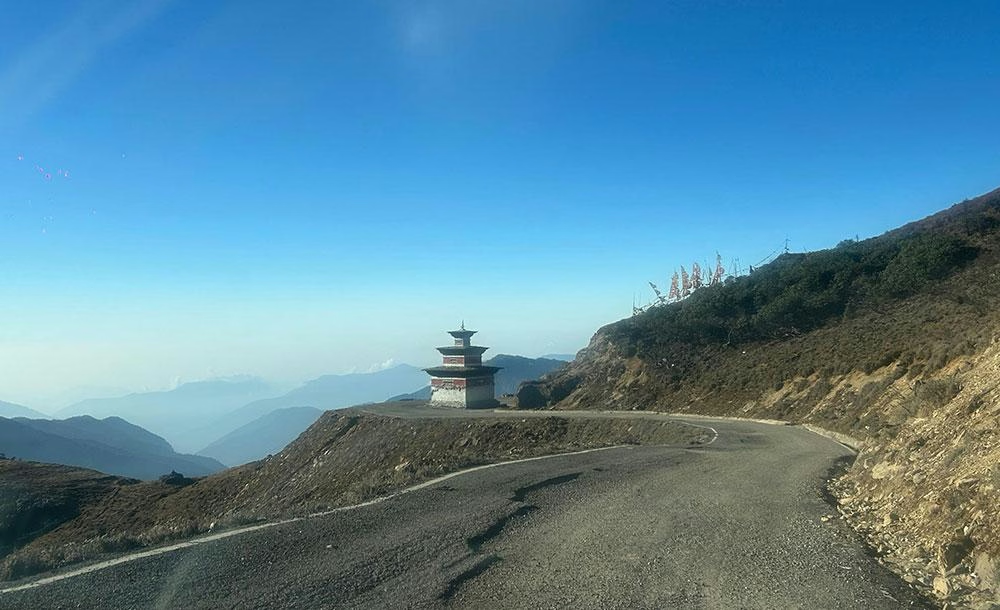
This October, one visionary transformed this ancient prayer into an extraordinary expedition, cycling from the iconic Taktsang monastery to the sacred Singye Dzong, carrying not just personal intentions but the collective hopes of an entire generation facing an uncertain environmental future. What began as a deeply personal pilgrimage evolved into a comprehensive campaign highlighting the intricate connections between retreating glaciers, shifting agricultural patterns, and the survival of Bhutanese culture itself.
The Genesis: Honoring Ancestral Wisdom 🙏
Every meaningful journey has a story of origin, and this one is rooted in profound personal reflection. The expedition was inspired by an unfulfilled wish from a beloved grandmother—a woman whose generation possessed an intimate, lived understanding of the land that modern society has largely forgotten.
For that ancestral generation, there was no conceptual separation between "environment," "climate," and "food security." These weren't abstract policy terms debated in conference rooms. They were simply life—the daily reality of existing in harmony with mountains, rivers, forests, and farms. The mountains provided water and sustenance. The rivers nourished crops. The forests offered shelter and resources. Everything was connected in a web of mutual dependence.
This journey represented a deliberate attempt to bridge two worlds: honoring the ecological wisdom of elders while addressing the urgent question that haunts today's youth—What kind of Bhutan will the next generation inherit? It was a prayer made manifest, transforming spiritual intention into tangible environmental action.
Glaciers: The Silent Sentinels of Climate Change ❄️
For years, extensive documentation across the Himalayan region has revealed a consistent pattern: climate change manifests most dramatically in the high mountains, where glaciers serve as Earth's most sensitive thermometers. These frozen repositories of ancient snow and ice are retreating at accelerating rates, and the consequences ripple far beyond the peaks.
Many assume that glacial melt remains a remote, high-altitude phenomenon. This misconception represents one of the most dangerous gaps in climate literacy. The reality is starkly different: water originating from Himalayan glaciers flows through agricultural valleys, sustains rural communities, powers hydroelectric facilities, and ultimately reaches the dinner tables of millions.
The glacier-to-table connection operates through multiple pathways:
- Seasonal water availability determines planting schedules and crop selection for farmers across Bhutan's agricultural regions
- Changing precipitation patterns (both rainfall and snowfall) create unpredictability that traditional farming knowledge struggles to address
- Hydropower generation, crucial for Bhutan's economy and energy security, depends on consistent water flow from mountain sources
- Ecosystem health in lower elevations depends on water regimes established by glacial melt patterns
- Rural livelihoods face existential threats when water availability becomes unreliable
The expedition recognized this interconnection as central to understanding contemporary environmental challenges. When glaciers retreat, they don't simply disappear from view—they trigger cascading consequences that reshape how communities produce food, generate energy, and sustain themselves.
From Mountains to Meals: The Food Security Connection 🍚
The partnership between this environmental campaign and the World Food Programme-Bhutan crystallized an essential truth: food security cannot be divorced from climate stability or water availability. In an era of rapid environmental change, ensuring that communities can produce and access nutritious food requires understanding and addressing the upstream factors that enable agricultural productivity.
Food security extends far beyond having enough calories. It encompasses the ability of communities to maintain agricultural traditions, access diverse nutritional sources, adapt to environmental changes, and preserve cultural food practices that have sustained Bhutanese society for generations.
The campaign's educational component focused on making this connection visceral for young people. Students living hundreds of kilometers from glacial zones often experience climate change as an abstract concept discussed in textbooks. But reframing the issue through tangible, personal questions transforms understanding:
- Where does the rice on your table originate?
- How do farmers decide when to plant without reliable rainfall patterns?
- What happens to your community when water sources become unpredictable?
- How do changing seasons affect the crops your region can grow?
These questions bridge the gap between remote glacial zones and lived experience, making climate action feel personally relevant rather than globally abstract.
Engaging Youth: Building Climate Literacy Beyond Classrooms 📚
The expedition visited schools and communities along its route, employing diverse educational approaches—presentations, conversations, documentary screenings, and direct engagement with students. This multi-sensory, experiential approach to climate education proved remarkably effective.
Students who initially seemed disconnected from glacial dynamics quickly grasped their relevance when discussions shifted to local contexts. Conversations beginning with ice and snow naturally evolved into discussions about farming practices, forest management, waste reduction, and community resilience.
Young people demonstrated sophisticated understanding of interconnected systems. They understood that protecting forests meant maintaining water cycles. They recognized that waste management reflected values about respecting the land. They grasped that climate action wasn't something distant governments handled—it was something they could influence through daily choices and community engagement.
Sports as a Platform for Environmental Advocacy ⚽
Innovative climate communication extends beyond traditional educational channels. The partnership with Paro Football Club demonstrates how sports can amplify environmental messaging. Jersey number 13, reserved specifically for this campaign, symbolizes SDG 13: Climate Action—using the universal language of football to inspire young people toward environmental stewardship.
This approach recognizes that climate messaging reaches different audiences through different channels. For young people passionate about sports, environmental advocacy embedded within football culture becomes personally meaningful rather than externally imposed.
Sacred Spaces and Responsible Tourism: Regenerative Travel 🏛️
Bhutan's approach to tourism has long emphasized sustainability, but the expedition raised a more ambitious question: Can travel actually improve a destination rather than simply minimizing harm? This concept of regenerative tourism goes beyond "leave no trace" to actively enhance environmental and cultural conditions.
During the moenlam journey, this principle manifested practically. The campaign hired five horses to carry accumulated rubbish down from sacred Singye Dzong, directly addressing the environmental degradation that even well-intentioned visitors inadvertently cause. This action sent a powerful message: visiting a sacred place should enhance rather than diminish its sanctity and environmental integrity.
As Bhutan navigates tourism development, critical questions emerge:
- How can visitor experiences strengthen rather than undermine local culture?
- What infrastructure supports tourism while protecting sacred sites?
- How do communities benefit economically while maintaining cultural integrity?
- Can tourism dollars fund environmental restoration and conservation?
Bridging Generations: Carriers of Wisdom and Hope 👥
Perhaps the moenlam expedition's deepest significance lies in its role as a meeting point between generations. On one side stand elders carrying prayers, spiritual wisdom, and intimate knowledge of the land. On the other side stand young people with hopes, energy, and demands for climate justice.
The generation undertaking this journey occupies a unique position: responsible for honoring ancestral wisdom while addressing contemporary crises. This intergenerational bridge-building proves essential because climate action requires both the grounded knowledge of those who have lived with the land and the innovation and urgency of those who will inherit its future.
Bhutanese youth articulate clear demands: protect forests and water sources, accelerate the transition to clean energy, strengthen climate education in schools, and build resilient communities capable of adapting to environmental uncertainty. These demands reflect both scientific understanding and lived experience.
The paradox haunting Bhutan's environmental future is stark: the nation has contributed minimally to global climate change, yet its mountains, farmers, and rural communities face disproportionate consequences. This injustice fuels the moral urgency underlying environmental advocacy.
The Power of Embodied Travel: Bicycles and Belonging 🚴
While the expedition covered significant distance by bicycle, the choice of transportation held profound symbolic and practical significance. Cycling changes how travelers experience a landscape. You feel every elevation gain, notice every stream and forest, pass through agricultural fields, and depend directly on community kindness.
Statistics about glacial retreat and warming temperatures matter intellectually, but numbers rarely generate the emotional connection necessary for sustained action. Embodied experience—the physical sensation of climbing mountains, the direct observation of environmental changes, the personal interactions with communities—creates the relational foundation for genuine environmental commitment.
We protect what we have relationships with. By cycling through Bhutan's landscapes, the expedition cultivated direct relationships with the land, the people, and the environmental challenges they collectively face.
From Prayer to Action: Translating Intention into Practice 🔥
Moenlam means prayer, but in an era of climate uncertainty, prayer must manifest as concrete action. The expedition recognized this imperative and translated it into multiple channels:
For students: Understanding where food and water originate, recognizing the connection between glacial health and agricultural productivity, and considering how individual choices affect environmental systems.
For families: Prioritizing locally produced food, reducing consumption patterns that strain environmental systems, and supporting agricultural practices that enhance rather than degrade land health.
For communities: Implementing waste management practices that protect sacred sites, developing climate-resilient agricultural techniques, and building social cohesion around environmental stewardship.
For policymakers: Integrating climate education into school curricula, supporting regenerative tourism practices, and ensuring that development prioritizes environmental and cultural integrity.
The Interconnected Web: Mountains, Rivers, Farms, and Culture 🌊
Bhutan's environmental challenge cannot be understood through siloed frameworks. Mountains aren't merely scenic backdrops—they're hydrological systems that determine downstream water availability. Rivers aren't just resources for extraction—they're ecological arteries connecting high-altitude zones to agricultural valleys. Farms aren't merely production units—they're cultural repositories embodying generations of ecological knowledge. Sacred places aren't tourism destinations—they're spiritual centers deserving reverence and protection.
This holistic understanding—recognizing the fundamental interconnection between all elements of the landscape—represents perhaps the most important insight from the moenlam expedition. Environmental protection requires protecting culture and communities simultaneously. Development strategies that ignore cultural and spiritual dimensions ultimately fail because they lack community buy-in and cultural legitimacy.
A Collective Endeavor: Gratitude and Partnership 🤝
While one individual cycled much of this journey, the expedition succeeded through collective effort. Schools, teachers, students, communities, government agencies, international organizations, private businesses, and individuals offered support—financial contributions, material resources, logistical assistance, and acts of kindness.
The Department of Tourism, World Food Programme Bhutan, Apollo Bhutan Institute of Nursing, and numerous private enterprises and travel organizations believed in the campaign's mission enough to invest resources. This broad coalition demonstrated that environmental advocacy resonates across sectors and constituencies.
Looking Forward: Sustaining Momentum Beyond the Journey 🌱
The moenlam expedition represents not an endpoint but a beginning. The conversations initiated with students, the awareness raised in communities, and the connections forged between environmental challenges and lived experience must continue evolving.
Climate action in Bhutan requires sustained commitment across multiple fronts: education systems integrating climate literacy from primary school through university, agricultural policies supporting climate-resilient farming practices, tourism development prioritizing regeneration over extraction, and cultural practices that honor ancestral wisdom while addressing contemporary challenges.
Young Bhutanese will determine whether this generation's environmental advocacy translates into systemic change. The expedition provided tools, knowledge, and inspiration. Now comes the harder work: implementing changes in daily life, advocating for policy shifts, and maintaining commitment through inevitable setbacks.
Conclusion: A Prayer Made Manifest 💫
Moenlam—a prayer for others' wellbeing—has been transformed from spiritual intention into environmental action. The expedition from Taktsang to Singye Dzong carried not just individual prayers but collective hopes for a Bhutan where glaciers persist, rivers flow reliably, farms flourish, communities thrive, and sacred places remain sanctified.
The journey revealed that environmental protection cannot be separated from cultural preservation, that climate action requires bridging generational wisdom, and that individual choices accumulate into collective transformation. As Bhutan faces an uncertain environmental future, the moenlam expedition stands as a model for how prayer, people, and purposeful action can generate meaningful change in a rapidly transforming Himalayan landscape.
The real moenlam—the genuine prayer for collective wellbeing—has only just begun.
You May Also Like
Environment
EV Battery Waste: Bhutan's Emerging Environmental Challenge
November 28, 2026
Environment
Haa Residents Fight to Protect Red Panda Habitat from Mining
November 28, 2026
Environment
EcoVation's Nu 7.56M Rural Waste Project Transforms Trashiyangtse
November 25, 2026
Environment
Water Data Gaps Expose El Niño Vulnerability
November 25, 2026