Category:
EconomyMatsutake Management Plan Drives Sustainable Growth in Genye
A Thriving Mushroom Economy Takes Root 🍄
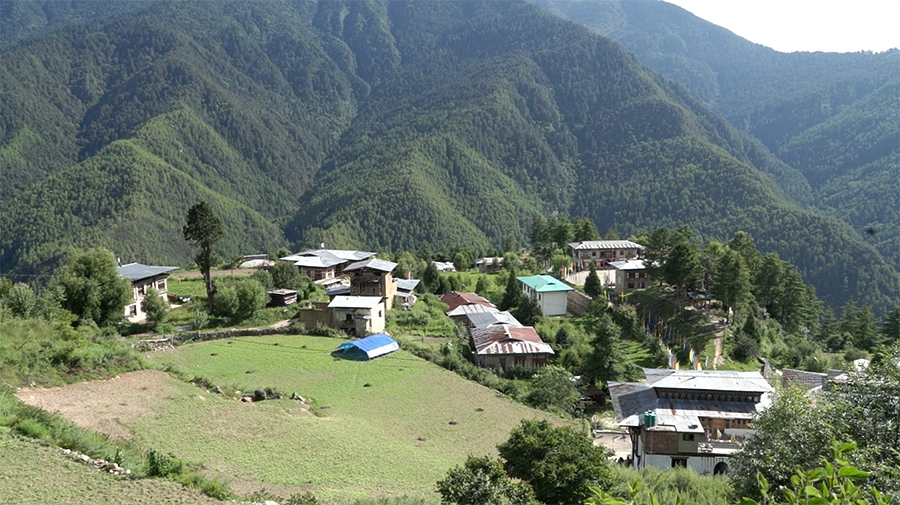
Thimphu's Genye Gewog is experiencing an unprecedented surge in the Matsutake trade, transforming what was once a modest seasonal activity into a thriving economic engine for the region. This remarkable growth story isn't driven by chance—it's the result of a carefully structured community-based management system that has revolutionized how the precious fungi are harvested, collected, and exported.
The numbers tell a compelling story. The number of exporters participating in this year's Matsutake trade has more than doubled, jumping from just three operators last year to seven this season. This explosive growth reflects both the increasing global demand for these highly prized mushrooms and the premium prices commanding attention in international markets. What makes this expansion particularly noteworthy is that it's happening within a framework designed to ensure sustainability rather than exploitation.
Understanding the Genye Community Mushroom Management Plan 📋
At the heart of Genye Gewog's success lies an innovative institutional framework: the Community Mushroom Management Plan. This system represents a sophisticated balance between commercial opportunity and environmental stewardship, demonstrating how traditional communities can harness market forces while protecting their natural resources.
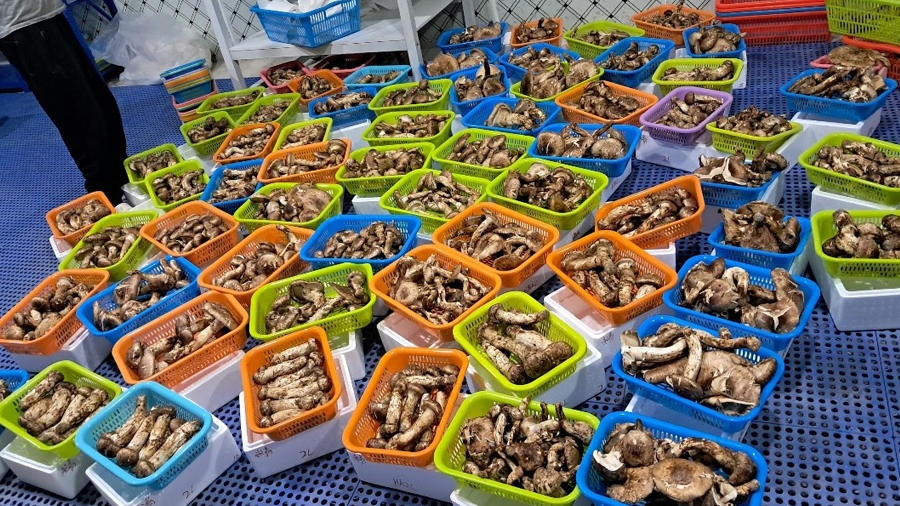
The management plan operates on several key principles:
- Pre-season coordination meetings where exporters gather with the Mushroom Tshogpa (community leader) and stakeholders
- Assigned collection schedules that distribute harvesting pressure evenly across the season
- Mandatory security deposits that incentivize compliance and timely collection
- Strict quality standards enforced through penalties for non-compliance
- Regular plan reviews conducted every decade to adapt to changing market conditions
Tshering Wangchuk, Manager of Padma Gourmet and Foods, one of the region's leading Matsutake exporters, explains the system's practical implementation: "Before the mushroom season begins, the Mushroom Tshogpa calls us for a meeting where they inform us about required documentation and other essential requirements. All interested exporters attend these sessions to discuss the guidelines and expectations."
The Security Deposit Mechanism: Ensuring Accountability 💰
One of the most innovative aspects of the Matsutake management plan is the security deposit system. Exporters must commit financially to the arrangement, demonstrating genuine dedication to the business while ensuring they'll maintain consistent collection schedules.
This year, the required security deposit was increased significantly from Nu 500,000 to Nu 1 million—a decision made collaboratively by exporters themselves. This increase reflects their confidence in the market and their commitment to benefiting the broader Genye community. The stakes are real: if an exporter fails to collect mushrooms on their assigned day, the Mushroom Tshogpa has authority to forfeit the entire deposit to the Genye Shamu Zingchong Tshogpa (community fund).
Last year provided concrete evidence of the system's effectiveness. When one exporter failed to collect harvested mushrooms on schedule, the community retained half of their security deposit. This mechanism serves a critical purpose beyond mere financial penalty—it prevents mushrooms from spoiling in the field and ensures that collectors have reliable buyers throughout the short harvesting season.
Quality Control and Collector Protection 🎯
The management plan extends beyond exporter accountability to include rigorous quality standards. Mushroom collectors must adhere to strict guidelines regarding harvest maturity and size specifications. Matsutake mushrooms must meet minimum size requirements, typically not less than seven centimeters in diameter at the base.

Last year, approximately seven collectors faced fines for harvesting Matsutake specimens below the required size threshold. These penalties aren't arbitrary—they serve to protect the ecosystem by ensuring younger mushrooms can mature and reproduce, maintaining the fungal population's long-term viability. The system thus balances immediate income needs with intergenerational sustainability.
The Seasonal Rhythm and Economic Impact ⏰
The Matsutake harvesting season in Genye typically runs from July through September, creating a concentrated window of economic opportunity. This three-month period generates substantial income for local collectors, many of whom depend on this seasonal harvest as a critical component of their annual earnings.
The timing creates natural pressures: collectors want to harvest as much as possible during this limited window, while exporters need reliable supply chains to meet international orders. The management plan elegantly resolves these competing interests by ensuring that exporters maintain consistent purchasing schedules, preventing market gluts that would depress prices and protecting collector incomes.
Scaling Success: The Growth Story 📈
The doubling of exporters from three to seven represents more than just numerical growth—it signals confidence in the system's effectiveness and the market's viability. Each new exporter brings additional capital, logistics capacity, and market connections, creating a virtuous cycle that benefits the entire ecosystem.
This expansion occurs within a framework that prevents the race-to-the-bottom dynamics that often plague resource extraction. Rather than competing on price or cutting corners on sustainability, exporters compete on service quality, logistics efficiency, and buyer relationships—factors that strengthen rather than weaken the system.
Ten-Year Review Cycles: Adaptive Management 🔄
The Community Mushroom Management Plan incorporates built-in flexibility through its ten-year review cycle. This periodic reassessment allows the system to evolve in response to:
- Changes in global market demand and pricing
- Environmental conditions affecting mushroom populations
- Technological advances in harvesting or processing
- Community feedback and lessons learned
- International trade regulations and certification requirements
This adaptive approach distinguishes the plan from rigid, top-down regulations that often fail to address real-world complexities.
Lessons for Sustainable Resource Management 🌱
Genye Gewog's mushroom management system offers valuable insights for communities worldwide managing valuable natural resources. The approach demonstrates that commercial success and environmental sustainability aren't mutually exclusive—they can reinforce each other when proper institutional frameworks are established.
Key success factors include:
- Community ownership of the management system
- Clear, transparent rules understood by all participants
- Meaningful financial incentives aligned with desired behaviors
- Regular monitoring and enforcement of standards
- Periodic review and adaptation of the system
- Equitable benefit distribution among stakeholders
Looking Forward: The Future of Matsutake Trade 🚀
As global demand for premium mushrooms continues to rise, Genye Gewog's experience provides a replicable model for other communities seeking to develop sustainable resource-based economies. The combination of market opportunity and institutional discipline has created something increasingly rare: an economically vibrant, ecologically sound, and socially equitable system.
The Matsutake management plan demonstrates that communities don't have to choose between development and conservation. By investing in thoughtful institutional design and maintaining commitment to both economic and environmental goals, Genye Gewog has created a template for prosperity that benefits present and future generations alike.
As exporters prepare for the upcoming season and collectors anticipate the July harvest, the system continues to evolve, proving that tradition and innovation can work in harmony. The growth from three to seven exporters, the increased security deposits, and the refined quality standards all point toward a maturing, resilient market that's here to stay.
You May Also Like
Economy
Bhutan's Bold Vision: Two USD 50M Enterprises by 2030
September 27, 2026
Economy
Mega Dry Port in Pasakha: Bhutan's Trade Revolution
September 25, 2026

Economy
Fixed Deposit Tax Withholding: What You Need to Know
September 13, 2026
Economy
DRC's QR Payment Innovation: Tracking Business Income
September 2, 2026