Category:
PoliticsLocal Leaders Voice Concerns Over Revised FLT Requirements
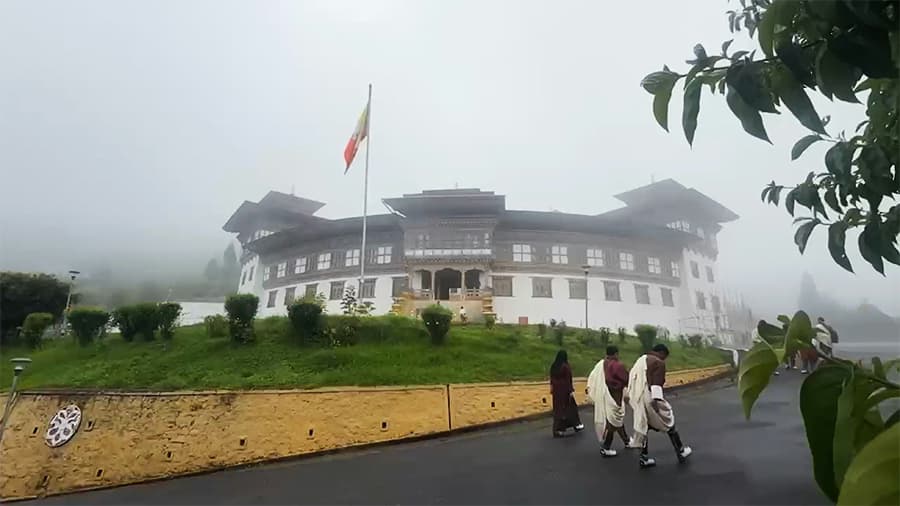
Understanding the FLT Debate in Bhutan's Local Elections 🏛️
Bhutan's upcoming Local Government elections have sparked significant debate among community leaders regarding the revised Functional Literacy Test (FLT). As the country prepares for this important democratic exercise, concerns have emerged from various dzongkhags about how the new testing framework will affect experienced candidates and the overall election process.
The discussion centers on a fundamental question: should educational qualifications replace competency assessments, or should both work in tandem? This tension reflects broader concerns about balancing accessibility in local governance with ensuring adequate administrative capabilities for an increasingly digital governance landscape.
The Core Issue: Certificate Validity and Revalidation 📋
One of the most contentious points raised by local leaders involves the validity of previously earned FLT certificates. Experienced candidates who successfully completed the original Functional Literacy Test years ago now face a puzzling situation—they must retake an entirely revised assessment to obtain new credentials, effectively rendering their earlier achievements obsolete.
Bjabchho Gup Tashi articulated this frustration clearly, noting that the devaluation of existing certificates undermines the credibility of the original certification system. When candidates invest time and effort to obtain credentials, they reasonably expect those qualifications to maintain their value, particularly when the underlying competencies haven't fundamentally changed.
This issue raises important questions about institutional consistency and fairness. If a candidate demonstrated functional literacy competency five years ago, what material change in their abilities would justify requiring them to prove themselves anew? The lack of clear answers has left many community leaders questioning the rationale behind this policy shift.
The Case for Educational Qualifications 🎓
Several local leaders have proposed an alternative approach: establishing minimum educational qualifications such as Class VIII or Class X completion as prerequisites for candidacy. This framework would offer several advantages over the current competency-based system.
Proponents argue that setting a clear educational threshold would:
- Eliminate recurring testing burdens: The Election Commission would no longer need to conduct comprehensive assessments every five years
- Provide transparency: Candidates and voters would understand eligibility criteria upfront
- Reduce administrative costs: Standardized educational records are easier to verify than conducting specialized assessments
- Create consistency: Educational qualifications provide objective, verifiable benchmarks across all districts
Geling Gup Kinley Dorji emphasized that establishing such standards would streamline the election process while maintaining quality assurance. The logic is straightforward—if a candidate has completed a certain level of formal education, they've presumably acquired foundational literacy and numeracy skills necessary for local governance.
Historically, many democracies have relied on educational qualifications as primary eligibility criteria. However, Bhutan's approach with competency testing reflects a more nuanced understanding that formal education doesn't always translate to practical governance skills.
Beyond Credentials: The Leadership Question ⭐
Yet not all local leaders believe that qualifications alone determine effective leadership. This perspective introduces an important counterbalance to the education-focused argument.
Maedtekha Gup Passang Tshering raised a crucial point: possessing a degree doesn't automatically create an effective local government leader. True leadership in community governance requires qualities that no standardized test can fully measure:
- Community engagement: Active participation in village affairs and genuine connection with constituents
- Trust-building: Earning respect through consistent, ethical behavior and transparency
- Responsiveness: Availability and willingness to serve beyond regular working hours
- Communication skills: Ability to translate policy into language communities understand
- Practical problem-solving: Experience addressing real local challenges
This perspective acknowledges that while educational standards matter—especially as communities increasingly adopt digital tools—they represent only one dimension of leadership competency. A candidate might excel on a literacy test but lack the interpersonal skills necessary to unite a divided community or the resilience needed to navigate complex local issues.
The Evolution of FLT: Why the Revision? 🔄
The Election Commission's decision to revise the Functional Literacy Test stems from recognizing significant changes in local government responsibilities. Bhutan's decentralization initiatives have substantially expanded the scope and complexity of local governance roles.
Modern local leaders now manage digital systems, handle online transactions, process data-driven decisions, and navigate increasingly complex policy environments. The revised assessment framework reflects this reality by incorporating:
- Digital literacy components: Essential for managing online administrative systems
- Analytical capabilities: Required for evidence-based decision-making
- Resource management skills: Critical for handling local budgets and development projects
- Public service delivery: Competencies for managing community expectations and service quality
The revised test comprises two components: the Functional Competency Assessment and the Functional Competency Engagement. Together, they evaluate candidates' reading, communication, computational, analytical, and digital skills—essentially creating a comprehensive profile of modern governance readiness.
Understanding the New Certification Levels 📊
The revised framework introduces a tiered certification system that differentiates between various local government positions:
Level One Certificate Requirements:
- Gup (Village Head) candidates
- Mangmi (Deputy Head) candidates
- Thromde Ngotsab candidates
Level Two Certificate Requirements:
- Thromde Tshogpa (Municipal Councilor) candidates
- Chiwog Tshogpa (Block Representative) candidates
This differentiation acknowledges that higher-level positions demand more sophisticated competencies. However, it also creates complications for existing certificate holders seeking to contest for higher positions—they must undertake the full revised assessment rather than having their credentials recognized at a higher level.
The Fairness Question: Existing Certificate Holders 🤔
One provision does offer partial relief: existing FLT certificate holders contesting only for Tshogpa positions will receive Level Two certification without retesting. However, this exception doesn't apply to candidates seeking Gup or Mangmi positions, regardless of their previous certification status.
This creates an uneven playing field. Experienced candidates who previously demonstrated competency must now prove themselves again, while new candidates face the same rigorous assessment. The policy essentially treats prior achievement as irrelevant, which many view as discouraging to experienced community members who might otherwise seek higher office.
Ground-Level Response: Chhukha Dzongkhag's Action 🗣️
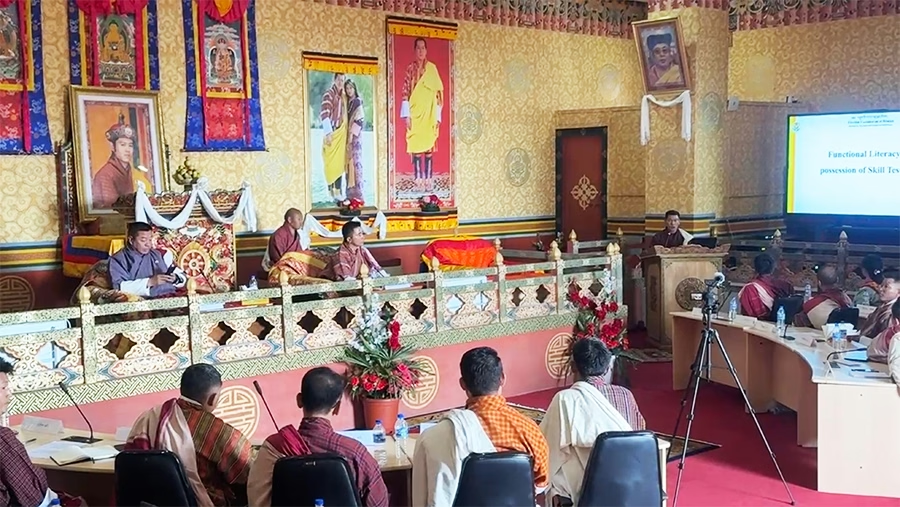
The concerns raised during the Chhukha Dzongkhag Tshogdu (District Assembly) meeting reflect frustrations shared across the country. With nearly 130 individuals already registered for the revised Functional Literacy Test in Chhukha alone, the impact of these new requirements is substantial.
Recognizing the significance of these concerns, the Dzongkhag Tshogdu voted to formally petition the Election Commission of Bhutan to review the revised testing requirements. This action demonstrates that local leaders aren't simply accepting the new framework—they're actively engaging with the electoral authorities to advocate for reconsideration.
This grassroots advocacy could influence how the Election Commission implements or modifies the revised FLT before the next election cycle. Democratic systems thrive when such feedback mechanisms exist and are genuinely considered.
Looking Forward: Balancing Accessibility and Standards 🌟
The FLT debate ultimately reflects a deeper tension in democratic governance: how to ensure that local leaders possess necessary competencies while maintaining accessible pathways to public service. There's no perfect solution—every approach involves trade-offs.
Educational qualifications offer clarity and reduce administrative burden but may exclude experienced community members without formal credentials. Competency assessments better measure practical governance skills but create recurring administrative costs and can undervalue prior achievement.
The path forward likely involves dialogue between the Election Commission and local leaders to find a framework that:
- Respects previously earned credentials while acknowledging genuine skill evolution
- Sets clear, transparent eligibility standards
- Measures practical governance competencies relevant to modern local government
- Remains administratively feasible and cost-effective
- Encourages experienced community members to seek leadership roles
Key Takeaways 💡
The revised FLT requirements represent Bhutan's thoughtful attempt to align electoral standards with evolving local governance demands. However, the concerns raised by community leaders deserve serious consideration. The debate over certificate validity, educational qualifications versus competency testing, and the true nature of effective leadership will likely shape how Bhutan refines its approach to local government elections in coming years.
As the country moves forward with its democratic processes, listening to these ground-level perspectives from experienced local leaders remains essential for building an electoral system that's both rigorous and fair.
You May Also Like

Politics
Women Leaders Training: Preparing for 2027 Local Elections
August 31, 2026
Politics
Speaker Election: Constitutional Duty Over Party Loyalty
August 29, 2026
Politics
Noise in the Quietest Democracy: Bhutan's Political Crisis
August 29, 2026
Politics
Election Pledges Gone Unfulfilled: Who Bears the Responsibility?
August 29, 2026