Category:
SportsJapan Honors Bhutan Judo Association for Bilateral Partnership
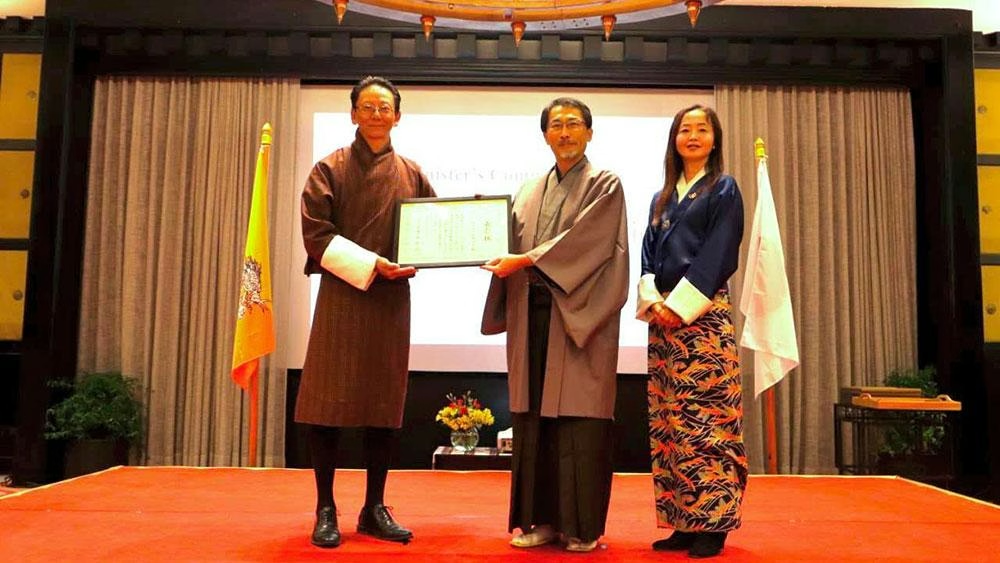
A Historic Recognition for Bhutan's Judo Movement 🥋
In a momentous celebration of international friendship and sporting excellence, the Bhutan Judo Association (BJA) has achieved a remarkable distinction—becoming the first organization in Bhutan to receive Japan's Foreign Minister's Commendation. This prestigious award, presented during the landmark 40th anniversary of diplomatic relations between Bhutan and Japan, represents far more than ceremonial recognition. It symbolizes the transformative power of sports diplomacy and the profound impact that sustained international cooperation can have on a nation's athletic development.
The presentation of this honor by Japanese Ambassador to Bhutan Keiichi Ono underscores Japan's commitment to fostering meaningful partnerships through cultural and sporting exchange. For the BJA, this commendation validates decades of tireless effort to establish judo as a legitimate competitive sport in the Himalayan kingdom.
From Humble Beginnings to International Recognition 🌟
The Remarkable Growth Story
The journey of judo in Bhutan is nothing short of inspirational. What began as a modest school club at Pelkhil School in 2010 has blossomed into a nationally recognized sports federation with international standing. BJA President Karma L Dorji eloquently captured the organization's origins: the early days were marked by severe resource constraints, with enthusiasts training without proper equipment, dedicated facilities, or qualified instructors.
The transformation didn't happen overnight. It required vision, persistence, and crucially, strategic partnerships that would prove instrumental in the sport's development. The Kobe Bhutan Friendship Association played a pivotal early role, with Japanese volunteers providing grassroots support during those foundational years when the association operated on virtually no budget.
Strategic Partnerships That Made a Difference
The turning point came in 2014 when the Japan Overseas Cooperation Volunteers programme began deploying trained judo instructors to Bhutan. These dedicated professionals brought technical expertise and international best practices to local training programs. Yoshihiro Horiuchi, who served as a judo instructor from 2014 to 2016, exemplifies the caliber of support that helped elevate Bhutanese judo from amateur status to competitive excellence.
The financial commitment from Japan's government further demonstrated the seriousness of this partnership. In 2018, Tokyo approved a substantial grant of approximately 14 million Yen specifically designated for constructing Bhutan's first purpose-built judo training facility at Pelkhil School. This state-of-the-art dojo, inaugurated in October 2021, provided the infrastructure necessary for serious athlete development and training standardization.
International Integration and Olympic Achievement 🏅
Breaking Into the Global Arena
Bhutan's judo federation didn't stop at domestic development. Strategic affiliations with world-renowned institutions elevated the sport's credibility and competitive opportunities. The BJA established partnerships with the Kodokan Judo Institute—an institution with over 140 years of judo heritage dating back to 1882—and the All Japan Judo Federation, connecting Bhutanese athletes to the sport's most authoritative governing bodies.
These institutional connections bore fruit in 2016 when BJA secured membership as the 196th member federation of the International Judo Federation, the sport's global governing body. This accreditation opened previously inaccessible doors for Bhutanese judokas to compete on the international stage.
The culmination of these efforts came with Ngawang Namgyel's historic participation in the Tokyo 2020 Olympic Games (held in 2021). As Bhutan's first judoka to compete at the Olympics, Namgyel's presence on the world's largest sporting stage represented the realization of a dream that seemed impossible just a decade earlier. This achievement transcended individual accomplishment—it demonstrated that Bhutan, a small nation of approximately 750,000 people, could compete with countries possessing vastly greater resources and sporting infrastructure.
The Strategic Value of International Recognition 💼
Beyond Ceremonial Honors
While the Foreign Minister's Commendation carries no direct financial assistance, its value to the BJA extends significantly beyond symbolic recognition. In the competitive landscape of international sports development, credibility is currency. This prestigious award substantially enhances the association's standing with potential long-term partners, sponsors, and funding organizations.
Bhutan's judo federation operates under resource constraints that would challenge any sporting organization. The BJA receives base funding through the Bhutan Olympic Committee but must independently raise at least half of its annual operating budget. This funding gap forces the organization to actively cultivate relationships with Japanese and European supporters who believe in the mission of developing competitive judo talent in Bhutan.
The Foreign Minister's Commendation serves as powerful validation when approaching potential sponsors. It demonstrates that international bodies recognize BJA's contribution to bilateral relations and sports development, making the organization a more attractive investment for organizations seeking meaningful impact through sports partnerships.
Addressing the Athlete Retention Challenge 📊
The Post-Secondary Gap
Despite impressive progress, the BJA faces a persistent challenge that affects many developing sports programs: athlete retention after secondary school. Bhutan's education and employment landscape creates structural obstacles to sustaining competitive judo careers. Many young athletes transition to higher education, technical training, or employment opportunities after completing secondary school, naturally shifting focus away from competitive sport.
Bhutan's sporting infrastructure, while improving, lacks the collegiate athletic frameworks and specialized sports academies that exist in more developed nations. Football represents the primary exception, with organized pathways for post-secondary competition. This absence of institutional structures for judo athletes creates a bottleneck where promising young competitors effectively exit the sport at precisely the moment when they could develop into elite athletes.
Historically, the BJA directed limited resources toward post-secondary athletes, even though many eventually abandoned competitive sport due to practical constraints. This allocation strategy, while understandable given resource limitations, inadvertently contributed to talent loss.
A Strategic Pivot Toward Youth Development
Recognizing these dynamics, the BJA has fundamentally reoriented its investment strategy. The association is now prioritizing grassroots and junior development programs, particularly targeting the under-19 age category. This approach emphasizes building a larger talent pool of trained young athletes, operating on the theory that increased participation at younger ages will naturally result in more athletes choosing to remain competitive long-term.
The strategy includes expanding training frequency and establishing regional competitions that provide younger athletes with meaningful competitive opportunities before they face post-secondary transitions. By making judo more accessible and rewarding at the junior level, the BJA hopes to cultivate deeper commitment to the sport among younger generations.
Expansion Through Educational Institutions 🎓
Leveraging Schools as Growth Engines
The BJA's expansion strategy increasingly recognizes schools as critical infrastructure for sport development. Student interest in judo remains strong across Bhutan's educational system, but a critical bottleneck limits growth: a shortage of certified, qualified judo coaches.
Bhutan's safety-conscious approach to judo instruction—requiring all coaches to be properly licensed and trained—prevents rapid club expansion despite strong demand. This regulatory framework, while prudent, creates a capacity constraint. The BJA cannot simply open new clubs without qualified personnel to oversee training and ensure participant safety.
To overcome this limitation, the BJA is implementing an innovative approach: direct collaboration with schools and sports instructors nationwide. The association plans to provide comprehensive support packages including mats, uniforms, and technical training to school staff, enabling them to establish judo clubs in new dzongkhags (districts) across the country.
This decentralized model leverages existing educational infrastructure and personnel, making judo development more sustainable and geographically inclusive. By partnering with the Ministry of Education and Skills Development, the BJA is positioning judo not as an external program but as an integral component of Bhutan's educational sports ecosystem.
The Broader Context: Sports Development in Bhutan 🌍
Institutionalizing Sports as a Professional Sector
The challenges facing the BJA reflect broader questions about how Bhutan develops its sports sector. BJA President Karma L Dorji articulated a fundamental insight: addressing these challenges requires institutionalizing sports as a recognized, viable professional sector within Bhutan's economy and society.
This perspective acknowledges that individual sports organizations, however well-managed, cannot overcome systemic obstacles alone. Sustainable sports development requires supportive policy frameworks, educational pathways, employment opportunities, and cultural recognition that positions athletic careers as legitimate life choices.
Bhutan's development model, which emphasizes Gross National Happiness over GDP growth, creates unique opportunities for sports integration. The country's commitment to holistic wellbeing aligns naturally with sports' documented benefits for physical health, mental resilience, and social cohesion. Judo, with its emphasis on discipline, respect, and personal development, particularly resonates with Bhutanese cultural values.
Looking Forward: The Future of Bhutan-Japan Judo Partnership 🚀
Sustaining Momentum Through Recognition
The Foreign Minister's Commendation represents both recognition of past achievements and a platform for future growth. Building on this recognition, the BJA has committed to deepening partnerships with Bhutanese educational institutions and continuing collaboration with Japanese organizations that have supported the sport's development.
The trajectory of Bhutan's judo movement demonstrates how strategic international partnerships, combined with local commitment and institutional support, can transform a sport from non-existent to internationally competitive within a single generation. As the BJA continues expanding through schools, developing younger athletes, and attracting international partnerships, the foundation for sustained competitive excellence grows stronger.
Bhutan's judokas will continue representing their nation on increasingly prominent international stages. Each athlete carries forward the legacy of those early pioneers who trained without mats or budgets, embodying the spirit of perseverance that characterizes both judo and Bhutanese culture. With Japan's continued support and Bhutan's strategic investments in youth development, the next chapter of this remarkable sporting partnership promises even greater achievements. ✨
You May Also Like
Sports
Bhutanese Tennis Players Make Historic Davis Cup Asia/Oceania Debut
November 7, 2026
Sports
Bhutanese Athletes Make Historic Mark at Youth Olympic Games
November 7, 2026
Sports
Bhutan Prepares for SAFF Championship Opener Against Bangladesh
November 4, 2026
Sports
Jamphel Choda and Pema Choki Win Snowman Race 2026
October 30, 2026