Category:
SportsBhutanese Tennis Players Make Historic Davis Cup Asia/Oceania Debut
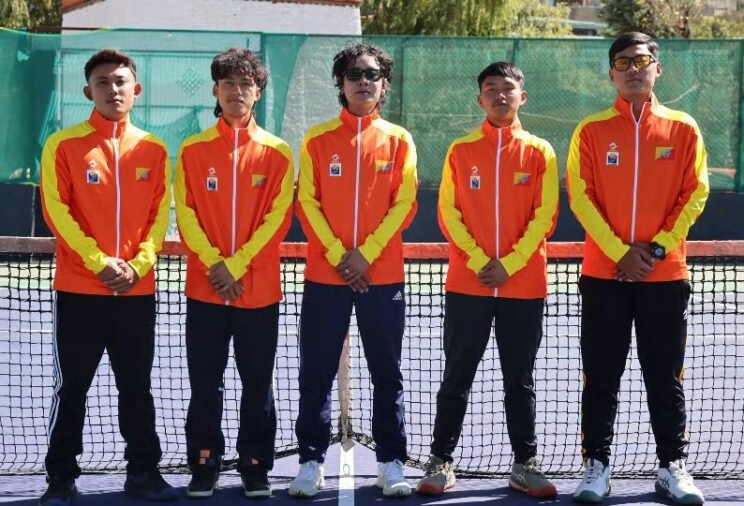
A Historic Moment for Bhutanese Tennis 🎾
Bhutan's tennis program is stepping onto the international stage with significant momentum. Four talented young athletes are preparing to represent their nation at the Davis Cup Asia/Oceania Group V tournament, marking a pivotal moment for competitive tennis in the Himalayan kingdom. This prestigious competition will take place in Vietnam from November 11-14, bringing together some of the region's most promising tennis talent across 14 nations.
The selection of these four players represents years of dedication to developing tennis infrastructure and nurturing young athletic talent in Bhutan. As the nation continues to prioritize sports development alongside its famous philosophy of Gross National Happiness, international tennis competition serves as an important platform for cultural exchange and athletic growth.
The Bhutanese Tennis Team: Meet the Players 🌟
Jamyang Choeda: The Rising Star
At just 18 years old, Jamyang Choeda from Tsirang represents the future of Bhutanese tennis. A Class XI student at Dechencholing Higher Secondary School, Jamyang has already demonstrated exceptional commitment to the sport, beginning his tennis journey at the tender age of seven. His inclusion in the Davis Cup team at such a young age underscores his potential and the progress he's made under professional coaching.
Jamyang's perspective on this opportunity reflects the enthusiasm of emerging athletes: he views the tournament as a crucial learning experience and a chance to showcase his abilities against regional competitors. For young players in Bhutan, international exposure at this level can be transformative, providing invaluable experience and confidence for future competitions.
Jigme Norbu: The Experienced Competitor
Jigme Norbu, 21, brings substantial international experience to the team. A third-year student at Royal Thimphu College, Jigme has already represented Bhutan in approximately five international tournaments, giving him a competitive edge and mental resilience that comes from previous cross-border competition. His versatility—competing in both singles and doubles formats—makes him a valuable asset to the team's overall strategy.
With over a decade of tennis experience, Jigme has watched the sport evolve in Bhutan and has been instrumental in helping younger players develop their skills. His commitment to intensive training over the past three months demonstrates the professional approach the team has adopted in preparing for this regional championship.
Thinley Dorji: Consistent Performer
Thinley Dorji, also 21 and hailing from Wangdue Phodrang, brings similar credentials to the team with five international tournament appearances under his belt. Like his teammates, Thinley has invested a decade into tennis development and brings maturity and game awareness to the squad. His participation in the Davis Cup represents recognition of his consistent performance and dedication to the sport.
The three-month intensive training regimen has prepared Thinley not just physically but mentally for the challenges ahead. Tennis at the Davis Cup level requires not only technical skill but also psychological resilience—qualities that Thinley has been developing throughout his playing career.
Sherab Gyeltshen: The Emerging Talent
Sherab Gyeltshen, 20, from Samdrup Jongkhar rounds out the four-player contingent. With three international-level competitions already on his resume, including the Under-12 International Championship and Junior Series events, Sherab has progressively climbed the competitive ladder. His selection for the Davis Cup squad reflects his steady improvement and potential for future development.
For Sherab, representing Team Bhutan at this level carries special significance—it's validation of years of hard work and an opportunity to compete against some of Asia-Oceania's best young talent.
The Competitive Field: 14 Nations Converge 🏆
The Davis Cup Asia/Oceania Group V brings together a diverse collection of nations, each with their own tennis development programs and ambitions. Bhutan will compete alongside established cricket nations like Bangladesh, traditional tennis markets like the UAE and Bahrain, and emerging programs from countries including Brunei, Guam, Laos, Macau, Maldives, Mongolia, Nepal, Pacific Oceania, Tajikistan, and Yemen.
This diverse competition format serves an important function within the International Tennis Federation's regional structure. The tournament isn't merely about determining winners and losers—it's a crucial developmental platform where emerging tennis nations can benchmark their progress, identify areas for improvement, and build international relationships within the sport.
Preparation and Training: Three Months of Intensive Work 💪
Under the guidance of Coach Tashi Dorji, the Bhutanese team has undergone a rigorous three-month preparation period. The training regimen reflects professional standards, with players dedicating four hours daily to their development—two hours in morning sessions and two hours in evening sessions. This commitment demonstrates the seriousness with which Bhutan's tennis federation approaches international competition.
Coach Tashi Dorji oversaw the selection process, choosing the final four players from a pool of ten candidates in late October. The selection criteria focused on current form, international experience, physical conditioning, and mental readiness. According to the coach, the team is both mentally prepared and physically fit, having worked systematically to improve all aspects of their game.
The training emphasis has covered three critical areas:
- Physical Fitness: Building stamina and strength required for competitive tennis
- Match Preparation: Developing tactical awareness and match strategy
- Mental Resilience: Preparing players psychologically for high-pressure international competition
The Davis Cup Structure and Implications 📊
The Davis Cup Asia/Oceania Group V represents an important tier within the International Tennis Federation's competition hierarchy. Success at this level carries tangible rewards—the top two teams will earn promotion to Group IV for 2027, providing a clear pathway for progression and greater international exposure.
For Bhutan, this structure offers a realistic and achievable goal. Rather than competing at the highest levels of international tennis, the Group V format allows emerging nations to develop competitive programs, identify and nurture talent, and gradually build toward higher tiers of competition. This tiered approach has proven effective in developing tennis programs across Asia-Oceania.
Regional Context: Tennis Development Across Asia-Oceania 🌏
Tennis development in the Asia-Oceania region has accelerated significantly over the past decade. Countries that previously had minimal tennis infrastructure have invested in coaching, facilities, and player development programs. This regional growth has created a more competitive environment while also providing opportunities for emerging nations like Bhutan to participate meaningfully in international competition.
Bhutan's participation in the Davis Cup reflects broader national commitments to sports development. As the government continues to emphasize health, wellness, and athletic achievement, tennis provides an excellent avenue for youth development and international representation. The sport's individual nature also aligns well with Bhutan's educational philosophy, developing discipline, resilience, and personal excellence.
What Lies Ahead: Expectations and Opportunities 🚀
The November tournament represents more than just competition—it's a learning opportunity for all four players. International Davis Cup experience at this developmental level provides invaluable exposure that will benefit these athletes throughout their careers, whether they continue in professional tennis or transition to other pursuits.
For the broader Bhutanese tennis community, success or strong performances at the Asia/Oceania Group V could catalyze increased investment in the sport, inspire younger players to take up tennis, and establish Bhutan as a serious participant in regional competitions. Coach Tashi Dorji's confidence in the team's preparation suggests that the players will be competitive and capable of representing their nation with distinction.
The team's departure for Vietnam marks the beginning of an exciting chapter in Bhutanese sports history. These four young athletes carry not just their own aspirations but also the hopes of a nation working to build excellence in international sports.
Key Takeaways 🎯
Bhutan's Davis Cup Asia/Oceania Group V participation demonstrates the nation's commitment to developing world-class athletes and participating meaningfully in international sports. The four-player team—comprising players with ages ranging from 18 to 21 and international experience ranging from first-time competitors to veterans of five tournaments—represents a healthy mix of youth and experience.
With three months of intensive preparation under professional coaching, these athletes are ready to compete with distinction. Whether they achieve promotion to Group IV or simply gain valuable experience, this tournament represents a significant milestone for Bhutanese tennis. As the nation continues its journey in international sports, moments like these build momentum, inspire future generations, and demonstrate that excellence in athletics is possible regardless of a nation's size or resources.
The Davis Cup Asia/Oceania Group V will serve as a crucial stepping stone for these players and a testament to Bhutan's growing presence in the international tennis community.
You May Also Like

Sports
Bhutanese Athletes Make Historic Mark at Youth Olympic Games
November 7, 2026
Sports
Japan Honors Bhutan Judo Association for Bilateral Partnership
November 7, 2026
Sports
Bhutan Prepares for SAFF Championship Opener Against Bangladesh
November 4, 2026
Sports
Jamphel Choda and Pema Choki Win Snowman Race 2026
October 30, 2026