Category:
EconomyIndian Demand Spurs Ginger Price Surge
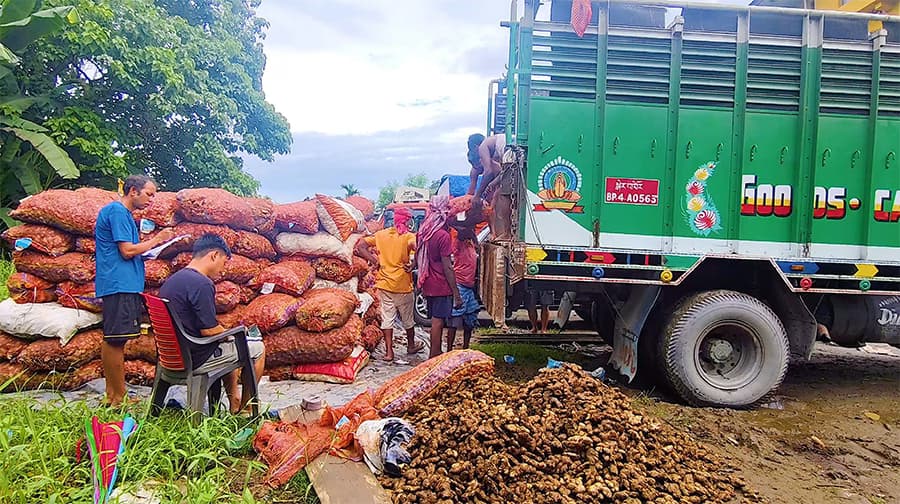
A New Dawn for Ginger Farmers in Samdrup Jongkhar 🌱
After four challenging years marked by low returns, ginger farmers in Samdrup Jongkhar are finally witnessing a promising turnaround. The price of ginger has soared to a high of Nu 90 per kilogram, offering a much-needed economic upliftment to local farmers. This surge has reignited confidence in ginger cultivation, which is pivotal for the region's agricultural economy.
Historic Struggles and Recent Success 📈
For years, ginger prices stagnated at around Nu 35 per kilogram, barely covering production costs. This season, however, prices have more than doubled, ranging between Nu 50 and Nu 90 per kilogram based on quality. This increase is a significant relief for farmers like Pema Yangdon, who reported earnings of Nu 32,000 from her first harvest and an additional Nu 18,000 subsequently. Such income is crucial for meeting essential expenses, such as children's education.
The Role of Indian Market Dynamics 🇮🇳
The primary driver behind this price surge is the strong demand from India. Lower production levels in several Indian states and delayed harvesting have caused a supply shortage, thus elevating prices. As Sangay Tenzin, a local trader, noted, "Production in Shillong has not yet started, so ginger supply in India is low."
Agricultural Practices and Economic Impact 🌾
Farmers in Samdrup Jongkhar typically plant ginger in March, with two harvests per year. The first harvest occurs in July or August, providing early income when the mother rhizome is collected. The second harvest in early winter allows shoots to mature, optimizing yield. With an annual production of approximately 650 metric tonnes, Samdrup Jongkhar ranks as the second-largest ginger-producing district in Bhutan.
Broader Economic Implications and Future Prospects 🔍
The current market conditions underscore the interconnectedness of regional agriculture and international demand. While the current boom is promising, it is essential for farmers to prepare for potential market fluctuations. As Indian production picks up, prices may stabilize or decrease.
To sustain these gains, farmers might consider diversifying crops or investing in better storage facilities to extend the selling period. Additionally, engagement with cooperatives could empower farmers to negotiate better prices collectively.
Conclusion: A Cautiously Optimistic Future 🌟
The ginger price surge in Samdrup Jongkhar is a testament to the resilience of the region's farmers and their ability to capitalize on international market dynamics. While the current situation offers hope, strategic planning and adaptation will be crucial in maintaining these economic gains in the long term.
Farmers and local authorities must continue to collaborate, ensuring that the agricultural sector thrives and adapts to future challenges. This season may well be a stepping stone toward a prosperous future for ginger cultivation in Bhutan.
You May Also Like
Economy
Beyond Bank Loans: Alternative Financing for Bhutanese Entrepreneurs
October 18, 2026

Economy
BCCI Elects New Leadership Team to Drive Business Growth
October 15, 2026

Economy
Indian Banks Slow to Adopt Bhutanese UPI Payments
October 12, 2026
Economy
Government Addresses 400+ Business Issues to Boost Economy
October 10, 2026