Category:
EconomyEV Subsidies on Hold: Bhutan's Strategic Approach to Electric Mobility
The Government's Measured Approach to EV Affordability 🚗⚡
Bhutan stands at a critical juncture in its journey toward sustainable transportation. While the nation recognizes the urgent need to transition away from fossil fuel dependency, policymakers have taken a deliberate pause on implementing immediate electric vehicle subsidies and tax exemptions. This decision reflects a broader strategic philosophy: that long-term market transformation requires careful planning rather than reactive financial incentives.
The government's hesitation isn't born from indifference to affordability concerns plaguing ordinary Bhutanese families. Rather, it stems from a sophisticated understanding that subsidies alone cannot solve the complex economic puzzle surrounding EV adoption. Finance Minister Lekey Dorji recently articulated this nuanced position, emphasizing that multiple factors influence vehicle pricing beyond taxation.
Understanding the Current EV Tax Landscape 💰
What Changed in the Recent Tax Reform
Under Bhutan's recent tax restructuring, electric vehicles maintain a distinctly favorable position compared to their conventional counterparts. While EVs are now subject to Goods and Services Tax (GST), they remain exempt from all other vehicle-related taxes that burden traditional internal combustion engine vehicles.
This tax treatment represents a significant advantage:
- EVs: GST only (approximately 5%)
- Conventional vehicles: Both GST and Excise Tax combined
- Practical impact: Electric vehicles still enjoy substantially lower tax burdens than petrol or diesel alternatives
However, this favorable tax regime hasn't automatically translated into lower showroom prices. The disconnect between tax policy and retail pricing reveals a fundamental truth about vehicle markets: taxation represents just one component of the final cost consumers face.
The Real Price Puzzle: Beyond Tax Policy 🔍
When Finance Minister Dorji addressed the 30th Meet-the-Press session, he emphasized an often-overlooked reality: tax policy alone cannot determine vehicle market prices. Multiple interconnected factors influence what consumers ultimately pay at dealerships.
These pricing determinants include:
- Manufacturer pricing — Global EV makers set base prices
- Supply chain costs — Production and logistics expenses
- Shipping charges — International transportation for imports
- Exchange rate fluctuations — Currency volatility affecting import costs
- Dealer margins — Local business profit requirements
Following recent tax reforms, most vehicle categories experienced tax reductions. Yet paradoxically, retail prices haven't consistently fallen. This suggests that dealers and importers haven't fully passed tax savings to consumers, instead maintaining or adjusting their profit margins accordingly.
Bhutan's Strategic EV Initiative: Building Infrastructure First 🏗️
The Accelerate E-Mobility Uptake Project
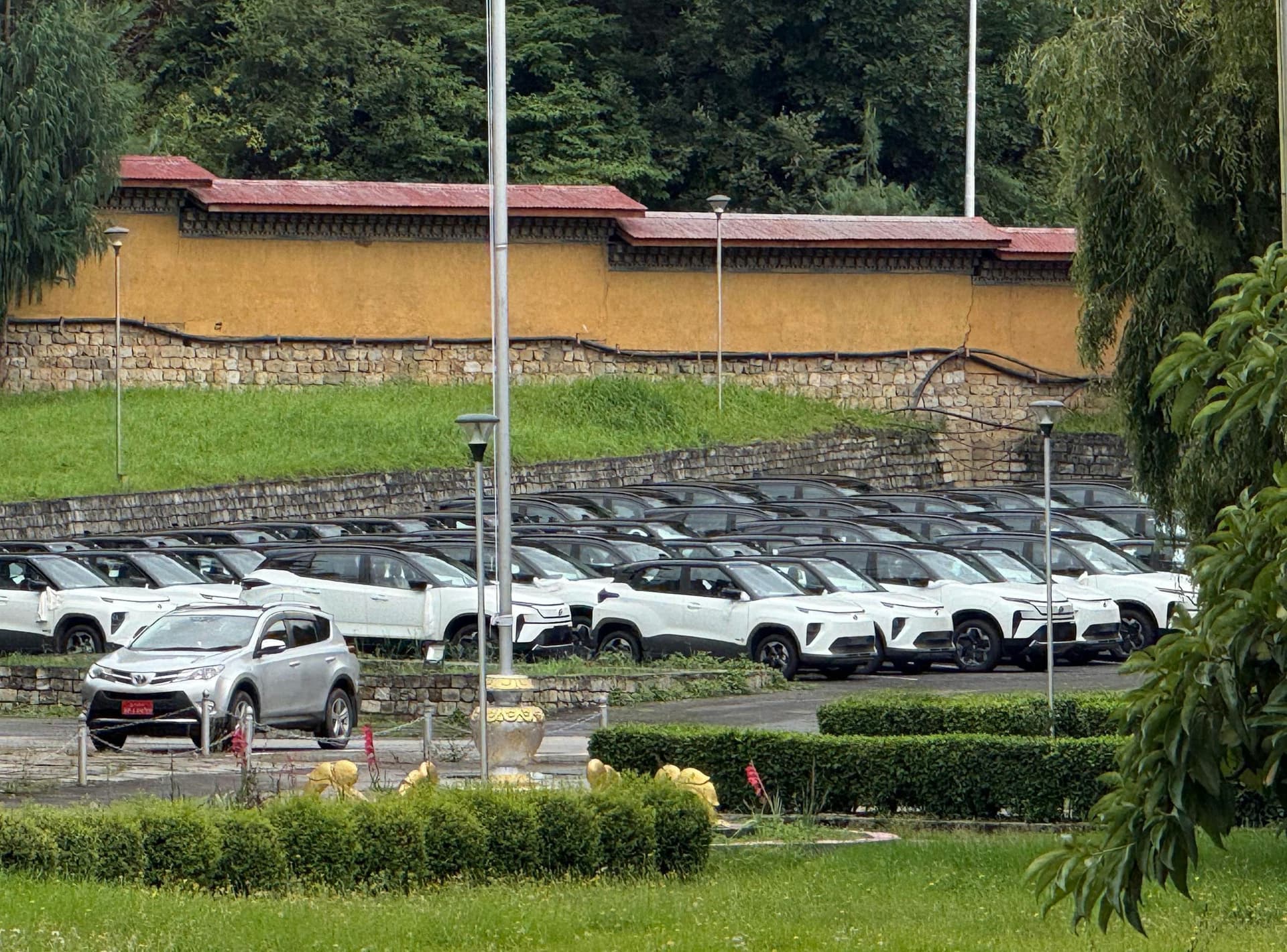
Rather than distributing direct subsidies to private buyers, the government has invested heavily in foundational infrastructure. India recently handed over 45 electric vehicles valued at Nu 93.723 million under the Accelerate E-Mobility Uptake in Bhutan project—a comprehensive initiative designed to demonstrate EV viability while building systemic capacity.
This multi-year project encompasses ambitious targets:
- 54 additional electric cars — To be procured in coming months
- 45 electric buses — For public transport transformation
- 30 charging stations — Strategically located for urban and inter-district connectivity
- 100 government EVs — For state fleet electrification
- Capacity-building programs — Training for engineers, technicians, and transport officers
- Total budget allocation: Nu 900 million
Finance Minister Dorji characterized this initiative as laying "the foundation for wider EV adoption in Bhutan" while simultaneously "catalysing market confidence." The strategy prioritizes demonstrating practical viability over immediate consumer incentives.
The Charging Infrastructure Challenge ⚙️
One of Bhutan's most pressing EV adoption barriers isn't price—it's charging availability. Health Minister Tandin Wangchuk highlighted this critical gap, noting that many existing EVs face limited driving ranges and encounter charging obstacles.
The government is addressing this through a public-private partnership model with Bhutan Power Corporation Limited (BPC). The arrangement divides responsibilities strategically:
- Government role: Provides financial support
- BPC role: Manages operation and maintenance
For private stakeholders, financial incentives encourage charging station installation:
- Monthly incentive: Nu 26,955 for individuals or businesses
- Additional benefit: Full electricity bill coverage
This carrot-and-stick approach aims to rapidly expand charging networks while distributing infrastructure investment across public and private sectors.
Technical Expertise and Battery Management 🔋
Beyond pricing and charging, another adoption barrier concerns technical expertise. Bhutan currently lacks widespread EV maintenance capacity, creating dependency on foreign manufacturers for repairs—particularly battery replacements.
Health Minister Wangchuk emphasized that Indian EV manufacturers have established responsible battery return programs. He urged other international EV makers to adopt similar practices, ensuring that damaged batteries don't become environmental liabilities or repair nightmares for Bhutanese owners.
Additionally, the minister stressed that EV dealers must commit to supplying only premium-quality batteries, recognizing that battery reliability directly impacts consumer confidence and long-term adoption rates.
Adoption Statistics: The Current Reality 📊
Despite electric vehicles entering the Bhutanese market in 2014, adoption has remained surprisingly modest. According to the Bhutan Construction and Transport Authority's February 2026 data:
- Total registered vehicles: Approximately 125,000
- Electric vehicles: Roughly 1,200
- EV market penetration: Less than 1%
This low adoption rate reflects genuine affordability challenges. The upfront purchase price remains the single largest barrier preventing wider EV uptake among ordinary families. A typical EV in Bhutan costs significantly more than comparable petrol or diesel vehicles, creating an accessibility gap that tax exemptions alone haven't bridged.
The Long-Term Economic Advantage 💡
While conventional vehicles may appear cheaper initially, the government argues that total cost of ownership tells a different story. Several factors favor EVs over their lifetime:
Operating Cost Stability
Petrol and diesel vehicles remain vulnerable to international fuel price volatility. Recent geopolitical tensions in West Asia demonstrated how quickly global energy markets can destabilize, spiking fuel costs. Bhutan's electricity sector, by contrast, operates domestically with comparative price stability.
Maintenance Advantages
Electric vehicles feature significantly fewer moving parts than internal combustion engines. This translates to:
- Lower routine maintenance requirements
- Reduced brake wear (regenerative braking)
- Longer service intervals
- Fewer unexpected repair costs
Over a vehicle's 10-15 year lifespan, these cumulative savings can substantially offset the higher initial purchase price—particularly for households with predictable driving patterns.
Global Market Trends Supporting Future Affordability 🌍
International experience suggests that EV affordability will improve dramatically over the coming decade. Several converging trends support this optimistic outlook:
Battery Technology Advancement: Battery costs have declined over 90% since 2010, with projections suggesting continued decreases as solid-state and other next-generation technologies mature.
Production Scaling: As global EV production volumes increase, manufacturers achieve economies of scale, reducing per-unit costs.
Intensifying Competition: New entrants from China, India, and other markets are pressuring established manufacturers on price, benefiting consumers.
Supply Chain Maturation: As EV supply chains stabilize and consolidate, logistics costs decline.
These dynamics suggest that waiting for market maturation may actually serve Bhutanese consumers better than rushing into subsidy programs now.
The Government's Monitoring Strategy 🔭
Finance Minister Dorji indicated that the government will continue observing EV market developments while assessing outcomes from the ongoing e-mobility initiative. This measured approach allows policymakers to:
- Gather real-world data on EV performance in Bhutanese conditions
- Evaluate charging infrastructure effectiveness
- Monitor battery technology improvements
- Assess consumer adoption patterns
- Engage stakeholders—manufacturers, dealers, consumers, and environmental advocates
Only after collecting sufficient evidence will the government consider additional policy measures, potentially including direct subsidies if market conditions warrant.
What This Means for Bhutanese Consumers 👥
The government's decision to hold off on immediate EV subsidies presents a mixed picture for ordinary families considering electric vehicle purchases:
Immediate Reality: Private EV buyers won't receive direct purchase incentives or tax exemptions in the near term, meaning affordability remains challenging.
Infrastructure Investment: However, expanding charging networks and government fleet electrification demonstrate genuine commitment to creating an EV-friendly ecosystem.
Long-term Perspective: As battery costs decline, production increases, and competition intensifies globally, EV prices will become increasingly competitive—potentially without requiring government subsidies.
Operational Benefits: Even at current prices, EV owners benefit from lower fuel costs and reduced maintenance compared to conventional vehicles.
Looking Forward: Bhutan's EV Strategy Development 📋
The Ministry of Infrastructure and Transport is currently developing a comprehensive EV Strategy to guide Bhutan's broader transition to electric mobility. This strategy will likely address:
- Charging infrastructure standards and expansion timelines
- Technical training and workforce development
- Battery recycling and environmental management
- Grid capacity planning for increased electricity demand
- Integration with Bhutan's renewable energy portfolio
According to the Current Policy Scenario for 2030, the transport sector is projected to account for 22% of electricity demand, making strategic EV planning essential for grid stability and energy security.
Conclusion: A Patient Path to Electrification ✨
Bhutan's decision to forgo immediate EV subsidies reflects sophisticated policy thinking rather than indifference to affordability concerns. By prioritizing infrastructure development, technical capacity building, and market observation over direct financial incentives, the government is laying groundwork for sustainable, long-term EV adoption.
The reality is straightforward: tax policy alone cannot solve affordability challenges. Instead, a holistic approach combining infrastructure investment, technical expertise development, and patience for global market maturation offers Bhutanese consumers a more durable path to electric mobility.
As battery costs continue declining and competition intensifies globally, the EVs that seem expensive today will become genuinely affordable tomorrow—without requiring permanent government subsidies. Meanwhile, expanding charging networks and government fleet electrification are already demonstrating that Bhutan is serious about its clean transport transition.
For families considering EV purchases now, the calculus is complex but ultimately favorable when factoring in operational savings and energy security benefits. For the government, the measured approach signals confidence that market forces and strategic infrastructure investment will achieve what subsidies alone cannot: genuine, sustainable transformation of Bhutan's transportation landscape.
You May Also Like

Economy
Fixed Deposit Tax Withholding: What You Need to Know
September 13, 2026
Economy
DRC's QR Payment Innovation: Tracking Business Income
September 2, 2026

Economy
Single Mother Transforms Life Through Beekeeping in Bhutan
August 31, 2026
Economy
Natural Resources: Turning Ore into National Opportunity
August 29, 2026