Category:
EnvironmentEnsuring a Resilient 2026 Cropping Season 🌾
In a proactive effort to safeguard Bhutan's agricultural future, the Ministry of Agriculture and Livestock (MoAL) has launched a series of initiatives aimed at shielding the 2026 cropping season from potential climate adversities. As global forecasts hint at a possible 'Super El Niño', the Ministry is doubling down on measures to ensure climate resilience and secure irrigation water. 🌦️
Navigating Climate Uncertainty: Bhutan's Strategic Approach
With climate change posing a significant threat to global agriculture, Bhutan is no exception. The Ministry of Agriculture and Livestock, led by Minister Younten Phuntsho, is taking decisive action to mitigate potential impacts. While international projections suggest the possibility of extreme weather, Bhutan's unique geographical terrain and climatic conditions present a different story. 🏔️
Bhutan's Climate Resilience Framework
The Ministry's strategy is informed by scientific forecasts from the National Center for Hydrology and Meteorology (NCHM), which collaborates with global and regional climate centers. Despite predictions of higher temperatures, Bhutan may still experience normal to above-normal rainfall during the monsoon season, offering a silver lining for local farmers. 🌧️
Key Initiatives for Climate Resilience
-
Expanding Irrigation Infrastructure: As part of the 13th Five-Year Plan, the Ministry is constructing 24 irrigation schemes, with five completed and seven underway. These schemes, spanning 146 kilometers, aim to provide reliable irrigation to 5,461 acres of land, benefiting over 3,161 households. 🚜
-
Promoting Efficient Water Use: The adoption of micro-irrigation systems, such as drip and sprinkler technologies, is a pivotal move to conserve water. Over 1,500 acres have already been equipped with these systems, enhancing water management for various crops. 💧
-
Investing in Climate-Resilient Crops: By promoting crop varieties resistant to heat, drought, and pests, the Ministry is equipping farmers to tackle the challenges posed by erratic weather patterns. 🌾
-
Enhancing Agrometeorology Services: Strengthening localized weather advisory services ensures farmers receive timely information to guide their planting and water management decisions. 📡
Aligning with Global Trends and Local Needs
Bhutan's initiatives align with global trends emphasizing sustainable agriculture and climate adaptation. The country's efforts to integrate climate and disaster-resilient practices into its policies highlight its commitment to sustainable development.
The Broader Impact on Bhutan's Economy and Society
Agriculture remains a cornerstone of Bhutan's economy, providing livelihoods to a significant portion of the population. The Ministry's comprehensive approach not only aims to mitigate climate risks but also contributes to national food security and economic stability. 📈
Looking Ahead: Preparing for the Future
As Bhutan braces for potential climate challenges, preparedness remains key. The Ministry's message is clear: while the forecasts are uncertain, proactive measures and informed decision-making will guide the nation towards a stable and productive cropping season. 🌱
In conclusion, Bhutan's strategic approach to climate resilience serves as a model for other nations facing similar challenges. By focusing on preparedness rather than panic, the Ministry of Agriculture and Livestock is ensuring that Bhutanese farmers are well-equipped to face the future. 🌍
You May Also Like
Environment
Climate Crisis in the Himalayas: Bhutan's Cold Reminder
August 29, 2026
Environment
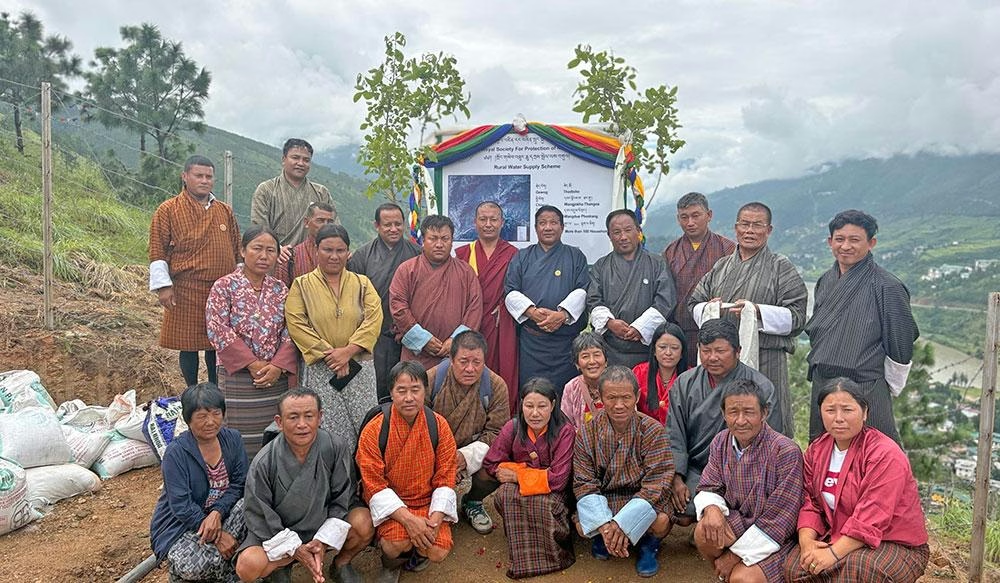
WBH Conservation Project Delivers Clean Water to Rural Homes
August 29, 2026
Environment
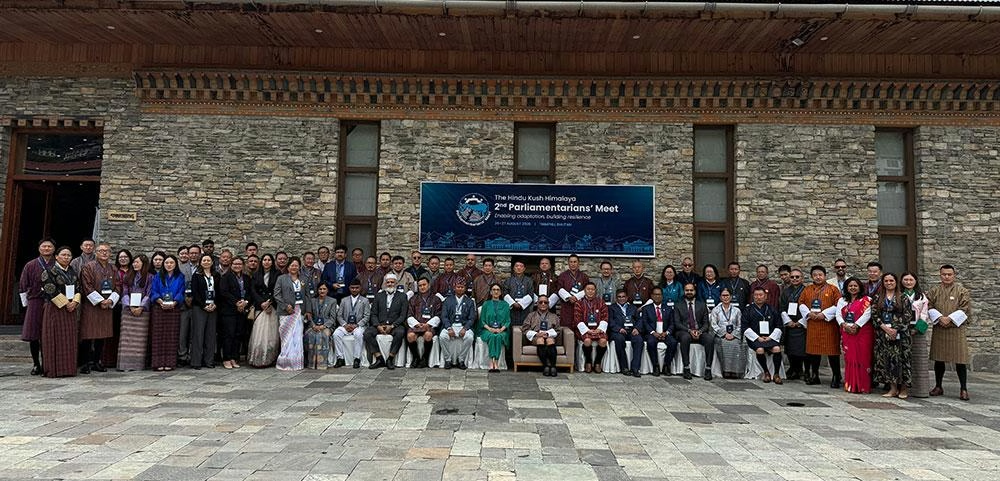
HKH Climate Crisis: Why Regional Unity Matters Now
August 29, 2026
Environment
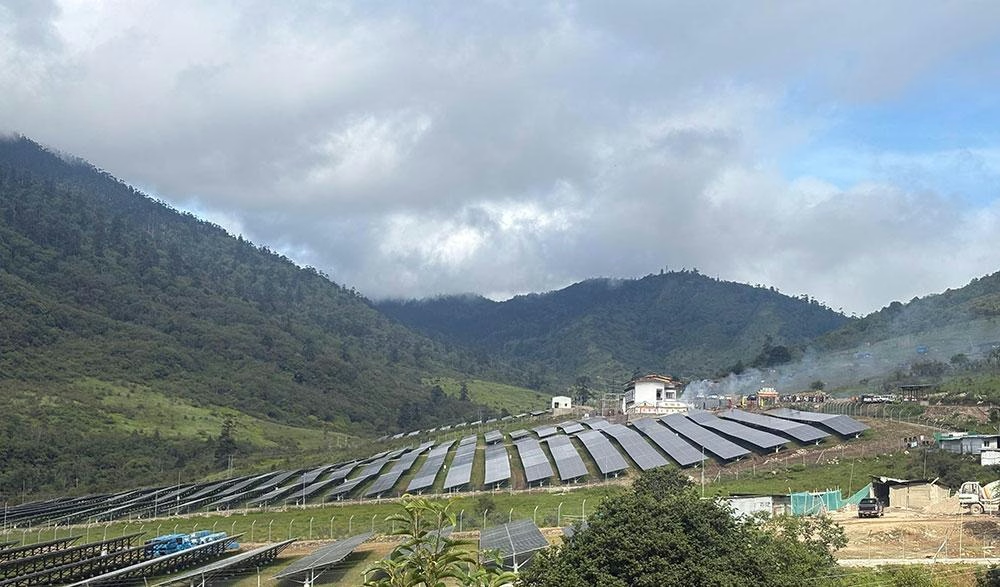
Bhutan's Solar Power Revolution: Energy Security Strategy
August 26, 2026