Category:
NewsBoosting Bhutan's School Nutrition with Global Partnership
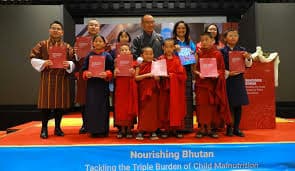
In a significant move to enhance the health and nutrition of schoolchildren in Bhutan, the United Nations World Food Programme (WFP) has teamed up with the Korea International Cooperation Agency (KOICA) to launch a transformative initiative. Over the next three years, this USD 9.5 million project aims to improve the lives of over 100,000 children across 50 government and seven monastic schools. By integrating local agricultural practices with school feeding programs, the initiative is set to drive sustainable community development.
A Holistic Approach to School Nutrition 🌱
The heart of this initiative lies in the Home-Grown School Feeding Programme. This approach not only ensures that children receive nutritious meals but also strengthens local food systems by connecting schools directly with local farmers. Over 2,000 farming households are expected to benefit, providing them with a stable market for their produce.
Enhancing Infrastructure and Education 🏫
One of the project's key components is the upgrade of kitchen and sanitation facilities in schools. These improvements are crucial for fostering healthy eating habits among children, thereby enhancing their learning capabilities. The initiative also focuses on building the capacities of local communities and institutions, ensuring the long-term sustainability of the program.
The Broader Impact on Bhutan's Development 📈
In Bhutan, nearly one in three individuals is of school age. Therefore, improving nutrition has a profound impact on the nation's future. Well-nourished children are more likely to excel academically, contributing positively to the economy as they grow.
Strengthening Local Agriculture 🌾
By supporting local farmers through guaranteed procurement, the project encourages the cultivation of nutritious crops. This not only secures a stable income for farmers but also enhances the nutritional quality of school meals. The initiative is a testament to how school feeding programs can deliver multiple benefits, from improving children's health to boosting local economies.
Challenges and Future Prospects 🔍
While the project promises significant benefits, challenges in implementation remain. However, the collaboration between the Royal Government of Bhutan, WFP, and KOICA, combined with technical expertise, provides a solid foundation for overcoming these hurdles.
A Model for Replication 🌍
Building on the Royal Government of Bhutan's efforts since 2019, this initiative aims to create models that can be replicated in other schools across the country and potentially beyond. This approach not only addresses immediate nutritional needs but also supports broader agricultural and educational reforms.
Conclusion: A Sustainable Path Forward 🌟
The partnership between WFP, KOICA, and the Bhutanese government marks a pivotal step towards better health and nutrition for schoolchildren. As the project unfolds, it promises to transform not only the lives of children but also the livelihoods of local farming communities. By fostering a sustainable, community-driven approach, Bhutan is setting a benchmark in integrating education, agriculture, and health for holistic national development.
You May Also Like
News
Women Entrepreneurs Master AI and Digital Tools in Phuentsholing
September 1, 2026
News
Can Samtse Keep Up With Its Growing Workforce?
August 29, 2026
News
Nepal Flood Exposes Critical Gaps in Bhutan's Early Warning Systems
August 29, 2026
News
High Court Overturns Acquittal: Doctor Sentenced to 10 Years for Child Sexual Abuse
August 29, 2026