Category:
EconomyBoB's Strategic Asset Recovery: Trongsa Resort Transfer to DGPC
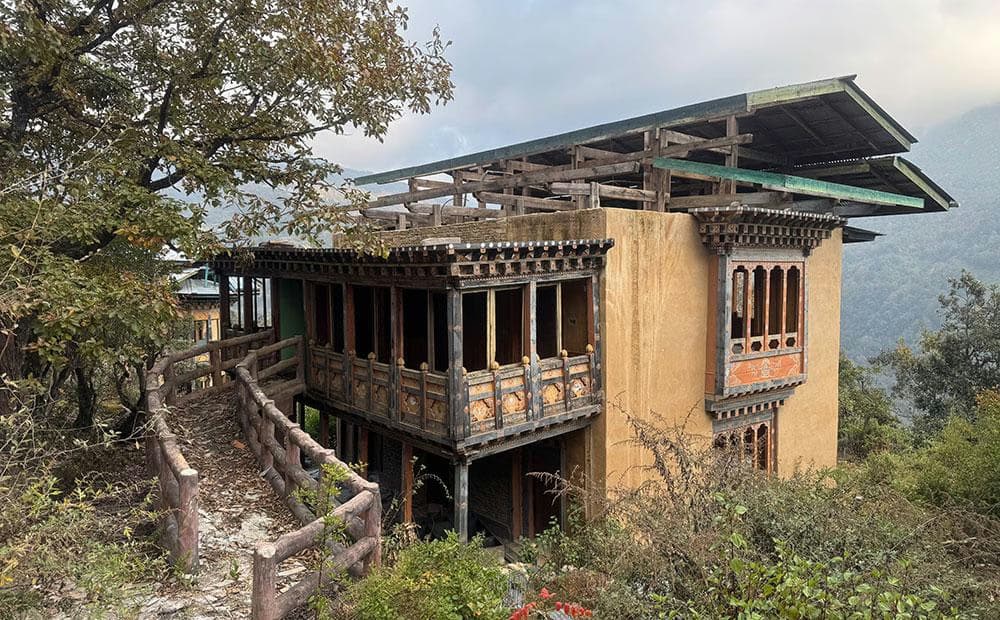
A Decade-Long Financial Saga Reaches Resolution 🏨
The Trongsa Viewpoint Resort, once envisioned as a premier hospitality destination in central Bhutan, has finally found new ownership after more than a decade of legal turmoil and financial uncertainty. The Bank of Bhutan (BoB) completed the transfer of this troubled property to the Druk Green Power Corporation (DGPC) for Nu 9.5 million, marking a significant turning point in one of Bhutan's most complex commercial disputes. This transaction represents far more than a simple asset sale—it exemplifies the challenges financial institutions face when recovering value from distressed properties entangled in legal complications.
Understanding the Financial Collapse 📉
The resort's journey from ambitious development project to distressed asset reveals critical lessons about property investment and institutional risk management. BoB had initially financed the resort with a substantial Nu 132.687 million loan, supplemented by a Nu 46.796 million service loan. By the time legal proceedings concluded, the outstanding debt had ballooned to Nu 280 million—a staggering increase that underscores the compounding costs of protracted legal disputes.
The initial valuation conducted by a joint assessment team in 2022 assessed the infrastructure at Nu 99.814 million, creating a significant gap between the bank's exposure and the property's assessed value. Meanwhile, the resort's original developer claimed construction costs had reached Nu 300 million, further complicating negotiations and recovery efforts.
The Corruption Case That Changed Everything 🔍
The resort's deterioration cannot be separated from the high-profile corruption scandal that engulfed it. In 2010–11, during the National Cadastral Resurvey, authorities uncovered a sophisticated land fraud scheme involving forged documents and falsified deeds. The scam's origins traced back to 1997, when the Trongsa College of Heritage and Contemporary Studies relocated to Taktse, creating administrative confusion that fraudsters exploited.
In 2015, while preliminary investigations were still underway, the defendants attempted to sell the resort to the Mangdechhu Hydropower Project for Nu 240 million. However, the Anti-Corruption Commission (ACC) swiftly issued a freeze notice just one week later, triggering legal proceedings that would paralyze the property for years.
The Supreme Court's verdict in April 2022 convicted former Trongsa Dzongda Lhab Dorji, his wife Karma Tshetim Dolma, and two others, sentencing them to prison terms ranging from 18 months to six years. This judgment provided legal closure but did nothing to address the property's physical and financial deterioration.
Physical Decay and Accountability Questions ⚠️
The absence of active management transformed the three-star resort into a shell of its former self. Without security presence, the property fell victim to systematic theft and vandalism. Prolonged exposure to the elements ravaged the structures—broken doors and windows, collapsed ceilings, stripped rooftops, and debris-filled rooms became the norm. Stray cattle eventually found shelter within the abandoned buildings.
Yet accountability for this deterioration remains contested. Family members of the convicted couple argue that judicial misinterpretation of the law, combined with the ACC's failure to maintain the seized property, directly caused its decline. They contend that the freeze on the land prevented them from operating and maintaining the resort, effectively destroying an asset they claimed ownership of.
The ACC maintains a different interpretation: the freeze applied only to land sales and transfers, not to operational activities. According to this perspective, hotel operations could have continued, and the ACC's responsibility extended only to investigating the case and enforcing court judgments.
The Legal Gray Zone 🏛️
Section 104 of the Anti-Corruption Act of Bhutan (2011) requires the ACC to take "all reasonably necessary steps" to protect any property under its custody. However, in November 2019, the Trongsa District Court ruled that this provision applied exclusively to movable property, not immovable assets like land and structures. This interpretation effectively shielded the ACC from accountability claims.
The family members sought Nu 6.5 million annually in compensation and requested restoration of the resort to its pre-seizure condition. Both claims were rejected based on this narrow interpretation of Section 104. The court simultaneously recommended that the ACC and Parliament introduce new provisions to address this legal ambiguity—a recommendation that remains pending.
DGPC's Strategic Acquisition 🌱
The Druk Green Power Corporation's decision to acquire the property reflects strategic planning rather than opportunistic asset-hunting. DGPC had long considered establishing a regional headquarters in Trongsa to support its expanding portfolio of hydropower and solar projects throughout central Bhutan. The corporation's existing operations along the Mangdechhu River, combined with planned solar installations in Trongsa and Bumthang, made the location strategically valuable.
Before finalizing the acquisition, DGPC conducted comprehensive due diligence, including independent property valuation and legal ownership verification. The corporation assessed the acquisition price of Nu 9.5 million as reasonable given the property's condition and development requirements.
Redevelopment Plans and Regional Impact 🔧
DGPC plans to transform the deteriorated resort into a functional operations center supporting the maintenance and management of existing hydropower facilities and future renewable energy projects. This repurposing aligns with Bhutan's national renewable energy ambitions and DGPC's expansion strategy.
The timeline for redevelopment remains flexible, with DGPC indicating that construction schedules will align with hydropower and solar project timelines in the region. This phased approach allows the corporation to integrate the facility into its broader operational framework rather than rushing into hasty renovations.
Government's Role and Commercial Principles 💼
The Ministry of Finance clarified that the transaction represented a commercial arrangement between BoB and DGPC, not a government decision to dispose of state assets below valuation. Once the fraudulently acquired land reverted to state ownership, the Ministry of Finance and National Land Commission granted a 35-year lease for the 4.703-acre property.
According to finance ministry officials, BoB exercised its prerogative as the lender to identify the best available option for recovering value from a deteriorated asset. Any gains or losses from the transaction form part of the bank's loan recovery process and are reflected in institutional financial statements, consistent with standard commercial banking practices for distressed asset recovery.
Broader Implications for Bhutan's Financial Sector 📊
The Trongsa Viewpoint Resort case illuminates critical vulnerabilities in how Bhutan manages complex commercial disputes and asset preservation. The decade-long legal entanglement demonstrates that even clear criminal convictions cannot quickly resolve underlying asset disposition questions, particularly when multiple stakeholders claim competing interests.
For financial institutions, the case underscores the importance of robust due diligence during lending decisions and proactive asset management strategies when loans deteriorate. BoB's experience suggests that early intervention and clear legal frameworks for frozen assets could have minimized losses significantly.
Lessons for Future Development Projects 🎯
Bhutan's tourism and hospitality sector continues expanding, with numerous resorts and tourism infrastructure projects under development. The Trongsa case provides cautionary lessons:
Clear ownership verification must precede all major property transactions, with comprehensive cadastral records essential before financing decisions.
Rapid dispute resolution mechanisms could prevent extended periods of asset deterioration while legal cases proceed through multiple court levels.
Defined responsibility frameworks for seized or frozen properties must clearly specify who maintains and protects such assets, eliminating ambiguities that currently exist.
Contingency planning in loan agreements should address scenarios where properties become entangled in legal proceedings, enabling faster recovery or alternative arrangements.
Looking Forward: Restoration and Recovery ✨
While the resort's transfer to DGPC doesn't fully resolve the broader accountability questions, it does provide a pathway forward. The property will receive professional management and targeted investment aligned with Bhutan's renewable energy priorities. Rather than continuing to deteriorate as an abandoned ruin, the facility will contribute meaningfully to regional infrastructure and economic activity.
For BoB, the Nu 9.5 million recovery represents a significant loss compared to the Nu 280 million outstanding debt, yet it provides concrete value recovery where previous auction attempts had failed entirely. This pragmatic approach, while financially painful, demonstrates the reality of distressed asset management in complex legal environments.
The unresolved questions regarding accountability for the property's deterioration remain important for establishing clearer legal precedents. Parliament's consideration of amendments to the Anti-Corruption Act regarding immovable property protection could prevent similar situations in future cases.
Conclusion: A Complex Resolution 🏁
The Trongsa Viewpoint Resort's transfer to DGPC closes one chapter in a complicated saga while leaving important questions open for future legal and legislative attention. The transaction demonstrates both the challenges of recovering value from corruption-tainted assets and the practical necessity of pragmatic solutions when perfect recovery remains impossible.
As Bhutan continues developing its tourism infrastructure and renewable energy capacity, the lessons from this case—about ownership verification, asset protection, dispute resolution speed, and clear legal frameworks—will prove invaluable. DGPC's acquisition offers an opportunity to transform a symbol of legal complexity into a functional asset serving national development priorities.
You May Also Like
Economy
Fixed Deposit Tax Withholding: What You Need to Know
September 13, 2026
Economy
DRC's QR Payment Innovation: Tracking Business Income
September 2, 2026

Economy
Single Mother Transforms Life Through Beekeeping in Bhutan
August 31, 2026
Economy
Natural Resources: Turning Ore into National Opportunity
August 29, 2026