Category:
NewsBhutan Faces Outmigration and Fuel Challenges
In recent developments, Bhutan's Prime Minister, Tshering Tobgay, has highlighted two significant challenges that threaten the nation's economic stability: outmigration and fuel vulnerability. These issues were brought to light during the presentation of the State of the Nation Report 2026 to Parliament, emphasizing their potential impact on Bhutan’s long-term growth trajectory.
Outmigration: A Growing Concern 📊
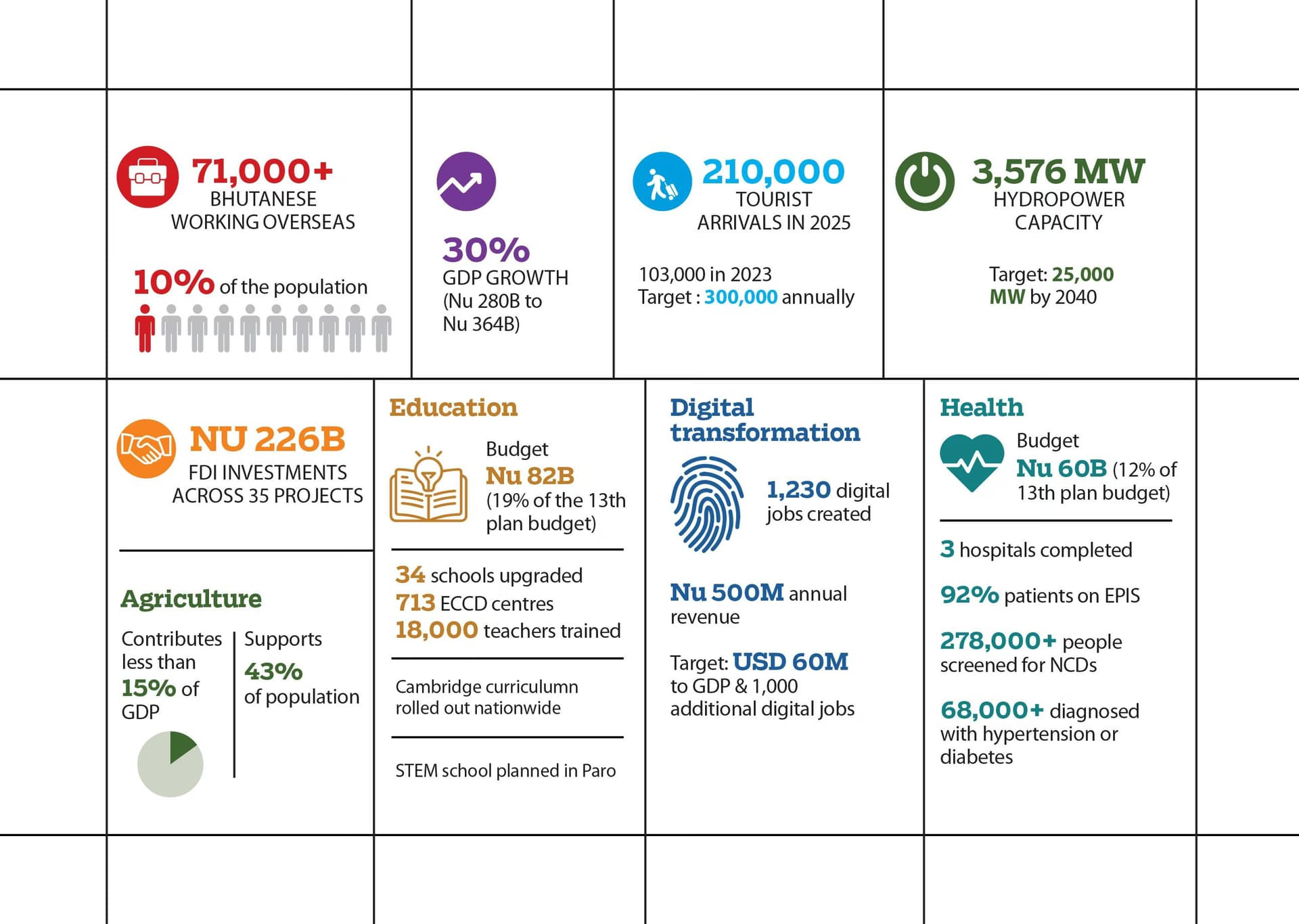
Outmigration remains a pressing issue for Bhutan, as an increasing number of young and skilled Bhutanese are seeking opportunities abroad. Currently, over 71,000 Bhutanese, which constitutes about 10% of the population, reside outside the country. This trend raises concerns about the sustainability of Bhutan’s workforce and its economic development.
Economic Implications of Outmigration
- Loss of skilled labor force
- Potential decrease in domestic productivity
- Challenges in implementing national development plans
While remittances from abroad have supported the Bhutanese economy, contributing USD 342.94 million in 2025 alone, the brain drain poses a significant risk. Young professionals, who are pivotal for innovation and economic transformation, are leaving the country, creating gaps that are challenging to fill.
Fuel Vulnerability and Energy Security 🔌
The volatility of global fuel prices, exacerbated by geopolitical tensions in West Asia, has also posed considerable challenges for Bhutan. The reliance on imported petroleum products makes the nation susceptible to external shocks, impacting everything from transportation to household energy costs.
Steps Towards Energy Independence
In response, the Bhutanese government has launched a National Energy Security Strategy. This initiative aims to reduce dependence on fossil fuels by transitioning to domestically generated electricity. Key objectives include:
- Increasing renewable energy capacity
- Promoting energy efficiency measures
- Encouraging the use of electric vehicles
These measures are aligned with Bhutan’s broader vision of economic self-reliance and sustainability.
Economic Growth and Government Initiatives 📈
Despite these challenges, Bhutan's economy is on a growth path, marked by a significant 30% increase in GDP, from Nu 280 billion to Nu 364 billion. This growth is driven by key sectors such as energy, agriculture, and tourism.
Energy Sector Developments
- Expansion of energy capacity to 3,576 MW
- Ambitious targets for 25,000 MW by 2040
- Hydropower projects like Kholongchhu and Punatsangchhu-II underway
The energy sector's expansion is pivotal in transforming Bhutan into a hub for technology and digital industries.
Agricultural and Tourism Sector Boost 🚜✈️
Investments in agriculture have focused on modernizing farming practices, which is crucial since agriculture supports 43% of Bhutan's population. Meanwhile, tourism has seen a resurgence, with arrivals more than doubling from 103,000 in 2023 to 210,000 in 2025. The government aims to attract 300,000 tourists annually.
Initiatives in Agriculture
- Fencing and irrigation system improvements
- Investment in farm mechanization
- Crop and livestock insurance supported with Nu 800 million
The Path Forward: Strategic Planning and Investments 📅
The 13th Plan, with a total outlay of Nu 512 billion, has seen improvements in its financing position, now projecting a surplus of about Nu 20 billion. This financial stability allows for strategic reviews and alignment with national priorities, such as the Gelephu Mindfulness City and the 21st Century Economic Roadmap.
Key Takeaways
- Prioritizing domestic skill development to mitigate outmigration impacts
- Strengthening energy independence to stabilize the economy
- Leveraging financial surpluses for strategic investments
In conclusion, while Bhutan faces significant challenges in the form of outmigration and fuel vulnerability, its proactive strategies and robust growth across key sectors offer a promising path forward. By continuing to invest in infrastructure and human capital, Bhutan aims to secure its economic future and achieve sustainable development.
You May Also Like
News
Women Entrepreneurs Master AI and Digital Tools in Phuentsholing
September 1, 2026
News
Can Samtse Keep Up With Its Growing Workforce?
August 29, 2026
News
Nepal Flood Exposes Critical Gaps in Bhutan's Early Warning Systems
August 29, 2026
News
High Court Overturns Acquittal: Doctor Sentenced to 10 Years for Child Sexual Abuse
August 29, 2026