Category:
NewsSiddhi Bistro Opens in Thimphu: Bhutan's New Plant-Based Dining Revolution
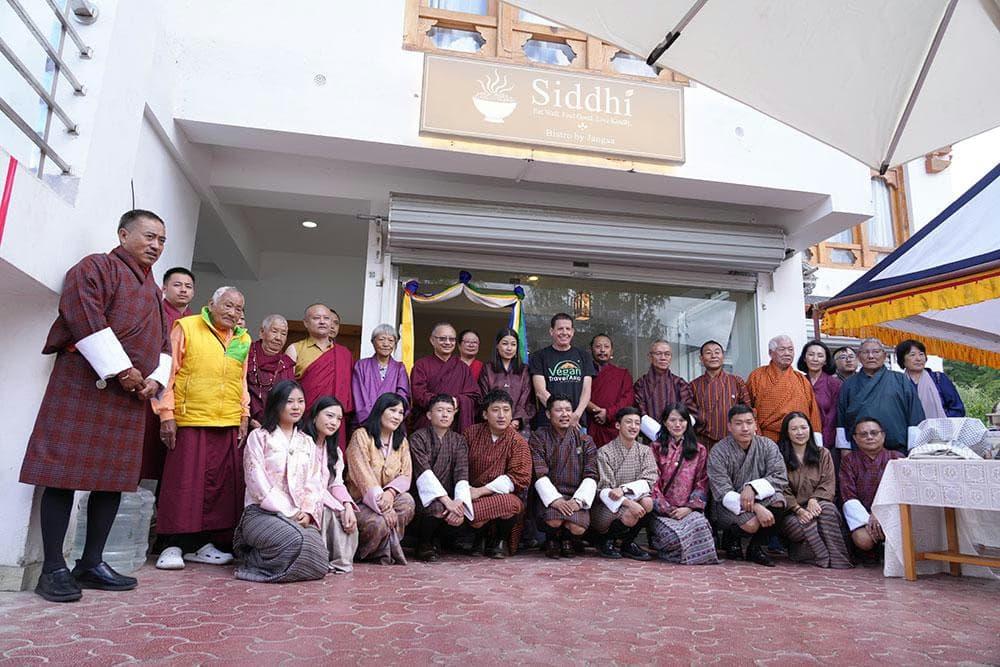
A New Chapter in Bhutanese Dining 🌱
Thimphu's culinary landscape just shifted in a meaningful way. On August 8th, Jangsa Animal Saving Trust unveiled Siddhi Bistro, a plant-based dining establishment located in upper Motithang that's redefining how Bhutanese communities think about food, compassion, and sustainable living. This isn't just another restaurant opening—it represents a deliberate effort to transform dietary habits while channeling profits toward animal welfare across the nation.
The venture arrives at a pivotal moment in Bhutan's development. As the country continues balancing modernization with its deep Buddhist values of compassion (or metta), initiatives like Siddhi Bistro offer practical pathways for citizens to align their daily choices with these principles.
Breaking the Meat Tradition: Plant-Based Takes on Beloved Dishes 🍽️
Walking into Siddhi Bistro, diners encounter a menu that feels both familiar and revolutionary. Approximately 70 percent of offerings reimagine traditional Bhutanese staples without animal products. Tofu ema datshi—the nation's iconic chili and cheese dish—arrives with silky plant-based tofu replacing dairy. Tofu paa (Bhutanese dumplings) and traditional thalis showcase how deeply rooted flavors can thrive without meat.
The remaining 30 percent draws inspiration from Korean and international cuisines. Bibimbap, tteokbokki, japchae, and tofu momos sit alongside fresh salads and innovative plant-based beverages. This strategic diversity wasn't accidental.
Phuntshok Rabten, Assistant Director of Jangsa, explained the philosophy behind this approach: the menu was intentionally crafted to appeal to younger demographics who might otherwise dismiss plant-based dining as restrictive or culturally disconnected. "We want people to ultimately buy these products and cook them in their own homes," Rabten noted, emphasizing that shifting daily dietary habits represents one of the most powerful levers for reducing animal suffering over time.
Developed with Nutritional Expertise 💪
Siddhi's menu didn't emerge from guesswork. Professional nutritionists and culinary experts, including specialists from the Veg Voyage Foundation, collaborated to ensure every dish delivers both satisfaction and nutritional integrity. This collaboration elevated the bistro beyond typical plant-based restaurants—it's nutritionally engineered to compete with conventional dining on every metric.
The bistro also functions as a retail hub for Jangsa Foods' expanding line of 11 plant-based products manufactured at their facility in Gelephu. These products include fortified tofu enriched with vitamin B12, vitamin D, and calcium—nutrients often cited as concerns in plant-based diets. By making these products accessible and visible, Siddhi transforms consumer behavior from the ground up.
Targeting Omnivores, Not Just Vegans 🎯
Here's where Siddhi's strategy diverges from conventional plant-based establishments. Rather than catering exclusively to existing vegetarians or vegans, the bistro was deliberately designed with omnivores in mind. This matters significantly in Bhutan's cultural context, where meat consumption remains deeply embedded in tradition and social practice.
Lama Kunzang Dorjee, founder of Jangsa, articulated this philosophy clearly: "My main purpose is I want non-veg people to come and try the vegan food." He recognizes that many Bhutanese consume meat primarily through habit, cultural expectation, or the widespread belief that animal products are nutritionally or gastronomically superior. Siddhi exists to challenge these assumptions through direct experience.
This approach reflects sophisticated understanding of behavioral change. Rather than preaching or shaming, Siddhi invites skeptics to discover that plant-based cuisine can be equally satisfying, healthy, and flavorful. When someone enjoys a meal and later learns it contained no animal products, the cognitive dissonance often catalyzes genuine dietary reconsideration.
Beyond the Plate: Education as Mission 📚
Siddhi Bistro transcends its function as a restaurant. Phuntshok Rabten emphasized the establishment's role as an educational nexus: "This will be a space where people can get educated about the impacts of food and why it's not just about food."
The bistro will host community workshops, nutrition seminars, and culinary training sessions linking local participants with international experts. These initiatives address a critical gap in Bhutan's food literacy—many citizens lack access to evidence-based information about nutrition, environmental impact, and the ethical dimensions of dietary choices.
This educational mission aligns with Bhutan's broader commitment to holistic development. Rather than pursuing GDP growth at any cost, the nation has long prioritized Gross National Happiness—a framework that emphasizes psychological well-being, cultural preservation, and environmental sustainability. Siddhi Bistro operationalizes these values through everyday dining decisions.
The Genesis: From Challenge to Commitment 💡
Siddhi's origin story reveals how transformative experiences can catalyze organizational evolution. In 2025, Jangsa organized a month-long vegan challenge in Gelephu, inviting monks, teachers, parents, and community members to participate. Participants underwent blood tests before and after the trial—a rigorous approach that generated compelling health data.
The results proved so encouraging that many participants continued their plant-based practice beyond the initial month. This success inspired Jangsa leadership to establish their own tofu production facility and ultimately launch Siddhi Bistro. What began as an experimental community challenge evolved into permanent infrastructure for dietary transformation.
Lama Kunzang Dorjee reflected on this journey: "We were very excited and inspired by this, we not only continued for one month but also carried on being vegan." This personal commitment from organizational leadership lends authenticity to the venture—this isn't corporate greenwashing but genuine conviction.
Financial Structure and Social Enterprise Model 💰
Siddhi Bistro required a total setup investment of Nu 5 million (approximately Nu 4.1 million in capital investment and Nu 900,000 in working capital). Notably, this funding came entirely from VegVoyages and the VegVoyages Foundation, demonstrating international confidence in Jangsa's mission and execution capacity.
Zac Lovas, co-founder of VegVoyages and the VegVoyages Foundation, explained the partnership rationale: the foundation identified Jangsa as one of South and Southeast Asia's most active animal protection and environmental advocacy organizations. This recognition reflects Jangsa's two-decade track record since its establishment in 2000.
Projected financial performance suggests sustainability. Jangsa anticipates approximately 75 customers daily, generating an annual turnover of Nu 4.95 million with a net profit of Nu 2.72 million. Crucially, all profits directly subsidize Jangsa's animal care network—a sprawling system of 11 sanctuaries across nine dzongkhags currently caring for over 3,000 domestic animals.
This financial model represents genuine social enterprise: commercial viability serves humanitarian mission rather than shareholder enrichment. Every meal purchased at Siddhi Bistro directly supports animal rescue, rehabilitation, and sanctuary operations across Bhutan.
A Catalyst for National Transformation 🚀
Yangchen Lhamo, a regular Siddhi volunteer known as Yoga Yangchen, articulated a broader vision: "Siddhi represents a potential pilot project for expanding plant-based accessibility across the country." This perspective highlights how a single successful restaurant can function as a proof-of-concept for systemic change.
Jangsa's expansion roadmap reflects this ambition. Plans include replicating the Siddhi model in Gelephu, introducing subsidized vegan meals for students and monks (addressing food security and accessibility), scaling retail distribution of plant-based products, and transforming the bistro into a regional training hub for plant-based nutrition and culinary skills.
These initiatives address multiple social challenges simultaneously. By making plant-based options affordable for economically vulnerable populations and culturally respected groups like monks, Jangsa removes barriers that typically limit dietary transformation to wealthy, urban demographics.
The Deeper Meaning: Siddhi as Spiritual Practice ✨
The name "Siddhi" carries profound significance in Buddhist philosophy—it means "blessing" or "spiritual accomplishment." Lama Kunzang Dorjee chose this name deliberately, reflecting on the network of advocates, chefs, nutritionists, and health experts who collaborated to bring the project to fruition.
"Jangsa started in 2000 to save animals and save lives," he reflected. "Compassion is the root of Dharma. Siddhi provides another practical way for people to put that value into practice." This framing transforms dining from mere consumption into spiritual practice—an opportunity for Bhutanese citizens to embody Buddhist principles through quotidian choices.
In a nation that constitutes itself through unique values and cultural preservation, this spiritual dimension matters profoundly. Siddhi Bistro doesn't ask Bhutanese to abandon their heritage but rather to deepen their commitment to compassion—a value that already lies at Buddhism's philosophical core.
Looking Forward: The Ripple Effect 🌊
As Siddhi Bistro establishes itself in Thimphu's dining culture, its significance extends far beyond restaurant industry metrics. The venture represents a practical demonstration that dietary transformation need not conflict with cultural identity, economic viability, or gastronomic pleasure.
For Bhutan specifically, Siddhi arrives at an opportune moment. The nation's young population increasingly engages with global trends while seeking authentic expressions of Bhutanese values. A plant-based restaurant that honors traditional flavors while advancing animal welfare and environmental sustainability speaks directly to this demographic's aspirations.
Moreover, as Bhutan continues developing its tourism sector, establishments like Siddhi offer visitors authentic engagement with Bhutanese values beyond cultural performances. International travelers increasingly seek dining experiences aligned with their ethical commitments—Siddhi provides exactly that.
The bistro's success will likely influence other entrepreneurs and organizations. If Siddhi demonstrates that plant-based dining can be commercially viable while advancing social missions, replication becomes inevitable. Within five years, Bhutan could host a network of similar establishments, fundamentally shifting the nation's relationship with food.
The Invitation 🍽️✨
Siddhi Bistro extends an invitation to Bhutanese citizens and visitors alike: come experience cuisine that nourishes body, mind, and spirit. Whether you arrive as a committed plant-based advocate or skeptical omnivore, the bistro welcomes you to discover that compassion tastes delicious. In choosing Siddhi, customers don't merely purchase a meal—they invest in animal rescue, environmental sustainability, and the practical realization of Buddhist values in contemporary Bhutan.
You May Also Like
News
Women Entrepreneurs Master AI and Digital Tools in Phuentsholing
September 1, 2026
News
Can Samtse Keep Up With Its Growing Workforce?
August 29, 2026

News
Nepal Flood Exposes Critical Gaps in Bhutan's Early Warning Systems
August 29, 2026
News
High Court Overturns Acquittal: Doctor Sentenced to 10 Years for Child Sexual Abuse
August 29, 2026