Category:
EnvironmentRethinking Hydropower Safety in Bhutan
The Hydropower Backbone of Bhutan's Economy 🌊⚡
Hydropower has long been the lifeblood of Bhutan's economy, fuelling its development and providing a stable source of income. The rivers cascading down the Himalayas have not only powered industries but also financed public infrastructure, from roads to schools. As Bhutan continues to harness its estimated 23,760 megawatts (MW) hydropower potential, only about 2,300 MW has been tapped so far.
However, as climate change reshapes the landscape, new challenges emerge. The critical question arises: Are Bhutan's hydropower infrastructures designed for the rivers of yesterday, or are they prepared for the evolving hydrological realities of tomorrow? 🌍🔍
The Changing Cryosphere and Its Implications ❄️🔄
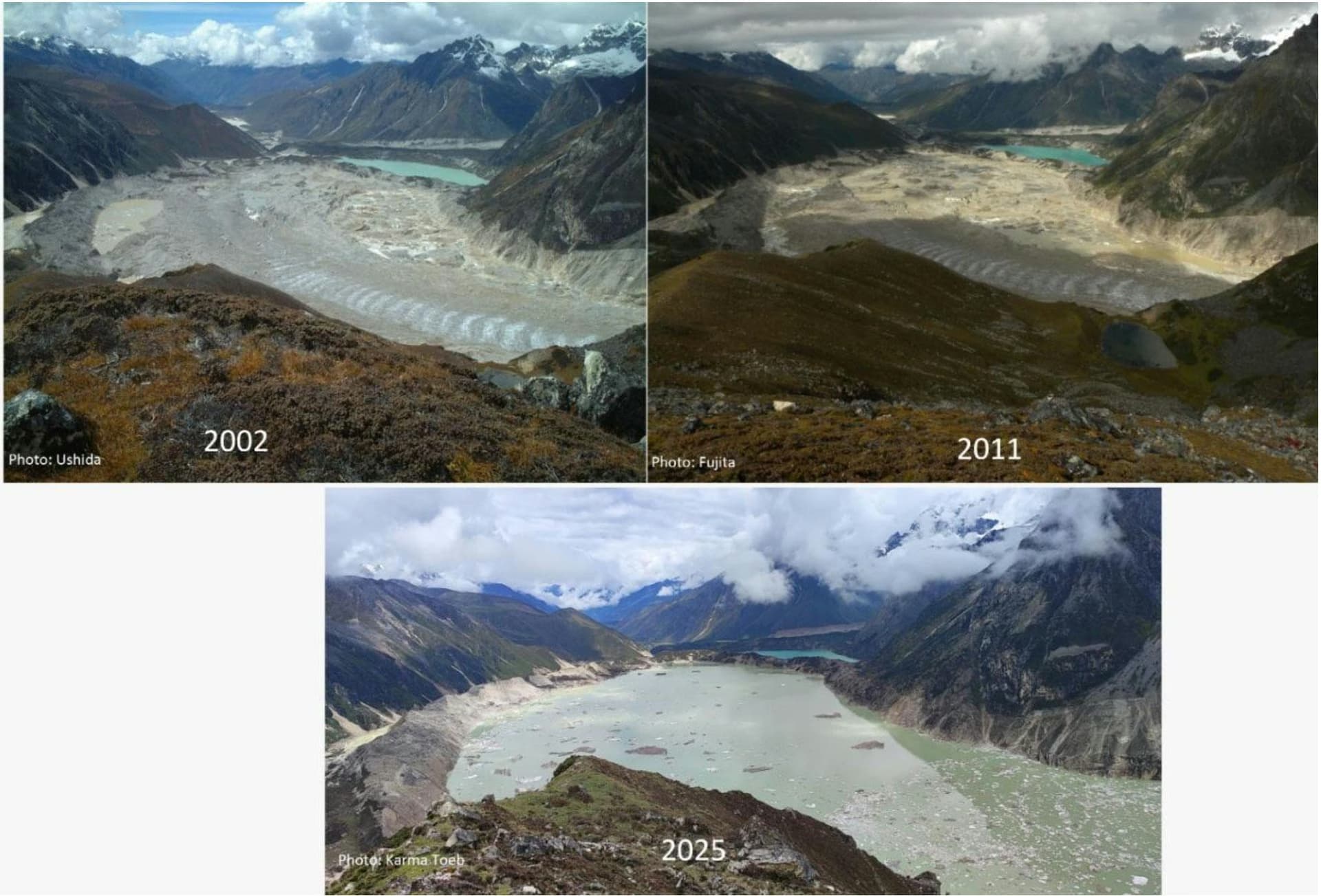
The cryosphere, which encompasses all the frozen water on Earth, is undergoing significant transformations. In Bhutan, warming temperatures have led to the retreat of glaciers and the expansion of glacial lakes. This dynamic environment introduces uncertainties in hydrological cycles, impacting the reliability of historical data used in infrastructure planning.
The Risks of Stationarity Assumptions 📉⚠️
Traditionally, hydropower projects have been designed based on the principle of stationarity, which assumes that past hydrological conditions will continue into the future. This approach, however, is increasingly unreliable in glacier-fed mountain regions, where Glacial Lake Outburst Floods (GLOFs) and other hazards can evolve rapidly.
For instance, while earlier assessments of hydropower safety considered certain glacial lakes and flood scenarios, evolving science now suggests that potential flood discharges could be much higher than previously estimated. Such insights necessitate a reevaluation of existing safety measures. 🧊🔧
Bhutan's Proactive Measures and Future Considerations 🔍🔧
Bhutan has demonstrated a proactive stance in addressing these challenges. Between 2008 and 2012, risk-reduction measures were implemented to lower the water levels of the Thorthormi Glacial Lake, one of the most dangerous in the region. Despite these efforts, the evolving nature of the cryosphere means that risk reduction is not equivalent to elimination.
Economic and National Security Concerns 💼🥅
The implications of hydropower safety extend beyond engineering. Hydropower is intertwined with Bhutan's economic stability, contributing significantly to its GDP and foreign exchange earnings. Approximately 60% of Bhutan's external debt is linked to hydropower initiatives, primarily financed through partnerships with India, the Asian Development Bank, and the World Bank.
Any significant disruption to these projects could affect export revenues, fiscal stability, and public confidence. Thus, ensuring the safety of hydropower infrastructures is pivotal not only for energy security but also for national resilience. 🇧🇹🛡️
Looking Forward: Embracing New Paradigms 🌐✨
As Bhutan plans its future hydropower expansions, several key questions must be addressed. How can the latest cryosphere science be integrated into planning and safety assessments? What role can international cooperation play in ensuring sustainable and safe hydropower development?
Key Takeaways and Future Directions 📈🌟
- Embrace Non-Stationarity: Recognize that glacier-fed systems are non-stationary, necessitating adaptive management strategies.
- Leverage International Expertise: Collaborate with global experts to incorporate cutting-edge science into safety assessments.
- Prioritize Resilience: Ensure that hydropower projects enhance national resilience, supporting economic and social stability.
By integrating these considerations, Bhutan can continue to harness its water resources sustainably, ensuring that the rivers of tomorrow are as beneficial as those of yesterday. 🚀🔄
In conclusion, while the challenges posed by a changing cryosphere are significant, they also present an opportunity for innovation and collaboration. By rethinking hydropower safety, Bhutan can secure its water resources for generations to come. 🌊🔒
You May Also Like
Environment
Climate Crisis in the Himalayas: Bhutan's Cold Reminder
August 29, 2026
Environment
WBH Conservation Project Delivers Clean Water to Rural Homes
August 29, 2026
Environment
HKH Climate Crisis: Why Regional Unity Matters Now
August 29, 2026
Environment
Bhutan's Solar Power Revolution: Energy Security Strategy
August 26, 2026