Category:
EconomyPasakha Mega Dry Port Nears Completion

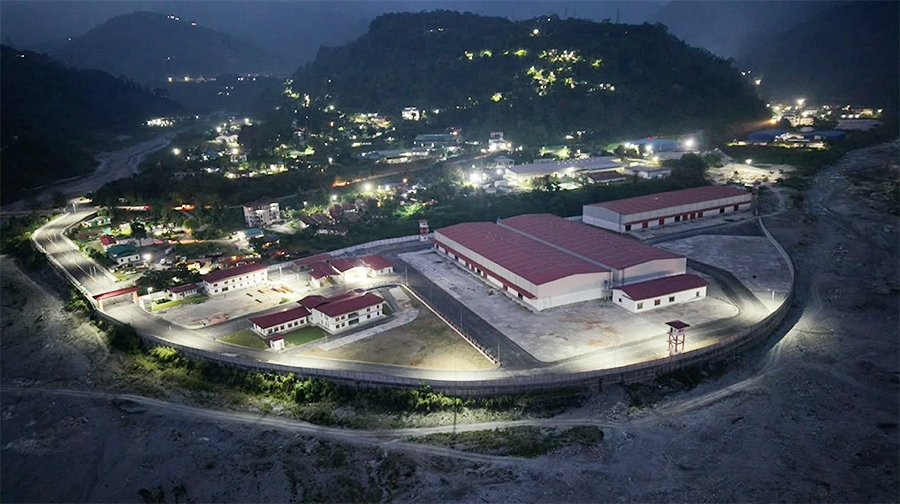
The Pasakha mega dry port, a significant trade infrastructure project in Bhutan, is poised to become a pivotal logistics hub by June, with 87% of its construction completed. This sprawling facility, covering approximately 15.46 acres, has been developed with an investment of Nu 1.2 billion. Its strategic location and state-of-the-art infrastructure aim to alleviate the logistical bottlenecks faced by Phuentsholing, Bhutan's primary commercial hub.
Transforming Bhutan's Trade Dynamics 🚛
The Pasakha dry port is designed to address the congestion and limited yard space in Phuentsholing. By relocating customs processing, warehousing, and logistics services outside the crowded border town, the port is set to streamline cargo movement significantly. The Ministry of Industry, Commerce, and Employment (MoICE) highlights that major civil works, including the RCC retaining wall, approach road, and site grading, are complete. The focus now shifts towards finalizing processing structures and operational infrastructure, such as internal roads and electrical systems.
Boosting Efficiency and Reducing Costs 📉
Once operational, the dry port will consolidate customs clearance, warehousing, and cargo handling in one location. This integration aims to reduce repeated handling of goods, lower logistics costs, and enhance turnaround time for imports and exports. The introduction of digital systems like the National Single Window will facilitate electronic documentation and faster clearance processes, further improving trade efficiency.
Strategic Benefits for the Pasakha Industrial Estate 🏭
The dry port's proximity to the Pasakha Industrial Estate is expected to significantly benefit local industries. By enabling customs clearance closer to production units, the facility will minimize the need to transport goods to Phuentsholing, thus reducing transport costs and congestion-related risks. This strategic advantage is anticipated to enhance production planning and inventory management for businesses within the estate.
National and Economic Implications 🇧🇹
On a national scale, the Pasakha dry port is set to centralize logistics functions, enhancing trade efficiency across Bhutan. The facility will not only reduce turnaround time for imports and exports but also improve the predictability of supply chains. This development is critical for a country increasingly aiming to integrate into global trade networks.
Institutional Coordination and Private Sector Involvement 🤝
To ensure the smooth functioning of the dry port, institutional frameworks are being strengthened. The Department of Trade will coordinate with the Department of Revenue and Customs and other border agencies. Additionally, existing platforms like the Bhutan Trade Finance Network and the Electronic Customs Management System will integrate with the National Single Window system, enabling real-time cargo tracking and coordinated regulatory checks.
Private sector participation is also envisaged, with services such as warehousing, cold storage, and equipment management expected to be outsourced. This collaboration aims to create a high-capacity logistics hub, fostering efficiency and accountability through standard operating procedures and periodic monitoring mechanisms.
Conclusion: A New Era for Bhutan's Trade 🌟
The Pasakha mega dry port represents a transformative step for Bhutan's trade infrastructure. By addressing critical logistical challenges, boosting efficiency, and fostering economic growth, the dry port is set to play a pivotal role in Bhutan's economic landscape. As the project nears completion, stakeholders, including government bodies and private operators, are poised to capitalize on the opportunities it presents, heralding a new era for the nation's trade and logistics sector.
You May Also Like

Economy
Bhutan's Bold Vision: Two USD 50M Enterprises by 2030
September 27, 2026
Economy
Mega Dry Port in Pasakha: Bhutan's Trade Revolution
September 25, 2026

Economy
Fixed Deposit Tax Withholding: What You Need to Know
September 13, 2026
Economy
DRC's QR Payment Innovation: Tracking Business Income
September 2, 2026