Category:
CultureLife is Dukkha: Navigating Through Suffering
Understanding Dukkha: A Timeless Truth
Life is often described as dukkha, a Sanskrit term broadly translated to mean suffering, dissatisfaction, or unease. This concept, introduced by Buddha in his first teaching after enlightenment, is central to Buddhist philosophy. But what does it mean for us in today's world? 🌏
The Historical Context of Dukkha
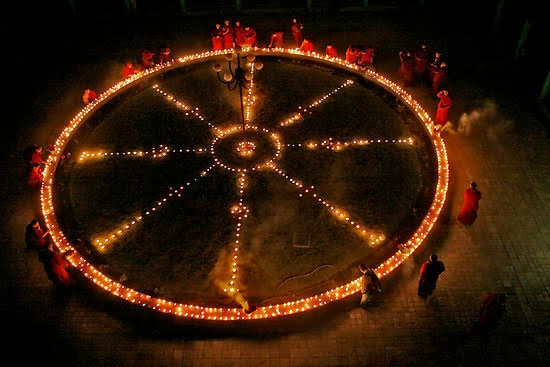
Drukpa Tshezhi, an important Buddhist holiday, commemorates the day Buddha first shared his profound insights in Sarnath, India. This teaching, known as the First Turning of the Wheel of Dharma, introduced the Four Noble Truths — the foundation of Buddhist teachings.
The realization that life is dukkha came to the Buddha after his enlightenment, as he contemplated the nature of human existence. Despite the passage of over 2,500 years, the relevance of this insight remains undiminished.
The Pervasive Nature of Suffering
When we hear that life is dukkha, we often associate it with obvious hardships like illness or loss. However, the Buddha's insight delves deeper, suggesting that even in happiness, there's a lingering fear of its impermanence.
Consider love: often romanticized as eternal bliss, it frequently becomes an engine of dukkha due to our unrealistic expectations. When our loved ones change or leave, the pain stems not just from loss, but from our illusion of permanence. 💔
The Root Cause of Dukkha
The core of dukkha lies in our attachment to transient experiences. We strive for permanent pleasure, avoid pain, and cling to a sense of self that is inherently unstable. This misunderstanding is akin to chasing a mirage — the more we grasp, the more elusive it becomes.
Moving Beyond Suffering
Fortunately, Buddhism offers a way out of this cycle. The Noble Eightfold Path provides practical guidance to transcend suffering. This path encourages right understanding, intention, speech, action, livelihood, effort, mindfulness, and concentration.
Different Buddhist traditions offer various methods to support this journey, each tailored to guide practitioners toward enlightenment. 🌟
Commemorating Drukpa Tshezhi
On Drukpa Tshezhi, Buddhists worldwide reflect on the Four Noble Truths, applying these teachings to their lives. Rather than viewing these truths as historical, we are encouraged to introspect and recognize these patterns within ourselves.
Practical Steps to Practice
- Meditation: Engage in mindful meditation to observe thoughts and emotions without attachment.
- Compassion: Practice compassion towards oneself and others, acknowledging the shared human experience of suffering.
- Mindful Living: Cultivate awareness in everyday actions, emphasizing the present moment.
By internalizing these practices, we honor Buddha’s teachings and transform our relationship with the world. 🙏
Conclusion: Embracing Impermanence
Understanding that life is dukkha doesn't mean viewing the world pessimistically. Instead, it invites us to engage with life fully, embracing its impermanence with wisdom and compassion. As we commemorate Drukpa Tshezhi, let us not only celebrate a historical event but also commit to a journey of personal growth and enlightenment. 🎇
You May Also Like
Culture
Sacred Heart of 108 Chortens: Bhutan's Spiritual Masterpiece
August 26, 2026
Culture
When Colour Drains From the Scene: Spiritual Gatherings in Bhutan
August 15, 2026

Culture
The Vanishing Trade of Drukor: Bhutan's Fading Cultural Exchange
August 15, 2026
Culture
Yojay: Ancient Buddhist Prayer Practice Goes Global
August 12, 2026