Category:
PoliticsExploring the Indus Waters Treaty: An Unequal Pact
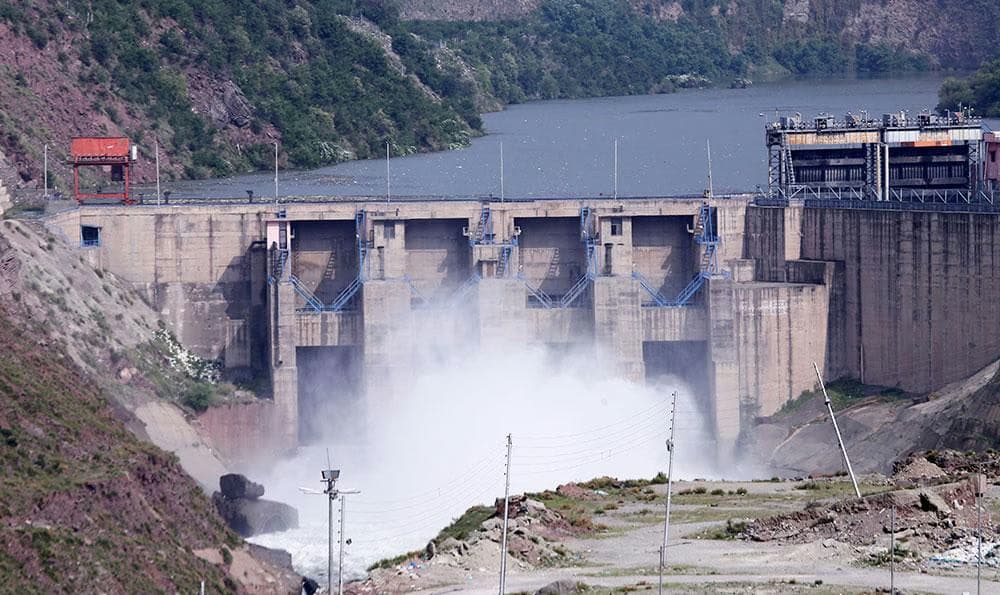
The Genesis of the Indus Waters Treaty
The Indus Waters Treaty, signed on September 19, 1960, between India and Pakistan, stands as a unique testament to post-colonial diplomacy. Facilitated by the World Bank, this treaty was forged in the wake of the partition of British India, which divided the Indus River System across two newly formed nations. The river system, comprising six major rivers—Indus, Chenab, Jhelum, Ravi, Beas, and Sutlej—serves as a lifeline for millions, supporting agriculture, drinking water, and electricity generation in both countries.
Historical Context 🌍
Following the partition in 1947, the geographical dichotomy was clear: India, the upper riparian state, controlled the headwaters, while Pakistan relied heavily on the water flow for its agricultural plains. Despite India's pressing domestic needs, it entered into a highly concessionary water-sharing pact with Pakistan, aiming for regional stability and normalized relations.
Negotiations and Concessions 🤝
The negotiations, marked by asymmetrical demands, highlighted Pakistan's strategy of delay. The 1954 World Bank proposal required India to make significant concessions. India had to abandon planned developments on the upper reaches of the Indus and Chenab, forgo diverting about 6 million acre-feet (MAF) from the Chenab River, and comply with several other restrictions. Despite these impositions, India accepted the proposal swiftly, while Pakistan delayed its acceptance until December 1958.
The Unequal Water Allocation 💧
Under the treaty, India received exclusive rights to the Eastern rivers—Sutlej, Beas, and Ravi—while Pakistan was granted the waters of the Western rivers—Indus, Chenab, and Jhelum. In terms of volume, the Western rivers carry approximately 135 MAF annually, compared to the 33 MAF from the Eastern rivers, giving Pakistan control of roughly 80% of the system’s water.
Financial Anomalies 💸
One of the treaty's most striking features is the financial obligation placed on India. India agreed to pay approximately £62 million (around $2.5 billion today) to Pakistan for water infrastructure development. This payment set a precedent where the upstream country financially compensated the downstream nation, despite already surrendering the majority of water resources.
Structural Inequities and Restrictions 📑
The treaty imposes several unilateral restrictions on India, affecting its use of the Western rivers:
- Limited irrigated cropped area within Indian territory.
- Strict limits on water storage volume.
- Specific design criteria for hydropower facilities, including restrictions on pondage and storage capacity.
These constraints ensure that India, despite being the upstream state, is subject to oversight, while Pakistan enjoys guaranteed water flows without equivalent obligations.
Broader Implications and Future Outlook 🔍
The Indus Waters Treaty is often cited as a model for transboundary water management. However, its structural inequities highlight the challenges of asymmetric treaties. As climate change impacts water availability, the treaty's rigid framework could face further scrutiny, necessitating adaptive management and potential renegotiations.
Conclusion: The Path Forward 🚀
The Indus Waters Treaty remains a cornerstone of India-Pakistan relations. While it has maintained peace over water disputes for decades, evolving geopolitical dynamics and environmental challenges may call for a more equitable framework. Moving forward, both nations must prioritize cooperation and innovation to effectively manage their shared water resources.
In this complex dance of diplomacy, the Indus Waters Treaty continues to be both a symbol of peace and a reminder of the enduring challenges of international water politics.
You May Also Like
Politics
Bhutan and EU Parliamentarians Unite on Climate Action
September 26, 2026
Politics
Bhutan Launches Four Voter Participation Initiatives for LG Elections
September 16, 2026
Politics
Women in Politics: Breaking Through Barriers Before Election Day
September 15, 2026

Politics
Women Leaders Training: Preparing for 2027 Local Elections
August 31, 2026