Category:
EconomyBhutan Stock Market Shows Volatility as Index Declines Amid Mixed Corporate Performance
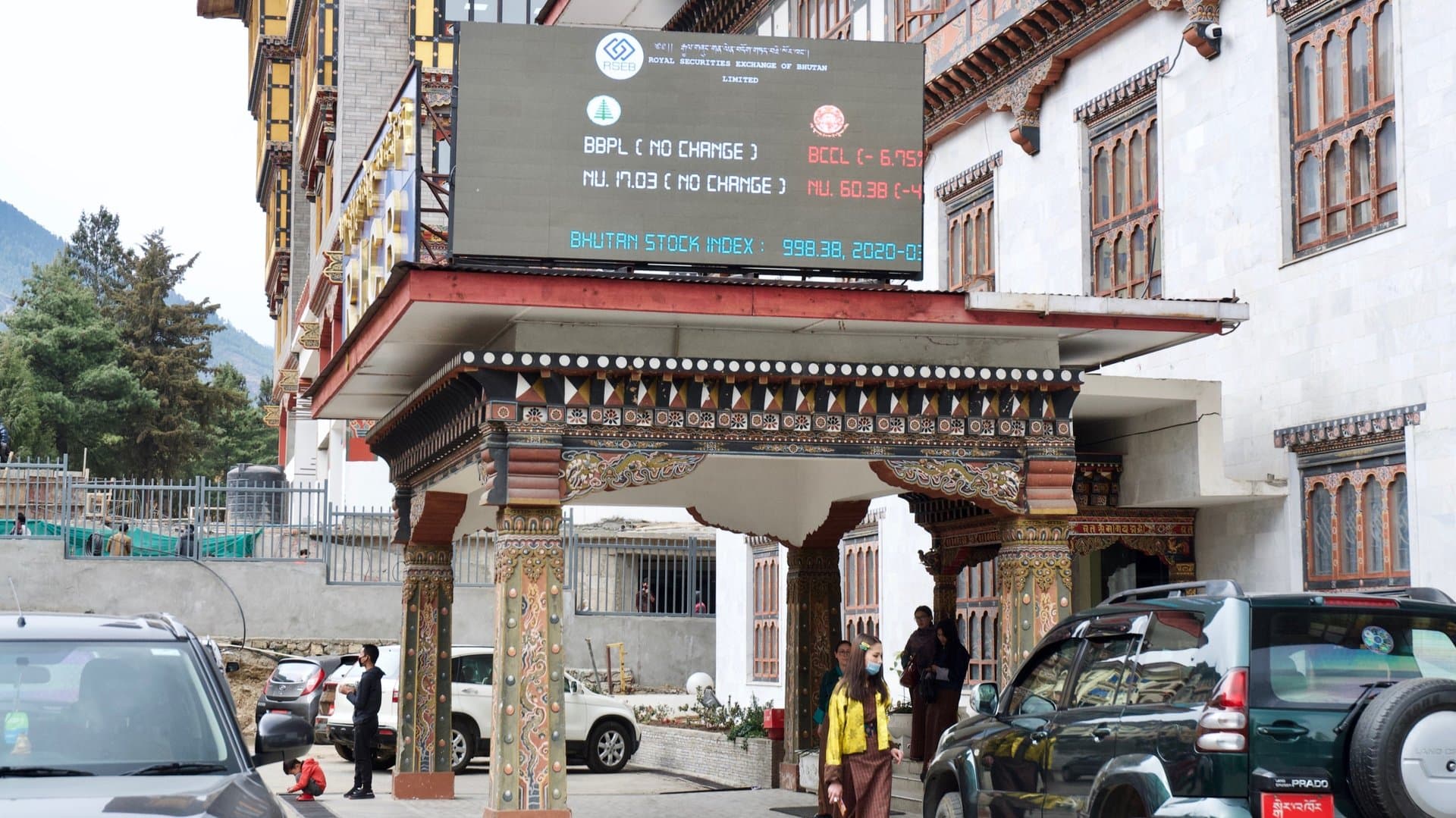
📊 Market Overview
The Royal Securities Exchange of Bhutan (RSEB) has reported a recent decline in the Bhutan Stock Index (BSI), reflecting growing volatility in the country’s small but developing capital market.
Despite the absence of major macroeconomic shocks, the index has slipped due to uneven performance across listed companies. Analysts suggest that in a market as small as Bhutan’s, even minor trading activity can lead to noticeable price swings.
📉 Mixed Performance Across Listed Companies
Recent trading sessions have revealed a sharp divergence in stock performance:
- Some companies, such as Bhutan Carbide & Chemicals, recorded strong gains of around 15%, driven by investor optimism and limited supply of shares.
- Meanwhile, others like Bhutan Board Products experienced declines exceeding 10%, contributing to the overall downward pressure on the index.
This contrast underscores the fragile and highly sensitive nature of Bhutan’s equity market, where liquidity remains low and price discovery is still evolving.
🏦 A Small but Growing Market
Bhutan’s stock market remains one of the smallest in the world, with:
- Fewer than 20 listed companies
- A relatively low total market capitalization
- Limited daily trading volume
The market is primarily driven by domestic investors, as foreign participation is largely restricted. This limits capital inflow but also shields the market from global financial shocks.
⚠️ Factors Behind the Volatility
Market observers point to several key reasons behind the recent fluctuations:
1. Low Liquidity
With limited buyers and sellers, even small trades can significantly impact stock prices.
2. Concentrated Ownership
Many shares are held by long-term investors, reducing the number of actively traded stocks.
3. Limited Market Depth
A small number of listed companies means fewer diversification opportunities, amplifying risk.
🔍 Outlook for Investors
While the recent decline in the Bhutan Stock Index may raise concerns, experts believe it is part of the natural evolution of an emerging market.
Efforts to modernize the financial sector, improve investor awareness, and gradually expand market participation could help stabilize the exchange over time.
However, for now, the Bhutanese stock market remains:
- 📉 Volatile in the short term
- 🏦 Stable but limited in scale
- 🌱 Promising for long-term development
🧾 Conclusion
The recent dip in Bhutan’s stock market highlights both the challenges and opportunities facing one of the world’s smallest exchanges. As the country continues to strengthen its financial infrastructure, market stability and investor confidence will be key to unlocking future growth.
You May Also Like

Economy
Bhutan's Industrial Growth Challenge: Why Businesses Stay Small
August 6, 2026

Economy
GST Compliance Challenges: How Bhutan's Businesses Navigate New Tax Rules
August 6, 2026

Economy
Trashiyangtse's Economic Decline: Challenges and Revival Efforts
August 5, 2026

Economy
Hydroelectricity Powers Bhutan's Economy to 8.52% Growth
August 5, 2026